I’ve moved on to Space Coast near Kennedy Space Center.
My last night (Saturday) at Three Flags Wildwood, I got a little claustrophobic in the RV. That doesn’t happen much; I like the small cozy space. But I hadn’t gotten out much over several days and I was a little bored and cabin feverish. So I Googled for the nearest bowling alley, and for the first time ever I bowled six games in a row. (I bowled alone but exchanged pleasantries with the couple in the next lane. The wife kept excusing her poor performance on how drunk she was.)
Next day, I packed up and drove an hour and a half to Space Coast. It’s a nice little campground but the sites are SUPER tight, so getting my RV backed into its space was a bit of a challenge. I wish I was one of those cool competent RV drivers who can casually point their rig and make it go exactly where they want. Maybe by the end of this trip, I will be. But as it was, I did a lot of dicey back-and-forth trying not to hit the slide of the RV in front of me or run afoul of my next door neighbor’s awning.
After I got plugged in, I went out for food and decided to drive to the beach. I realized I hadn’t seen the Atlantic (not counting the Gulf) since before the pandemic. This part of the Florida coast is complicated with rivers and Intracostal Waterway and marshland and causeways and beach town traffic, so even though my campground is less than eight miles from open ocean, it takes about half an hour of driving to get to a beach. And I found that Cocoa Beach, where I wound up, is unlike Galveston in that you can’t just cruise down the coast road and see the water because there are too many buildings in the way; you have to find somewhere to park and walk to it. That proved a bit of a challenge, but I followed the time-honored practice of stalking a departing family to their car and taking their space. It was a lot of effort for a day where I just wanted to briefly stick my feet in the water (I hadn’t even brought sunscreen so I couldn’t stay out long!), but the view was worth it.
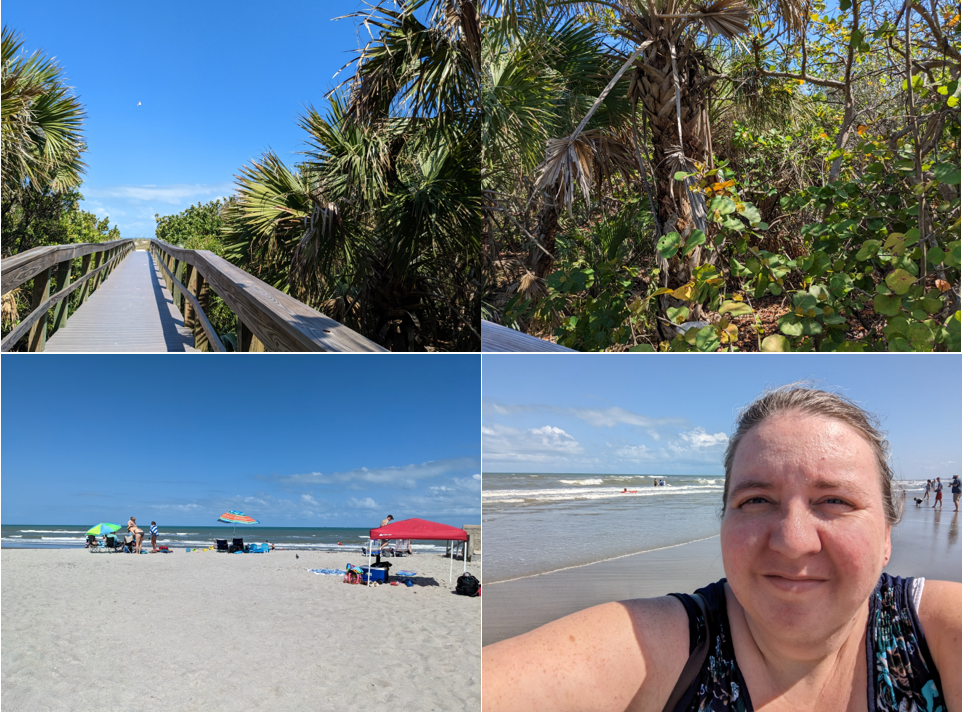
Sunday evening, I spent in the campground pool. It’s a good thing I got in at least a little wading and swimming, because the weather turned ugly on Monday and the rest of the week doesn’t look too good here. (I won’t be too sad if I don’t get more beach time here, though, because I’ve got a week booked in the Florida Keys for later.)
I had booked online a two-day pass to Kennedy Space Center with a special tour at 10:30 this morning. I arrived by 9:30 and started out at KSC’s rocket park, which is a good bit bigger than JSC’s.

In fact as the day went on, I gradually had to admit to myself that KSC’s visitor attractions are all-around bigger and more visually impressive than Space Center Houston. As a Houstonian, it’s easy to see JSC as “headquarters” where the real work gets done (including 99% of Mission Control, once each flight clears the tower) and KSC as an appendage where the rockets just get launched. But since launch is the part of a mission most easily observable from the ground, I suppose KSC naturally attracts tons of visitors and needs to put on a good show.
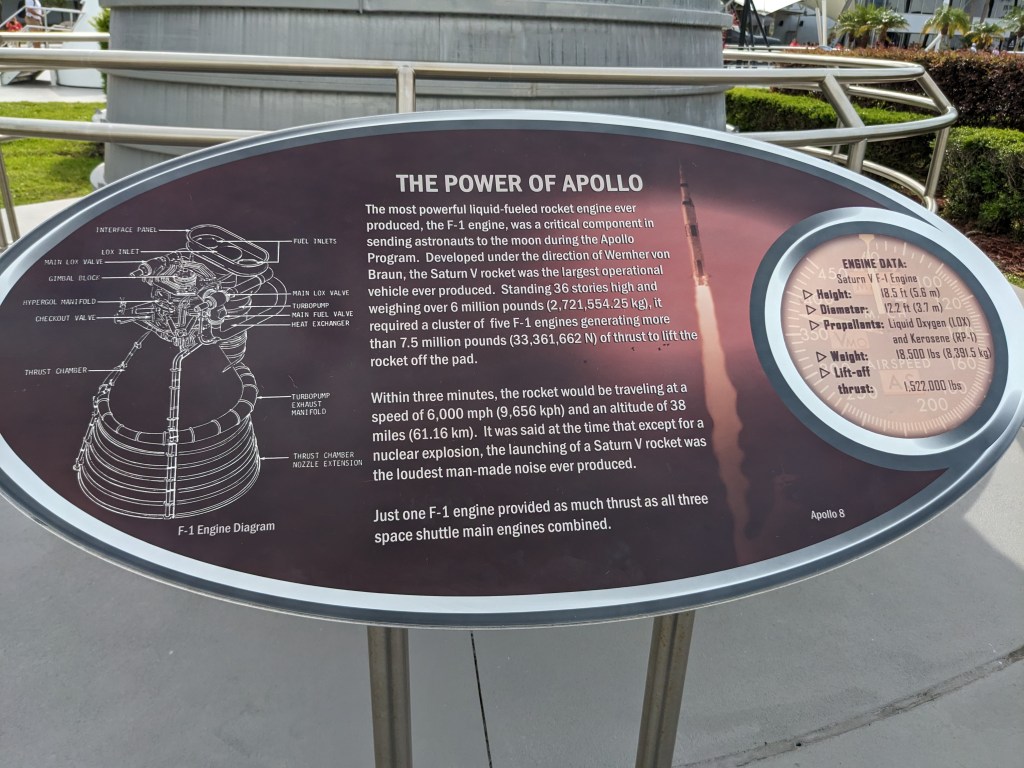
I’m not a graffiti’ist, but if I’d had a sticky note in my purse I would have left a comment on this sign, which is out of date since SpaceX’s Starship launch last week:
I duly started on my tour at 10:30, on an air-conditioned coach bus that took us out near to the launch complexes. I was hoping to see a rocket actually on the pad, but it wasn’t out there yet. SpaceX is supposed to launch a Falcon Heavy on Wednesday evening (basically three Falcon 9’s strapped together for bigger payloads). I would LOVE to see it launch, but as I said, the weather this week doesn’t look good and Wednesday night is worst of all. I’m not holding my breath.
I’ve watched launches on TV and heard announcers referencing the different launch pads, but our tour gave us a great overview, literally, by taking us to a four-story-high viewing deck about a mile away from them. (Nobody’s allowed to watch launches from there because it’s too close for safety.)

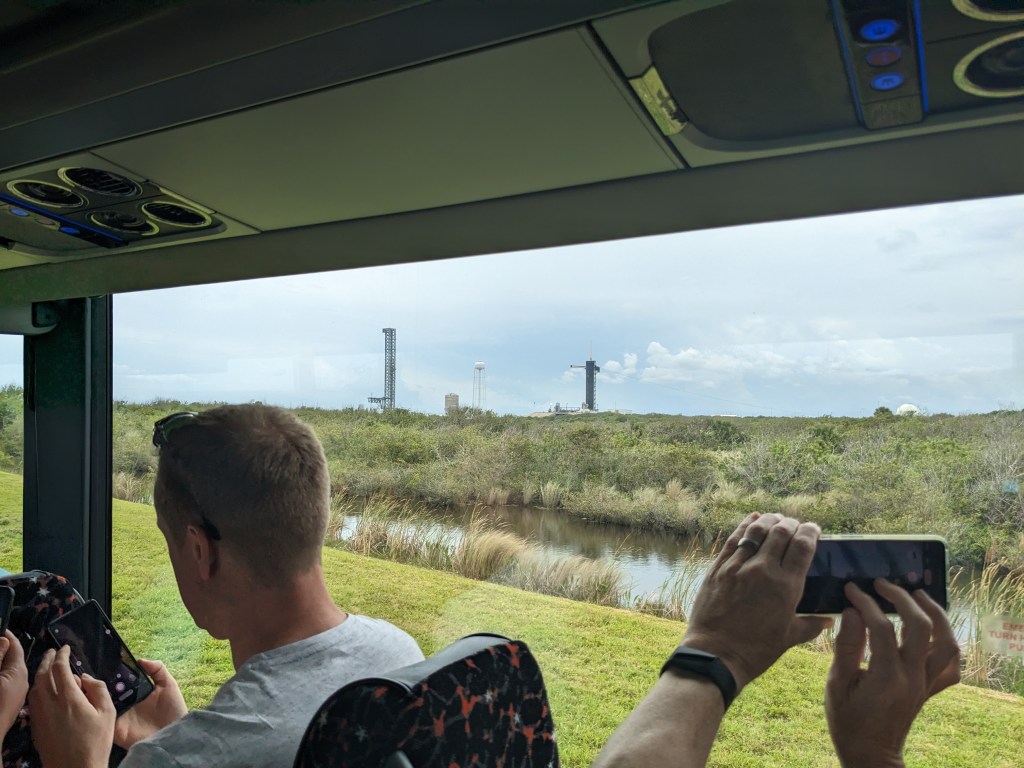
Launch Pad 39A is historically where the majority of the Apollo and Shuttle missions launched. These days it has been wholly given over to SpaceX, which has remade it according to its needs. They’ve got a big assembly shed there (where, we were told, the Falcon Heavy is currently being prepared). The black tower on the left is where the Falcon 9/ Dragon and Falcon Heavy missions launch. For crewed missions, there is actually a zip line leading from the tower to the ground in case something goes dreadfully wrong and the crew needs to escape without waiting for an elevator — a safety system they’ve never had to test. The tower on the right has never been used yet, but it is being prepared for Starship — it’s a twin of the tower in Boca Chica, Texas, where last week’s test launch happened. You can see why they want to get things right in Boca Chica before they try launching from Pad 39A! Destroying their whole complex with debris would be a very bad idea. Our tour guide mentioned that the two Starship towers don’t have flame channels under the pad (like the main tower at 39A and all the other launch pads) and that, judging from the amount of damage in Boca Chica from the launch, Space X is going to have to rethink that and design something.
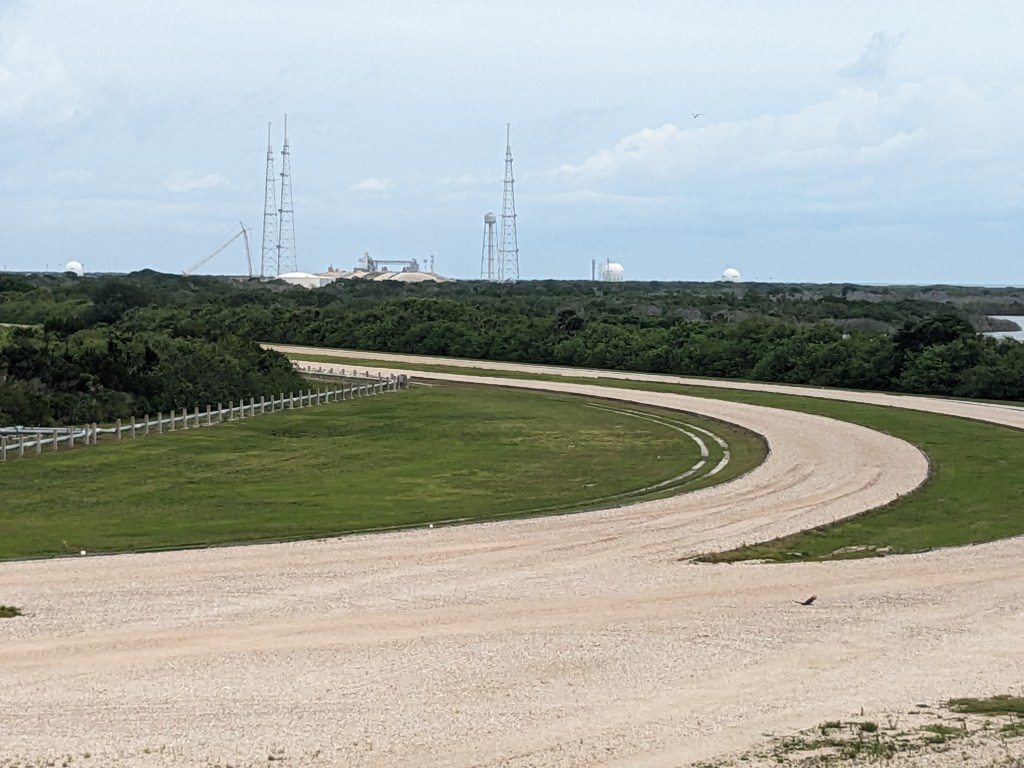
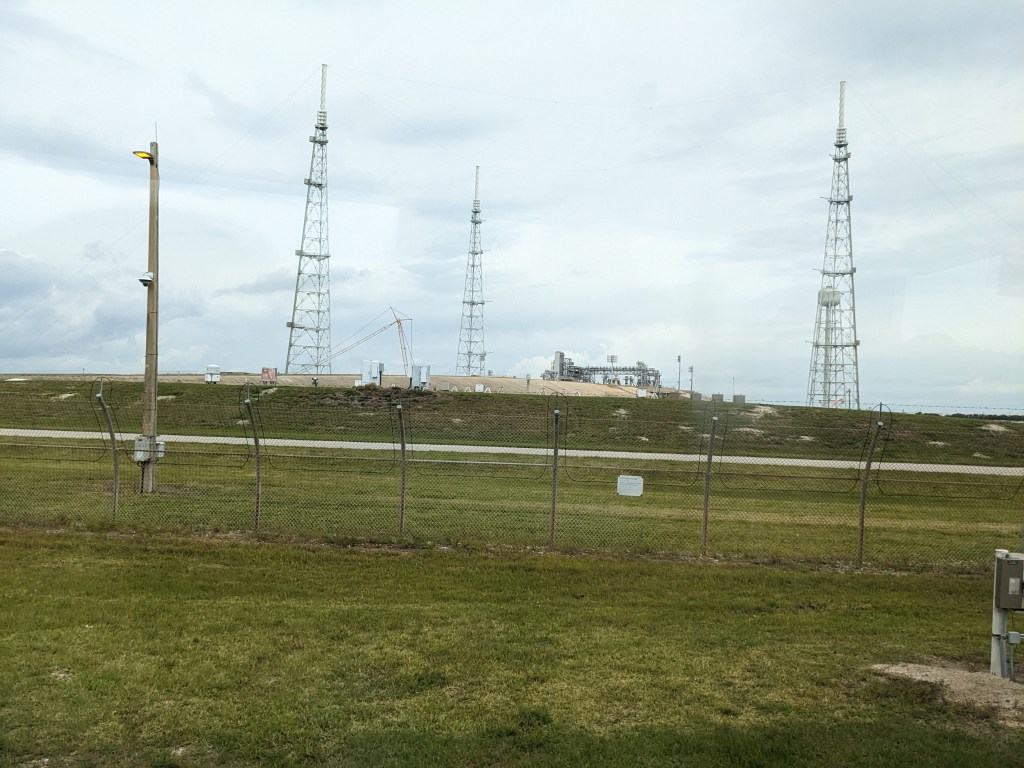
Launch Complex 39B also saw its share of Apollo and Shuttle launches. These days it is dedicated to SLS/ Artemis, NASA’s own in-house moonshot program. The uncrewed Artemis 1 launched from there last fall, and a crewed Artemis 2 mission is supposed to launch from there in 2024 and fly around the moon, followed by an Artemis 3 moon landing in 2025. The towers there are lightning rods; the actual launch tower is mobile and was set up a couple of miles away next to the Vehicle Assembly Building at the moment. The tower and the SLS rocket itself come out to the pad on the Crawler, a massive piece of machinery that you can see briefly in the movie Apollo 13 (in the scene where Jim Lovell gets called into the office to be told that Charlie Duke has the measles). The big double gravel track is the surface on which the Crawler gets to the pad — each of its treads takes up one of those tracks, so that gives you some idea how massive it is.
Since KSC obviously needs a lot of undeveloped land around it for safety, the majority of its grounds (not actually occupied by buildings) are designated as a wildlife refuge. (On our bus drive, I saw a couple of alligators, egrets, a bald eagle’s nest, and an armadillo.) One of the common species there is the Gopher Tortoise… we saw one calmly watching us from his burrow when we stopped at our second vantage point of the 39 A and B launch complexes.
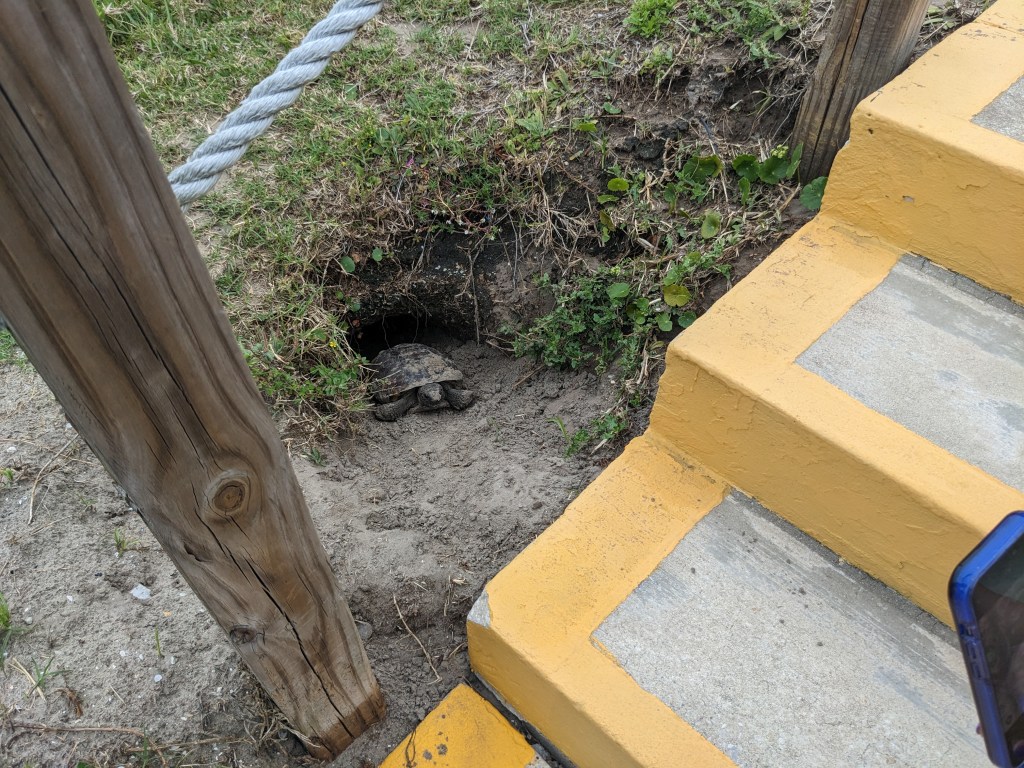
Our tour guide told us that the tortoises have a bad habit of getting on the Crawler Track, and people walk ahead of it to gently move them off so they don’t get crushed. But if the tortoise is walking the same direction as the Crawler, they don’t bother, because the tortoises move faster than the machine!
Launch Complex 39A and 39B are the Kennedy Space Center launch pads, but I learned that there are also a number of Cape Canaveral launch pads. I would have used those names synonymously, but it turns out they are two different things. (I think the guide said that KSC is NASA while Cape Canaveral is military.) We could see the various Cape Canaveral pads from our vantage tower, too. They are used for smaller routine rocket launches (satellites, etc.) and for a number of commercial companies (Blue Origin, ULA, Boeing, Relativity, and of course Space X) who are testing out new rockets.
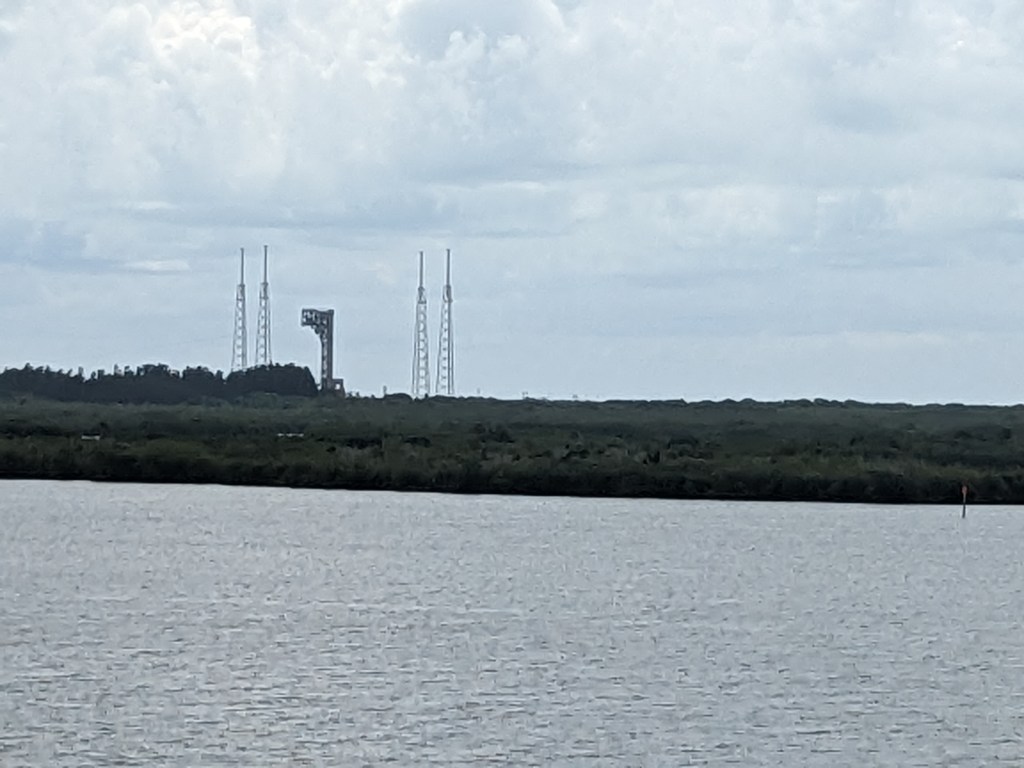
All of the contractors have their own complexes at KSC where rocket construction is underway. It really makes you appreciate the amount of innovation that is going on in this exciting era of space travel, especially if you remember the doldrums of the early 2010s. And it’s amazing to see it all connected with these launch pads where so much history has already been made. Our tour guide summed it up, and I liked what he said so much that I wrote it down to remember it: “Everything we do here is science fiction until we do it. Then it’s just what we do.”
Our tour also made a stop at the Vehicle Assembly Building and Launch Control (which are right next to each other). Unfortunately, we didn’t get to go inside, but we got a very nice view from the parking lot of “the tallest one-story building in the world.”
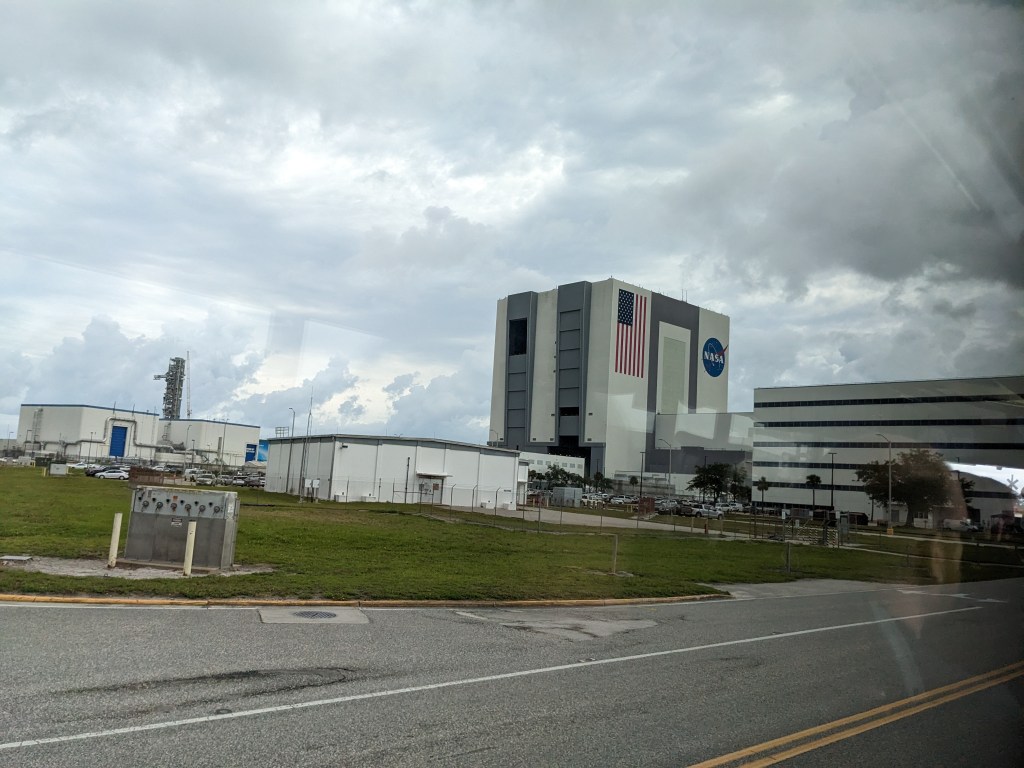
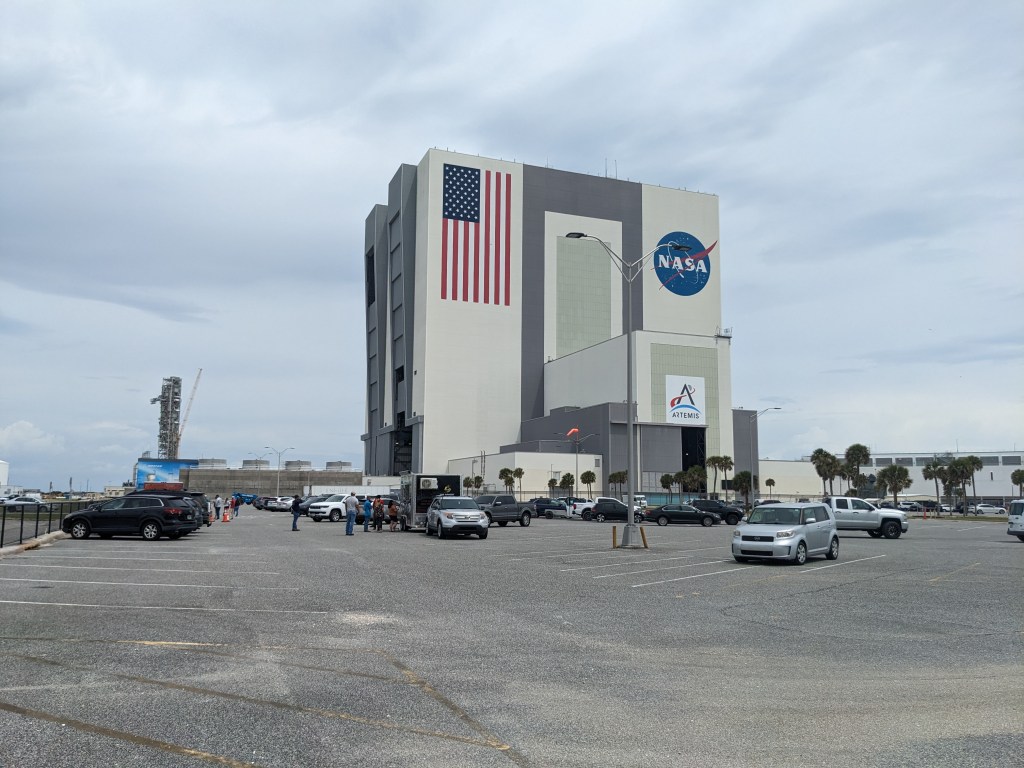
(You can see the mobile SLS tower on the left there.)
Our tour ended at the Apollo/ Saturn Center, which is (as the name would suggest) dedicated to the history of the Apollo program. Like JSC, they’ve got their own Saturn V rocket displayed on its side in a huge building. You can’t see it quite as well from the sides as you can at JSC, but you can walk right under it.
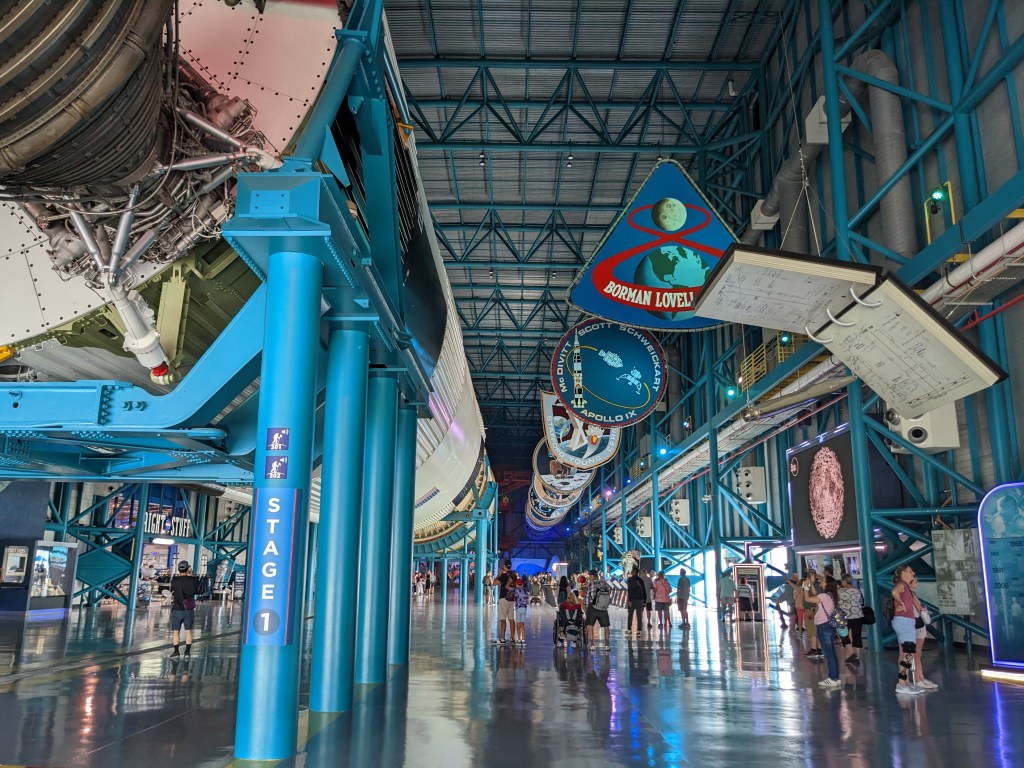
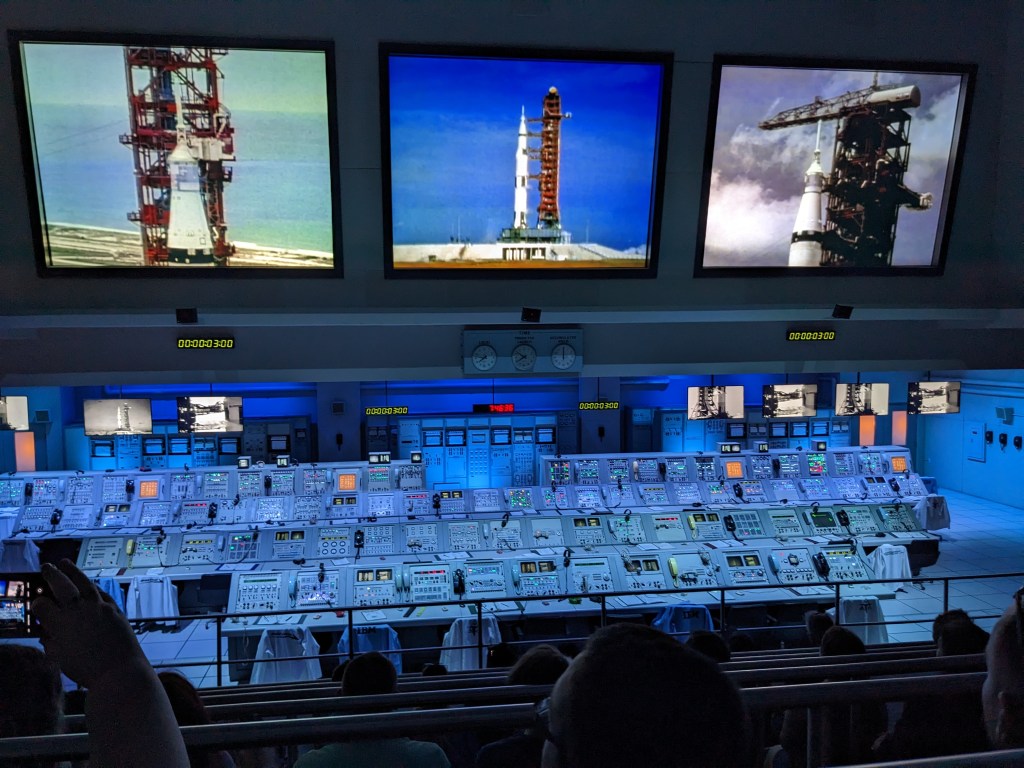
They also have the actual Launch Control consoles from Apollo 8, with a cool reenactment of the launch. (Apollo 8 was the first to fly a crew around the moon.)
There are a bunch of historic artifacts, including the Apollo 14 capsule, Alan Shepherd’s Apollo 14 EVA suit still covered in moon dust, and the gantry on which the Apollo 11 astronauts walked from the launch tower to their capsule (which you can walk yourself).
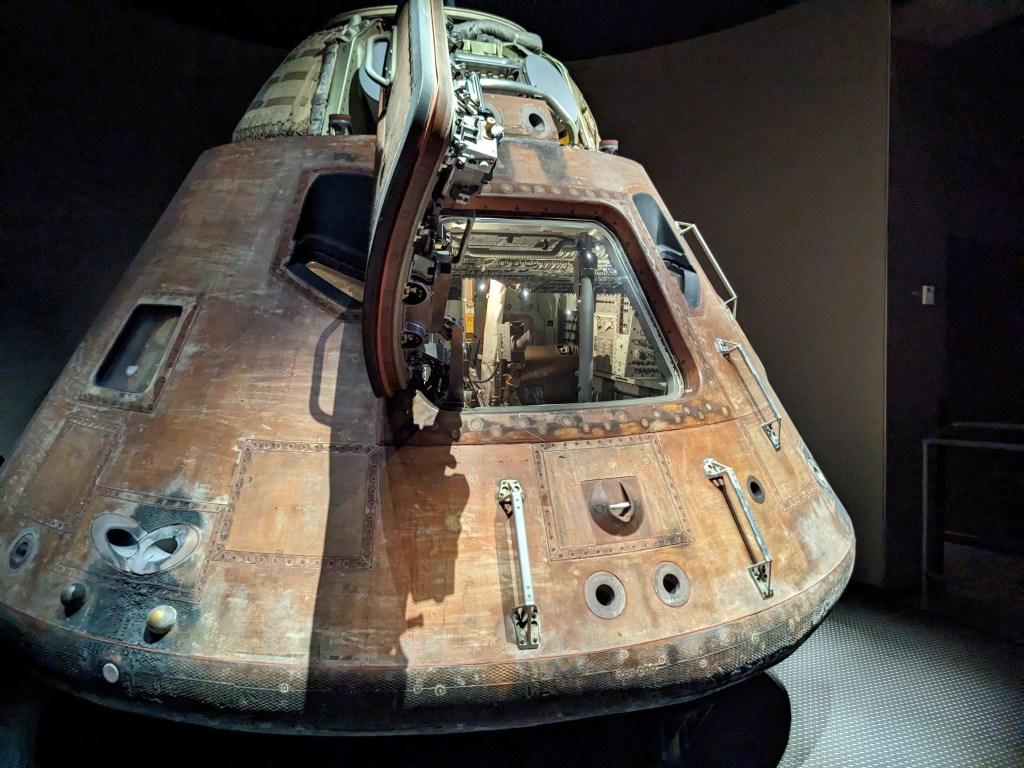
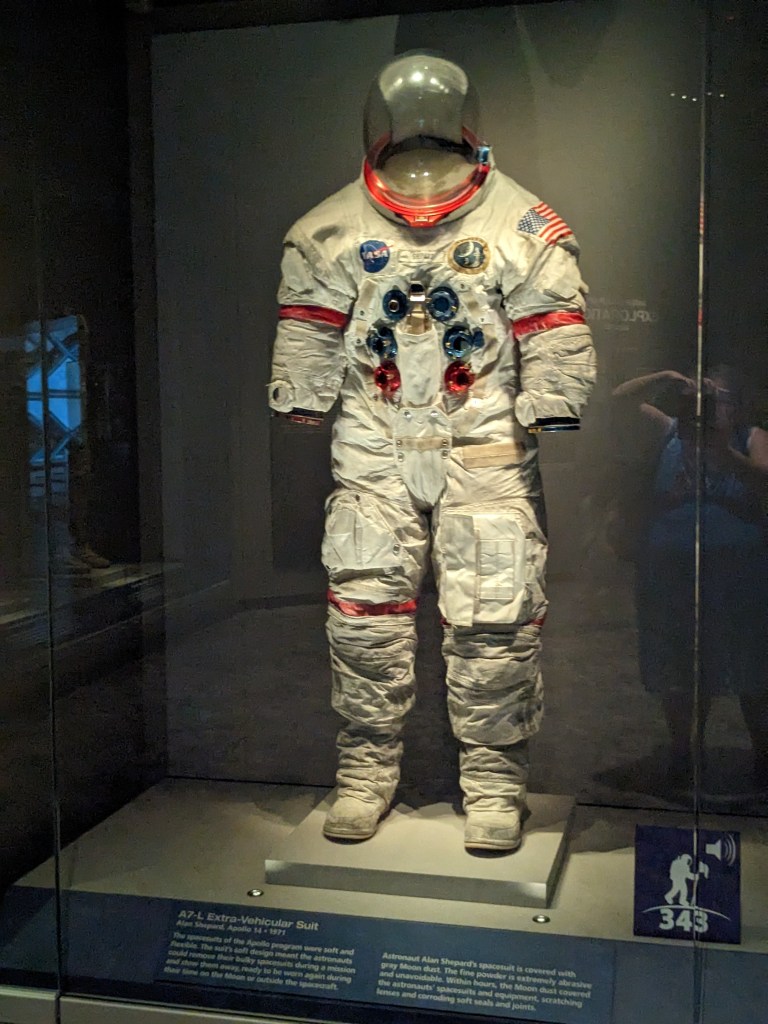

I caught a regular tour bus back to the main visitor complex and followed our tour guide’s advice to start with the Shuttle Atlantis building. When the shuttle program ended, the three surviving shuttles got sent to various destinations to become tourist displays. (JSC got a training shuttle, which is nice because you can walk inside it, but not one of the real shuttles… Houston’s still a little salty about that.) KSC got Atlantis and built a whole building around it dedicated to the history of the shuttle program. They definitely have a flair for the dramatic. When you go into the building, you walk through a two-part theater presentation that dramatizes the history of the shuttle program starting with its first conception in 1969 to its first launches in the early 1980s. The second part of it surrounds you with the sights and sounds of a Florida swamp at dawn and the launch pad a couple of miles away in front of you, as if you’re watching the first shuttle launch. It takes off with a roar, and then the screen goes translucent and lifts away to reveal the actual Atlantis behind it.

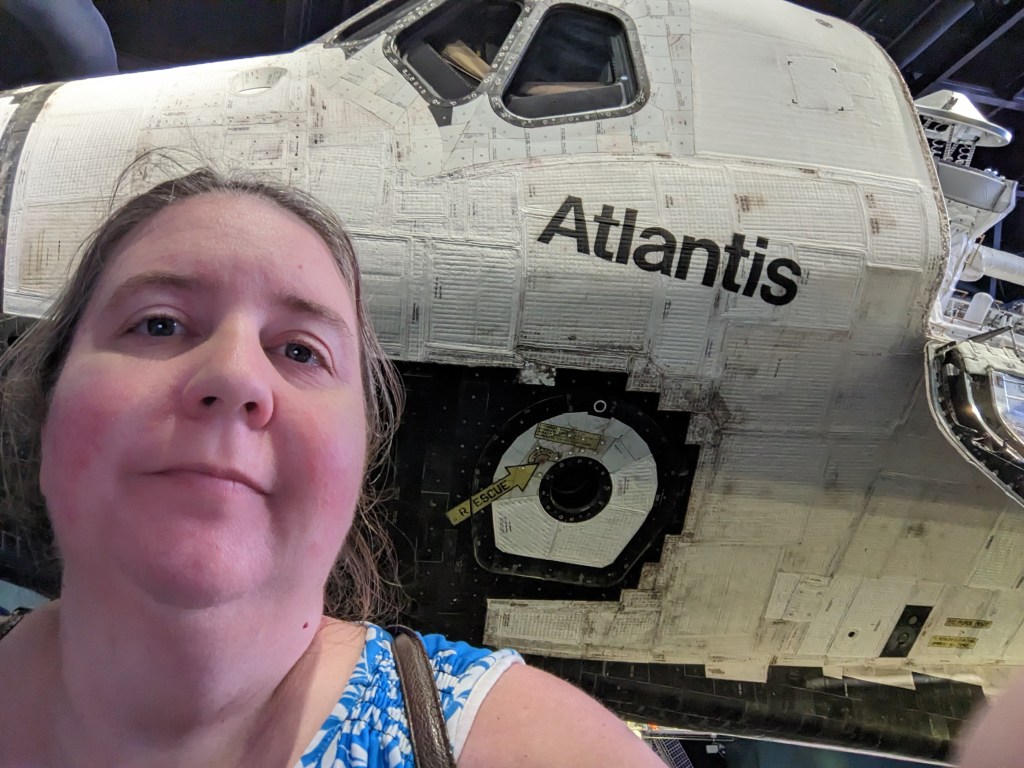
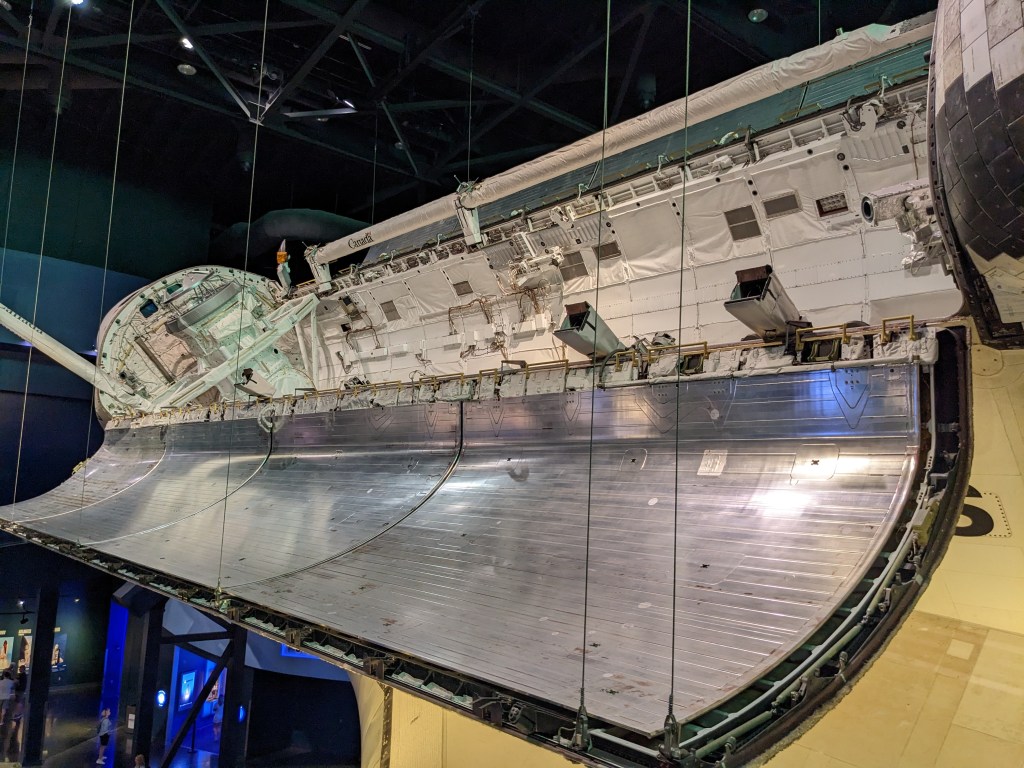
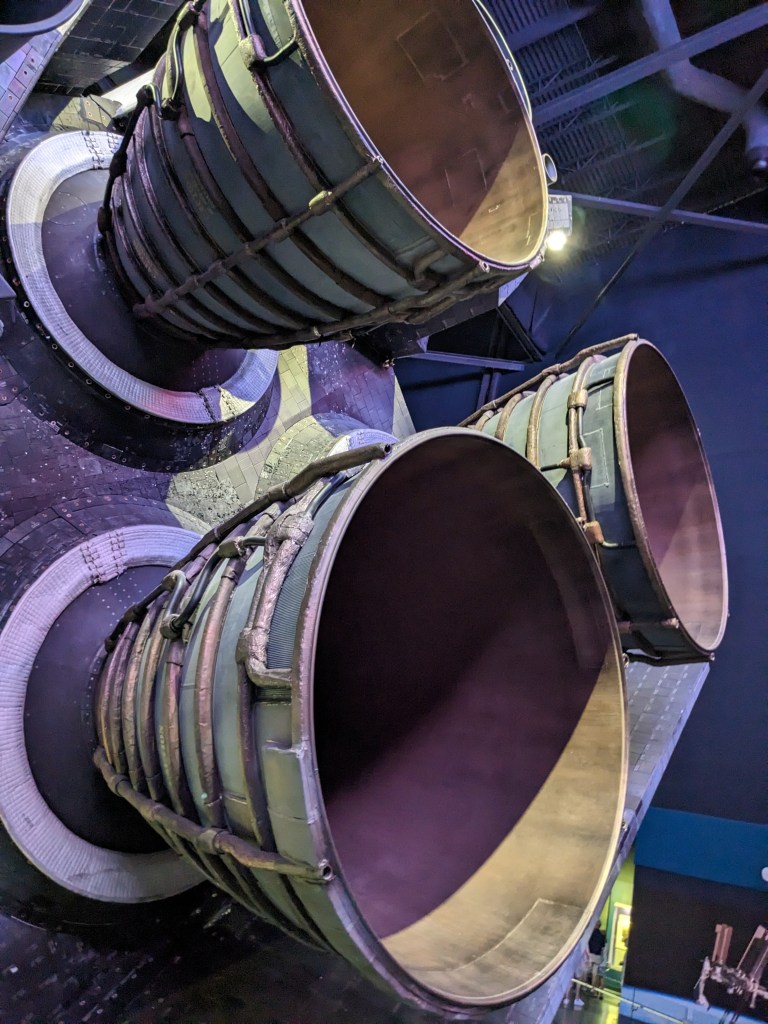
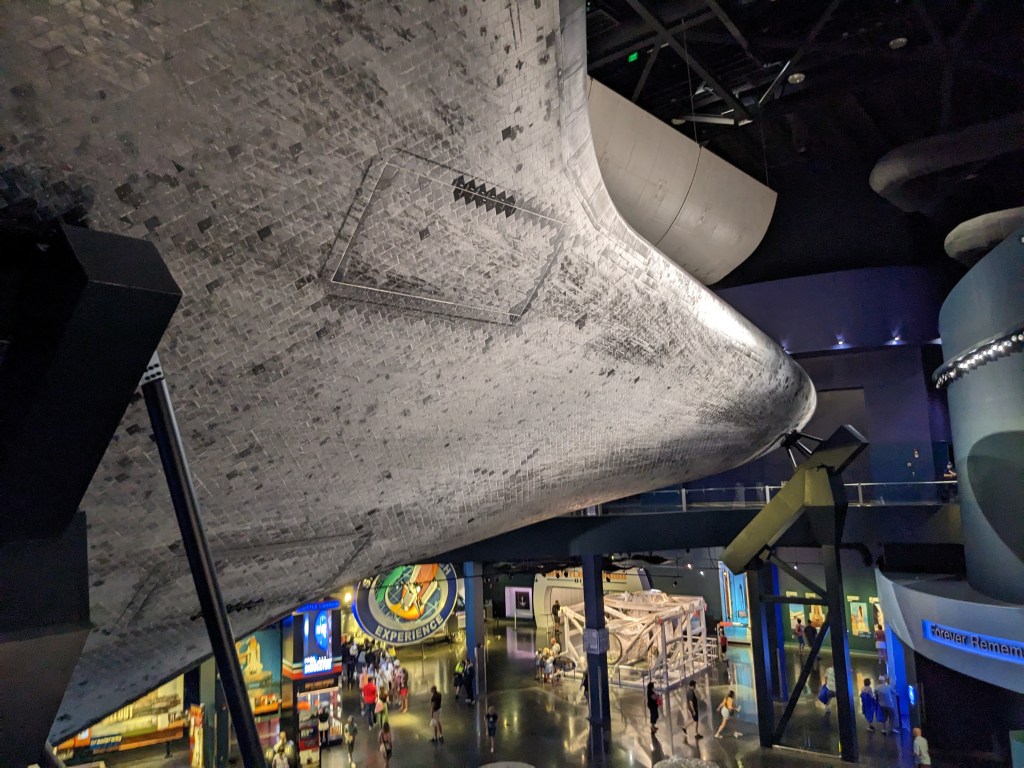
There were a bunch of other cool exhibits in the building, including a shuttle launch simulator, but it was already after 4pm and I was simply physically and mentally done for the day. And there were whole buildings in the main visitor complex (including an “Astronaut Training Experience”) that I hadn’t even set foot in yet. Today Me was feeling very grateful to Former Me for having the foresight to buy a two-day ticket. I plan to get work done for my clients tomorrow, and go back again on Wednesday to see more of what I missed. And if, by some chance, Space X *DOES* get to launch its rocket, I want to be there to see it!


 Vivian's RV Vignettes
Leave a comment