My National Parks tour called for me to move on from Voyageurs in Minnesota to Badlands in South Dakota, but the town of De Smet, South Dakota was more or less right on my path, so of course I had to plan a stop there.

For those who don’t know, De Smet was the home for many years of American writer Laura Ingalls Wilder (1867-1957) who was known for her autobiographical “Little House” book series about her family’s adventures as pioneers on the American Western Frontier. The books were written in the 1930s and 40s when that way of life had already nearly disappeared, and after Laura’s death, they were adapted into a wildly popular television series. I grew up with both the books and the show, so Laura feels like an old friend, and I wanted to go see where the stories happened.
Laura was actually born in Pepin, Wisconsin, and lived in Walnut Grove, Minnesota before moving to South Dakota with her family at the age of 13. They were the very first settlers of the town that is now De Smet, but within a few months they were followed by a rush of homesteaders lured by the promise of a free farm, and the little town on the prairie sprang up almost overnight.
I am continuing my practice of listening to audio books as I drive that relate to the area I’m driving through, so I listened to “Little House in the Big Woods” as I drove across Wisconsin and “On the Banks of Plum Creek” in Minnesota. I listened to “By the Shores of Silver Lake,” about the Ingalls family’s journey from Minnesota to South Dakota, as I was driving from Minnesota to South Dakota, which felt cool but a little surreal.

De Smet has carefully preserved what it can of places connected to its most famous citizen. The land that Charles Ingalls chose as his homestead is now a public attraction with replicas of the buildings he built and exhibits about the pioneer way of life. (Fortunately for me, it also has a small RV campground, so I was able to park in sight of the reconstruction of the Ingalls’ claim shanty.)
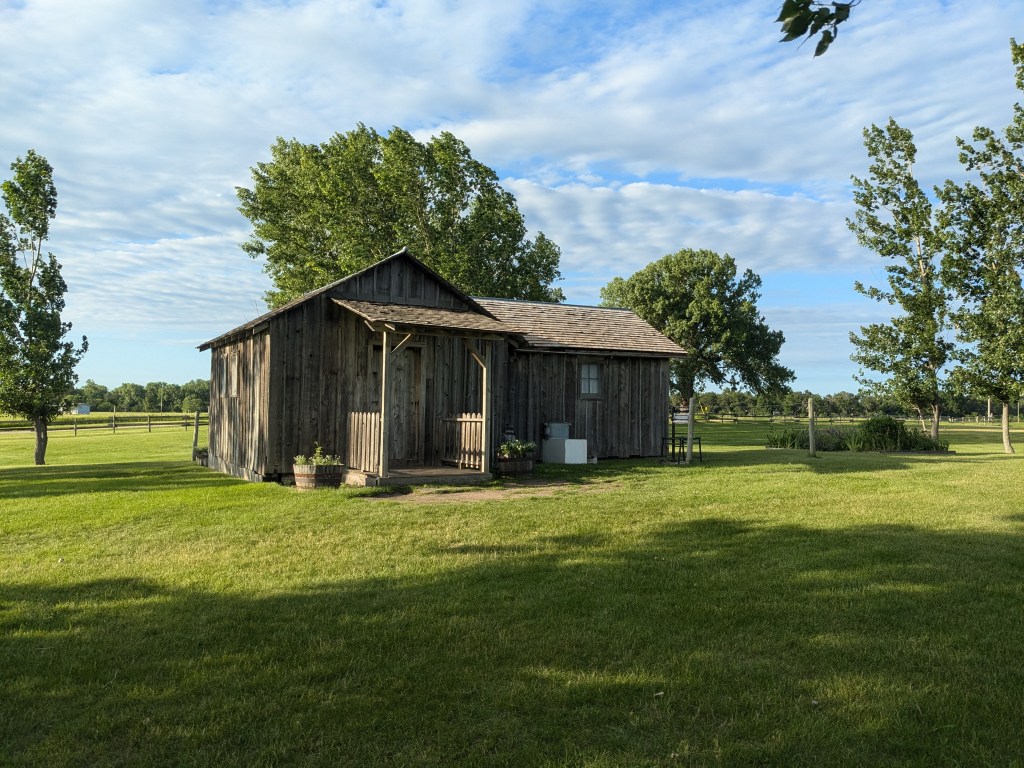

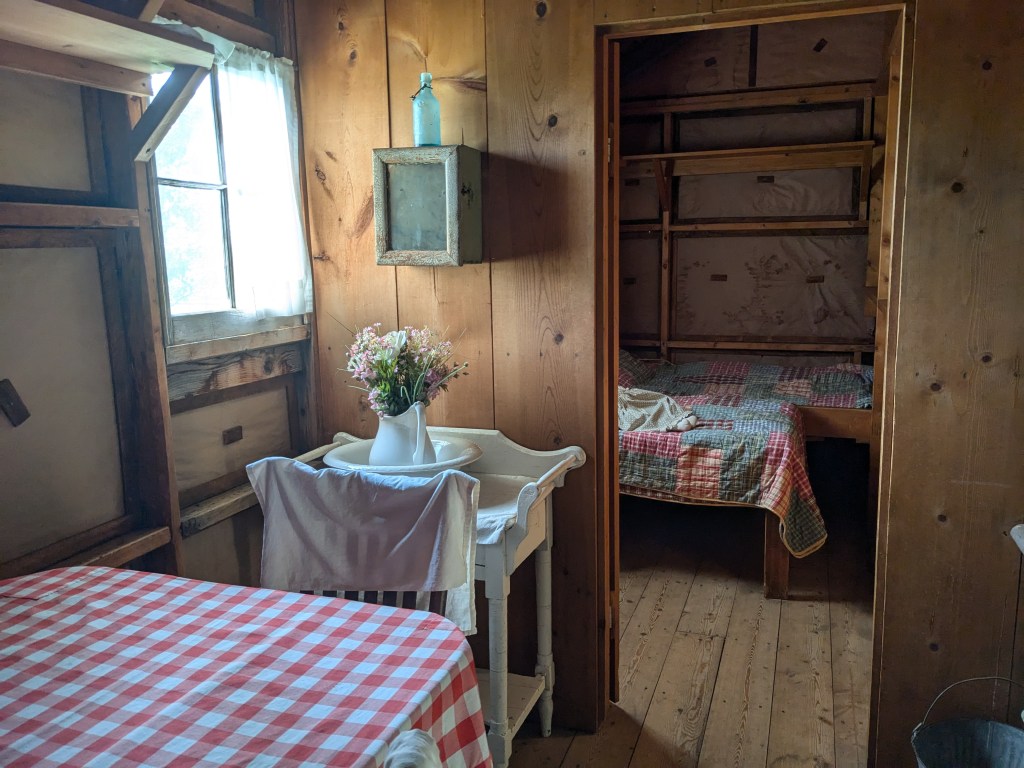
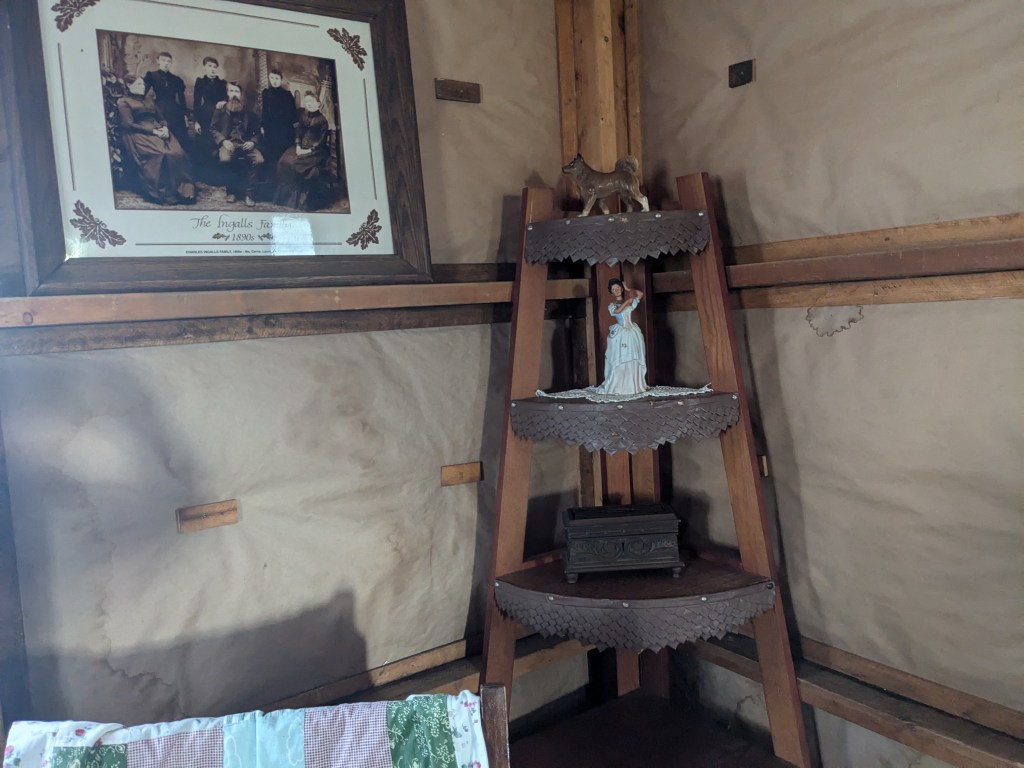
They included lots of nice little details, including the “whatnot” shelf that held Ma Ingalls’ prized china shepherdess (I’m assuming a replica).
The whole place was SO tiny, especially for a family of six… and I can’t even imagine how crowded it was in “phase 1” when all of them were crammed into the front room, before the other rooms were added!
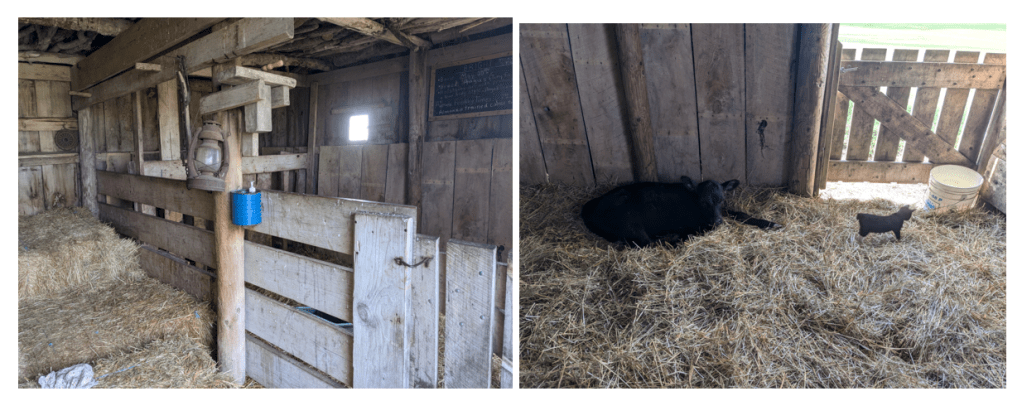
There was a replica of the sod stable, too, complete with a live calf, chicken, and a family of kittens. I didn’t have a kid with me to participate, but I understand the docents do a lot of activities to let kids experience pioneer life on the farm.

The property also has some other historic buildings that have been moved there to preserve them, including an old church and schoolhouse. But the one thing “original” to the Ingalls family was five patriarchal cottonwood trees that Charles Ingalls planted himself, still alive and growing.
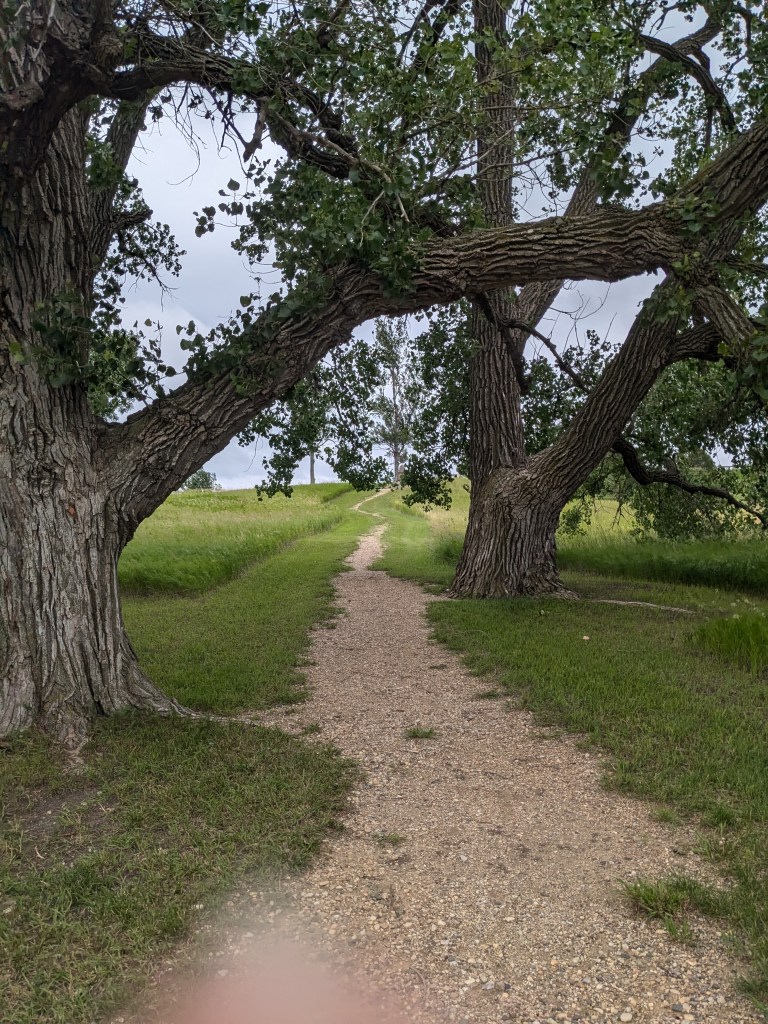
One thing I learned from the exhibits was that only about 20-33% of homesteaders actually made good on their claims. To get a “free” farm, a homesteader had to file a claim and then live on the land at least six months out of the year for five years, while planting at least 10 acres of crops. At the end of the time, the land would be theirs. It was a lot harder than it might sound! Laura explained the homesteaders’ dilemma in her books. The land might be “free,” but if you didn’t already have money to buy supplies to last you for a year, construction materials for some kind of shelter, farm tools, and seed to plant, it was impossible to survive on the harsh prairie for a whole year while you were waiting to make your first crop. To meet the six-month requirement, women and children would end up living in tiny shanties miles from the nearest neighbor during the spring and summer months while their husbands and fathers worked jobs in town or on the railroad to support them. The men would come out to the claim to plant crops, and the families would tend to them. But the crops failed often as not. The Ingalls family lost one of their first oat and corn crops to a swarm of blackbirds. It’s easy to see why a lot of homesteaders couldn’t stay the course.
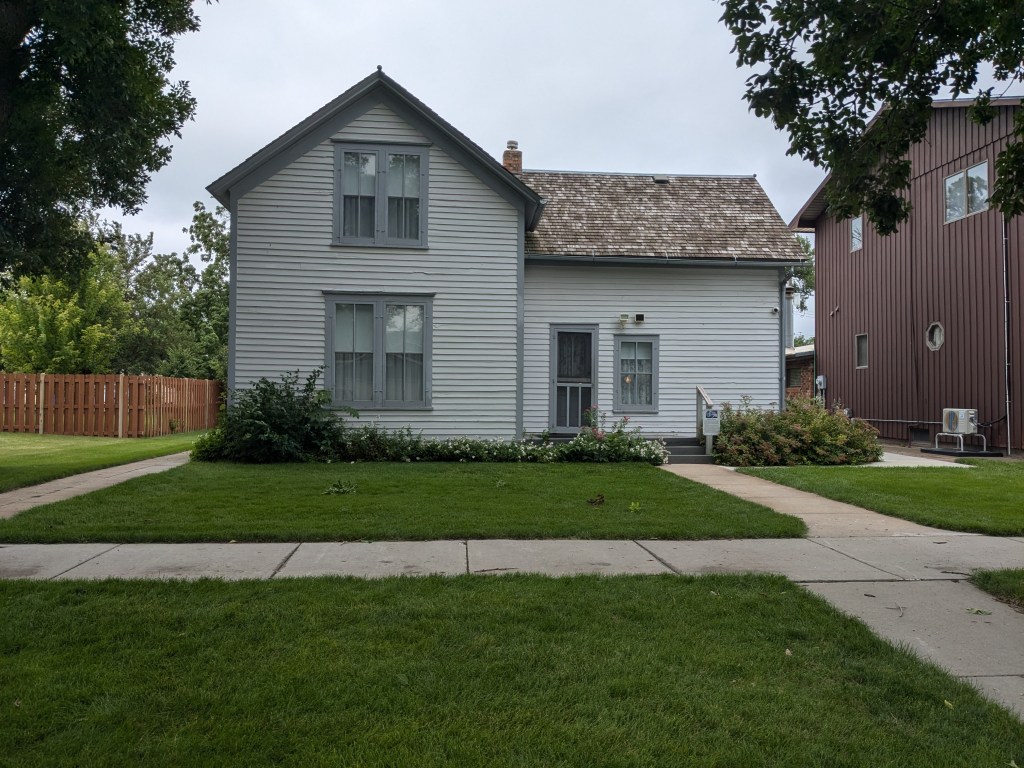
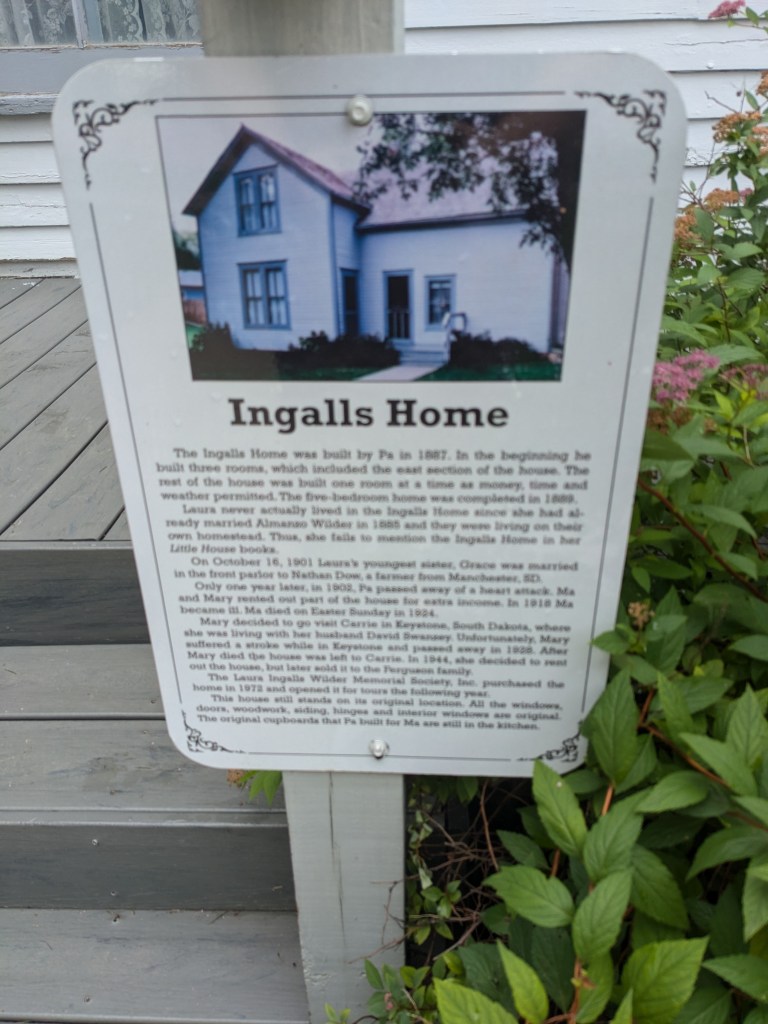
The Ingalls family beat the odds and proved up on their claim (shortly after Laura married her husband Almanzo). But Charles Ingalls must have realized that he was never going to make a reliable living as a farmer in that environment. Once the land was his, he turned around and sold it, and built his family a house in town in De Smet. Amazingly, that house is still there, and open to public tour! So of course I had to go see it.
But first, I saw a couple of other original buildings from the books, including the Surveyor’s House where the Ingalls family stayed during their first winter in De Smet, and the first De Smet schoolhouse where Laura and her sisters went to school.
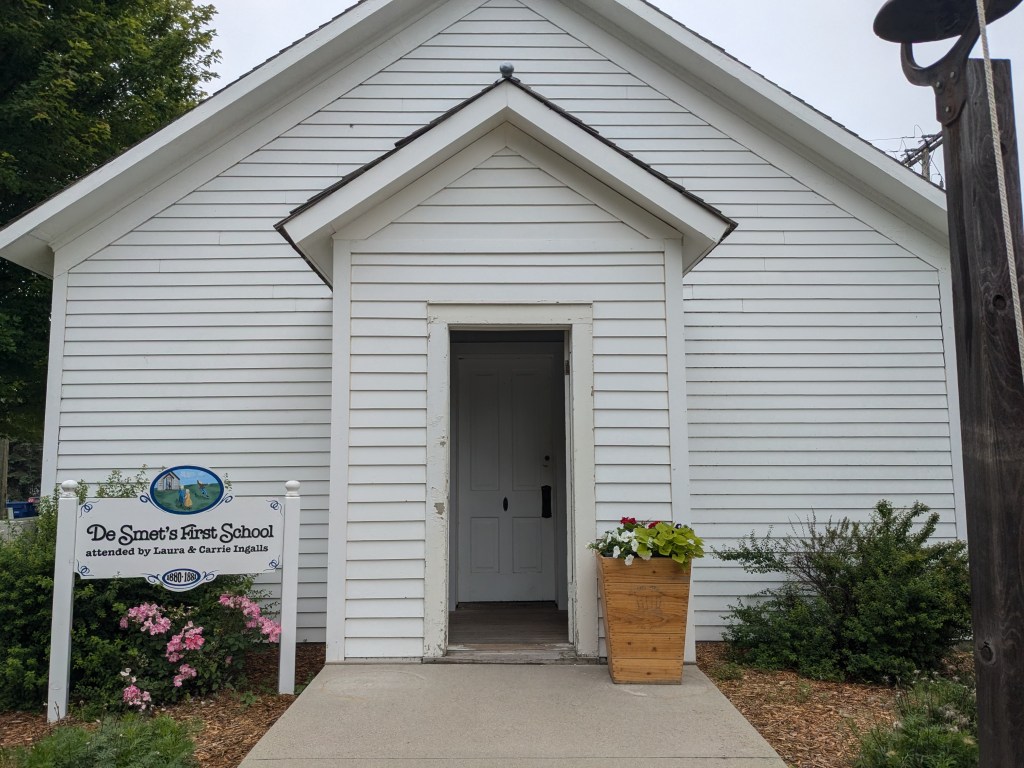

Then our tour guide took us over to the Ingalls House that Pa built with his own hands. It’s on a residential street surrounded by other houses, and it doesn’t stand out from the other more modern homes that much! It must have seemed like SUCH a step up from the tiny claim shanty.
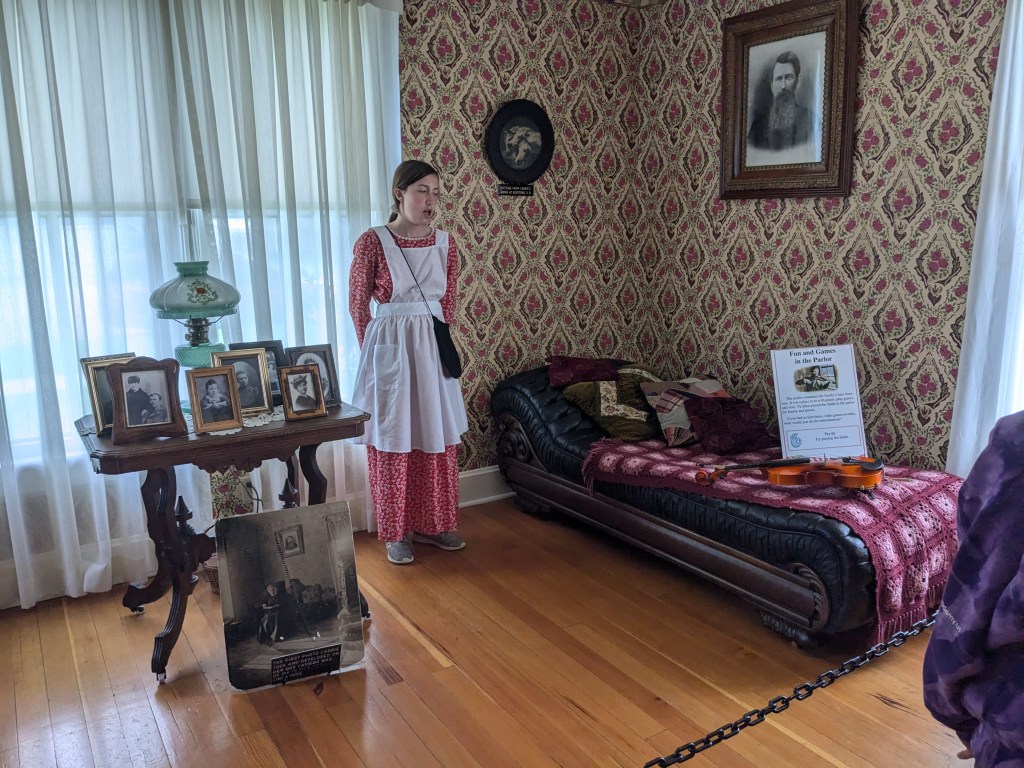
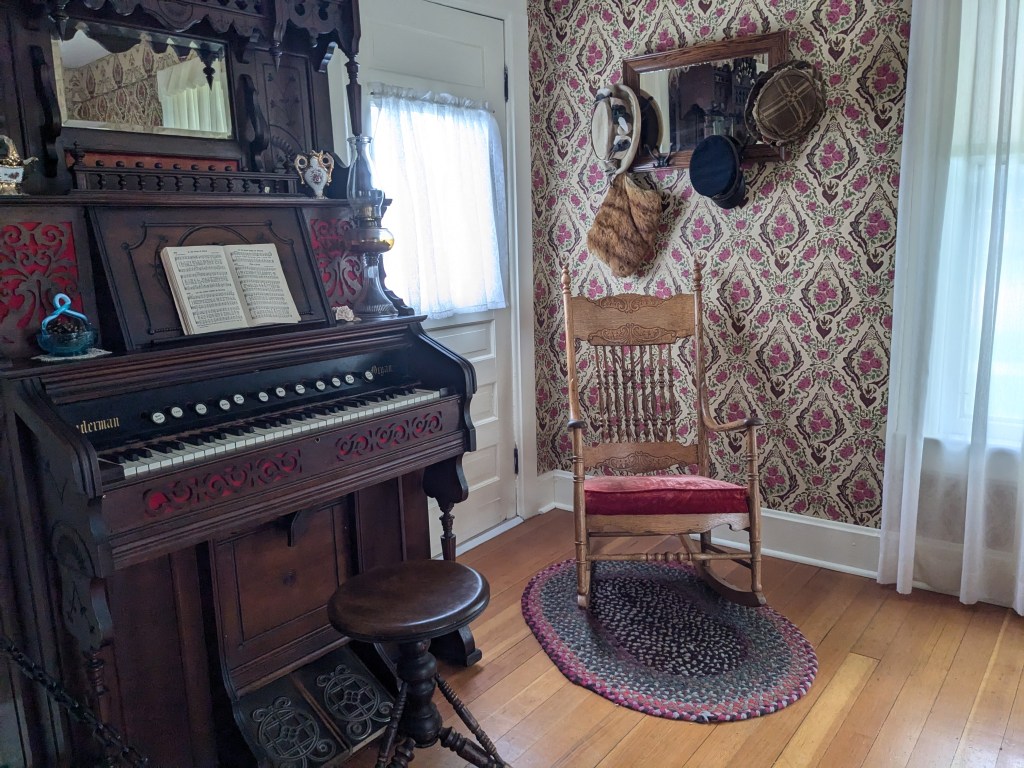
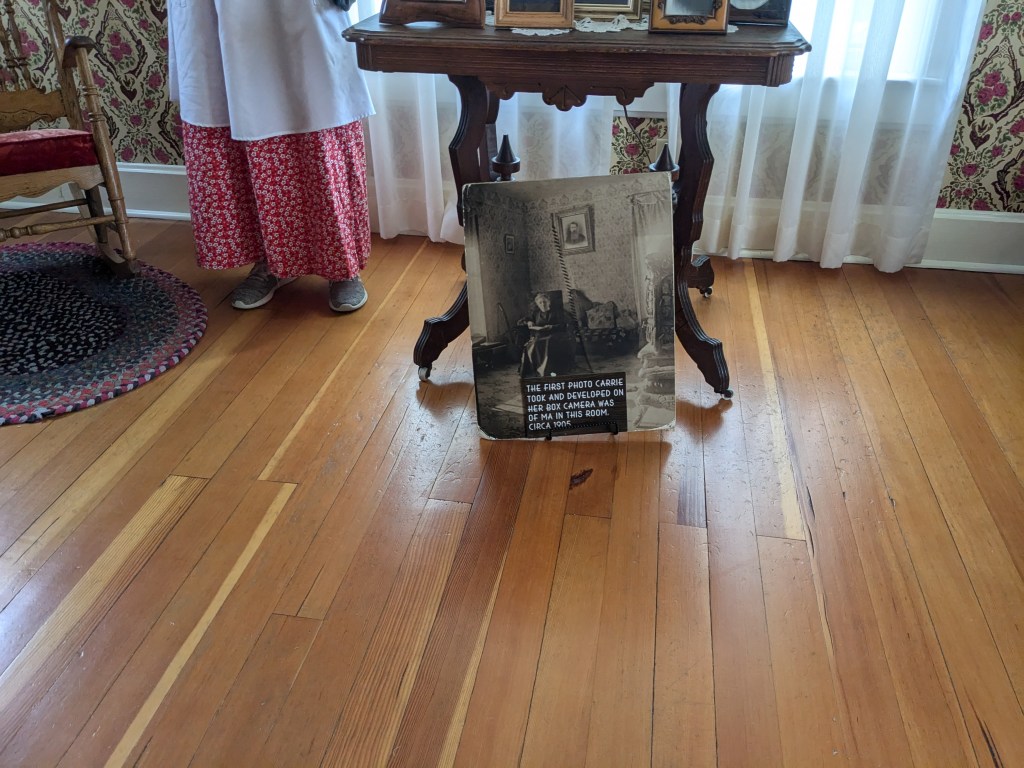
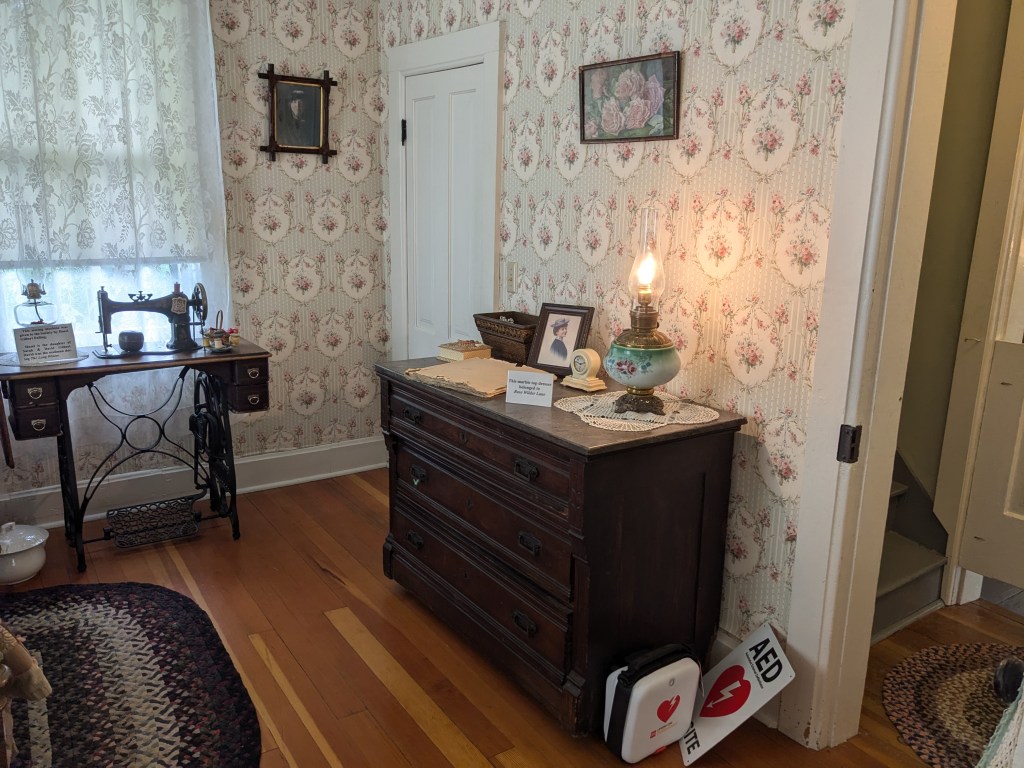
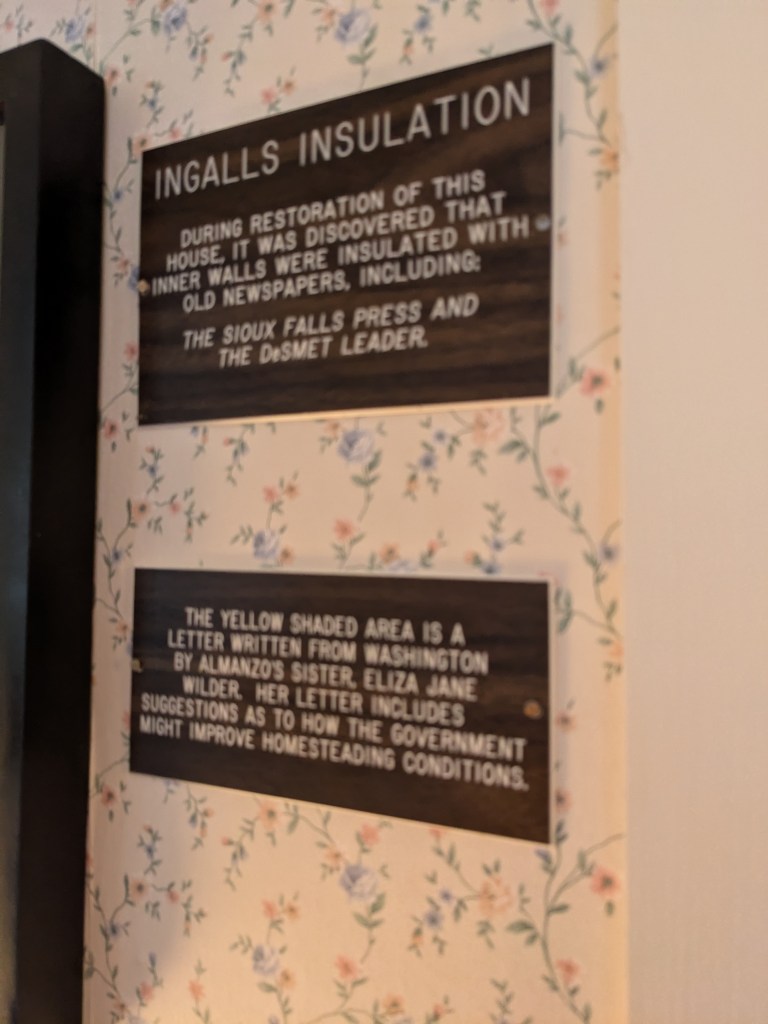
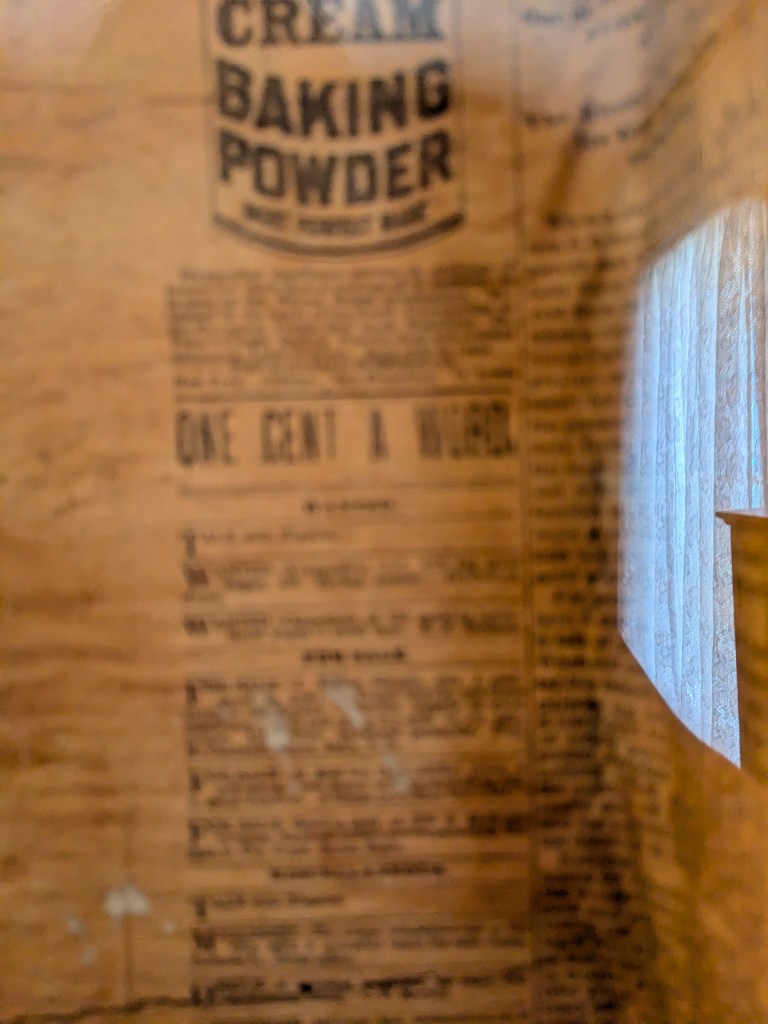
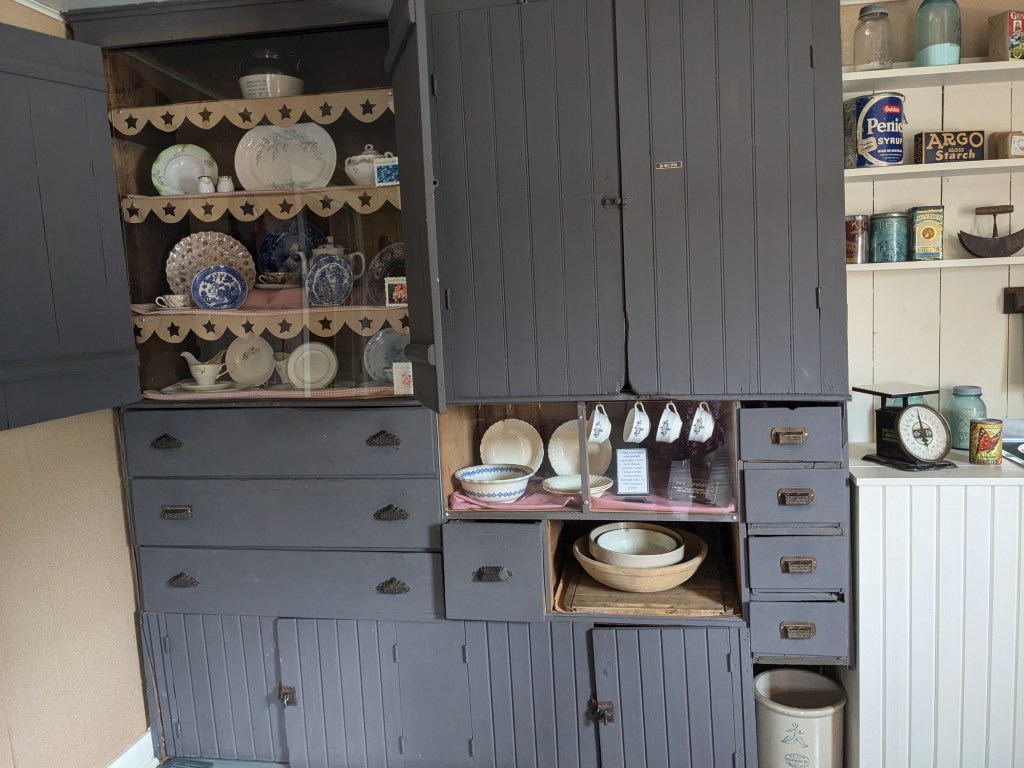
The tour guide also pointed out the Ingalls’ church just a block away, which Charles Ingalls helped build. It’s still an active church today!
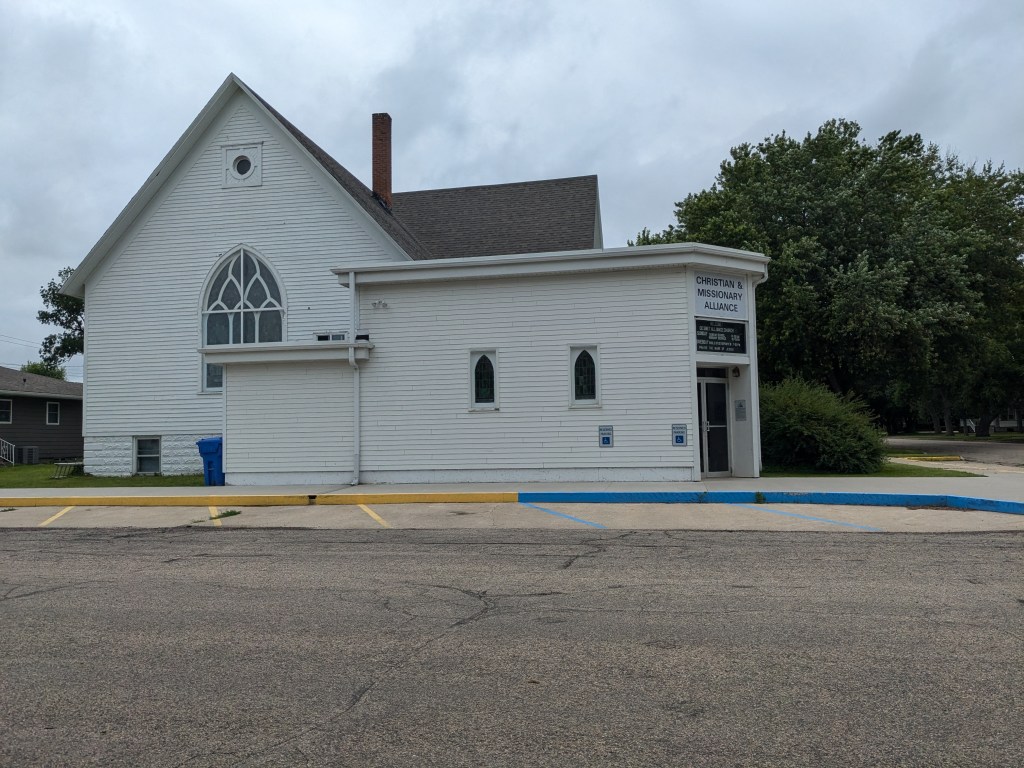
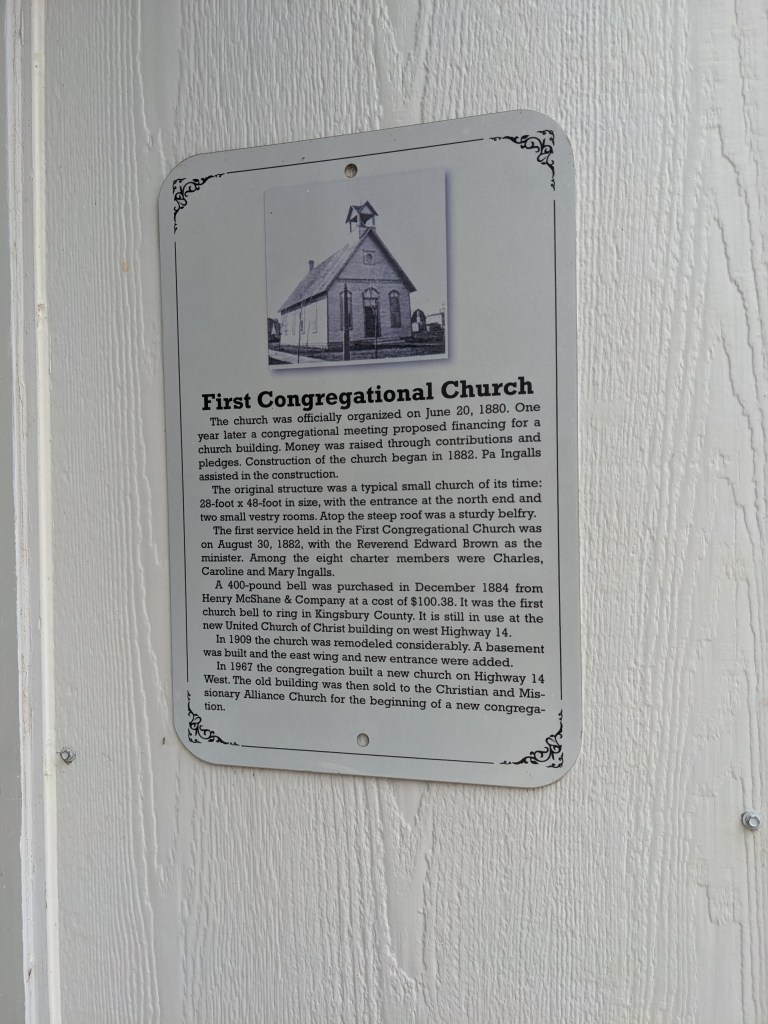
The Ingalls family endured a lot of hardship and tragedy in their lives. But as I was listening to the audio books, I was struck anew by the way their faith sustained them, and Laura’s particular gift for an unending sense of wonder and joy from simple natural beauty, togetherness with her loved ones, and her Pa’s gift for music. She was also skilled at describing all her varied and amazing experiences to give her audience a window into a different time and place with remarkable fidelity. In a humble way, I am trying to do the same with this blog so that my readers can experience America’s beauties along with me.
I left De Smet early the next morning for Badlands National Park, but I did have one short stop to make along the way. I had seen pictures of an amazing statue called Dignity of Earth and Sky that’s at a rest stop along I-90, so I had to stop and see it.
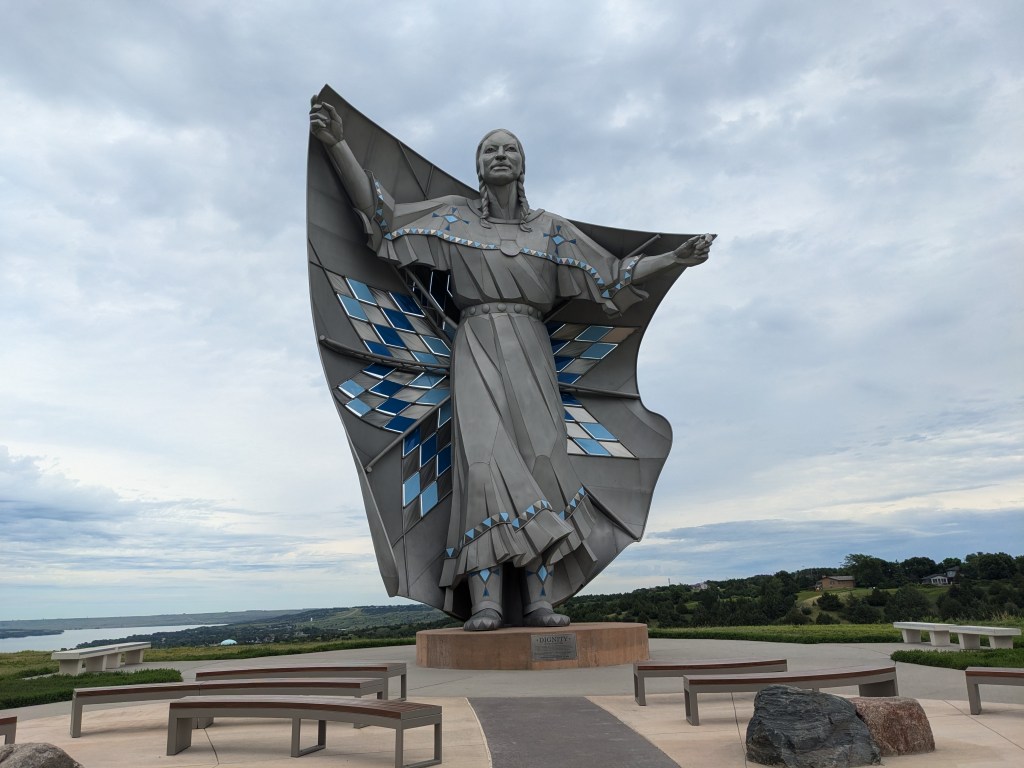
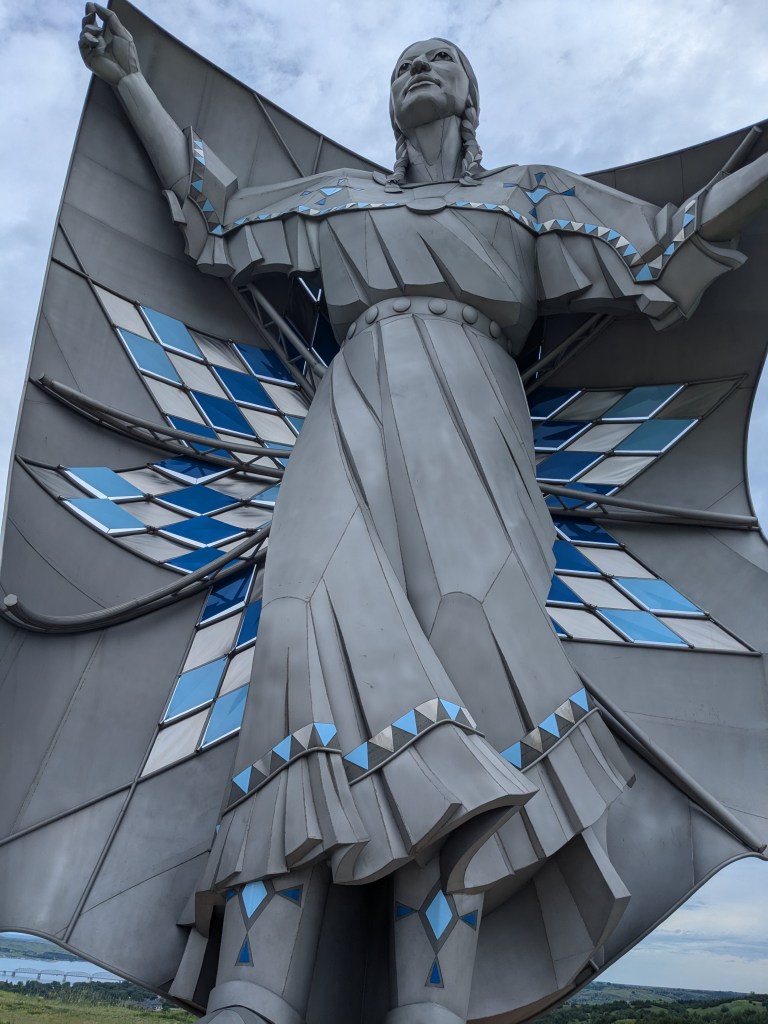
It’s an incredible tribute to the native peoples of the Dakotas.
 Vivian's RV Vignettes
Leave a comment