Once again I have fallen behind on blogging. I am already juggling to keep up with sightseeing, full-time self-employment with strict deadlines, and grad school. When push comes to shove, blogging becomes a low priority. But I’m going to try to get caught up now. I’ve decided that rather than do one mega-entry, I’ll break it down into smaller entries by location and just do three in a row.
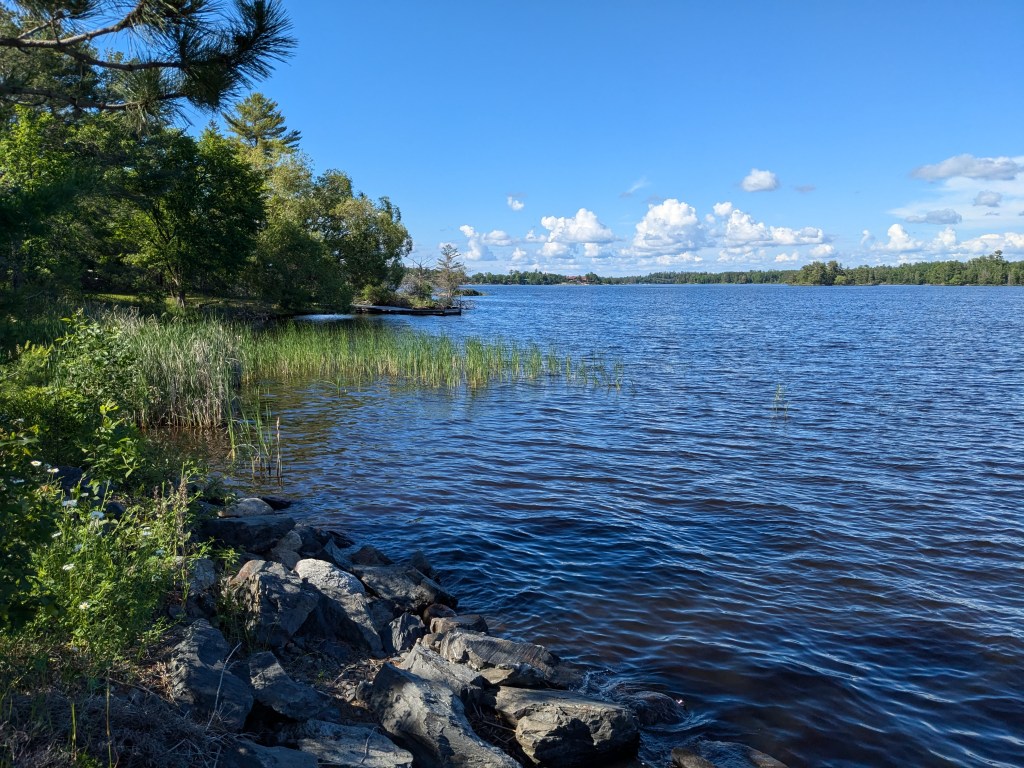
From Illinois, I headed up north to Voyageurs National Park in far northern Minnesota. I will admit to a little bit of superstitious nervousness about that drive. Last year, 12 miles into Minnesota just north of Duluth is where the wheels came off on my journey (literally — it started with a blown-out tire). Thankfully, this time I made it safely!
I camped just west of the park and just east of International Falls Minnesota, on the shore of Rainy Lake. Rainy Lake is actually the 16th largest lake in the U.S. (who knew?) and forms that part of the US-Canada border, so my campsite was only 2 miles from the (water) border crossing, and a few miles from the official land border crossings in Ranier and International Falls, MN. I saw a lot of Canadian shoreline across the way, but I didn’t actually cross the border myself on this trip.
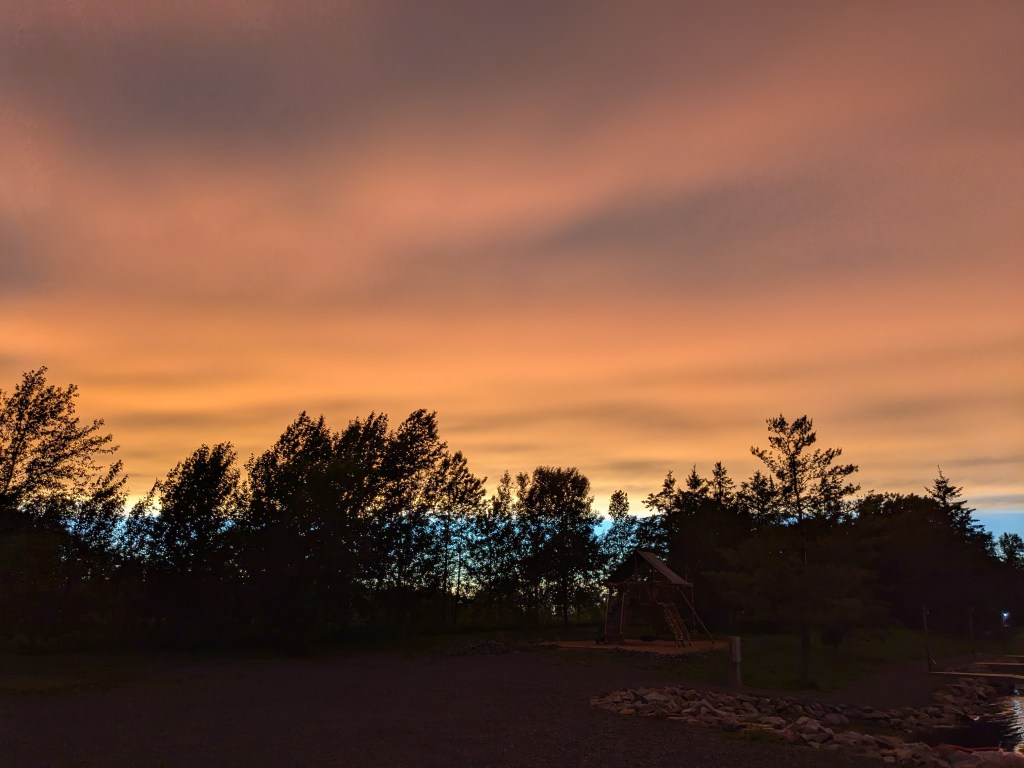
Being so far north, I got a lot of pleasant daytime temperatures and a little bit of chill at night — I got to use the electric heater I installed in my RV. The visible daylight was also insanely long; the last light didn’t fade until well past 10pm, and the sun came up extremely early.
Voyageurs is an extremely watery park. There are edges of it on the mainland (where the visitors centers are located), but much of it is a jumble of little islands plus the huge Kabetogama Peninsula. The peninsula is just barely a peninsula, connected to the mainland by a narrow neck, and it has no roads or car access. Pretty much only the way to get there is by boat.
Fortunately, I brought my kayak. My campground was connected to Rainy Lake by a short canal, with a boat ramp about 25 feet from the back of my RV where I carry the kayak… it doesn’t get much more convenient than that.
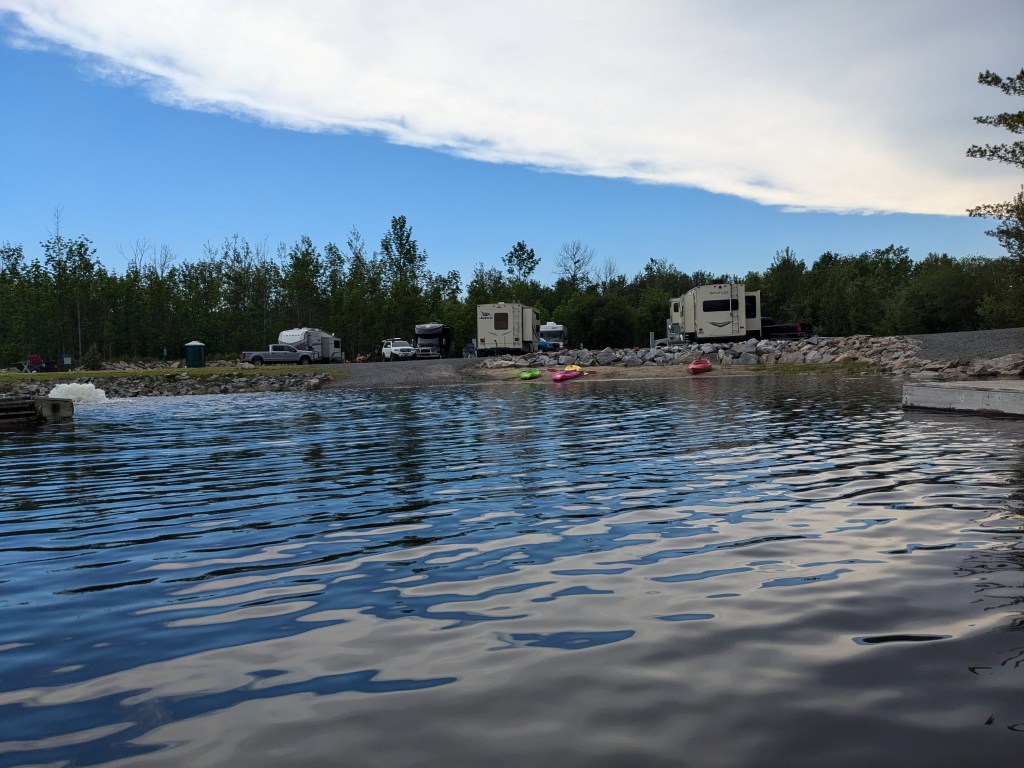
I did go for a short paddle on the lake soon after my arrival, but I was too far outside the park to actually kayak into it. Instead, I booked myself a boat tour from the Rainy Lake Visitors’ Center.
The boat took us out to Little American Island, where Ranger Peter told us about the history of the land and water that is now part of the park, from the Native Americans and early Voyageurs (French Canadians and others who transported furs by canoe at the height of the fur trade) to the settlers who came during the 1890s gold rush and formed logging settlements after the mining gave out.

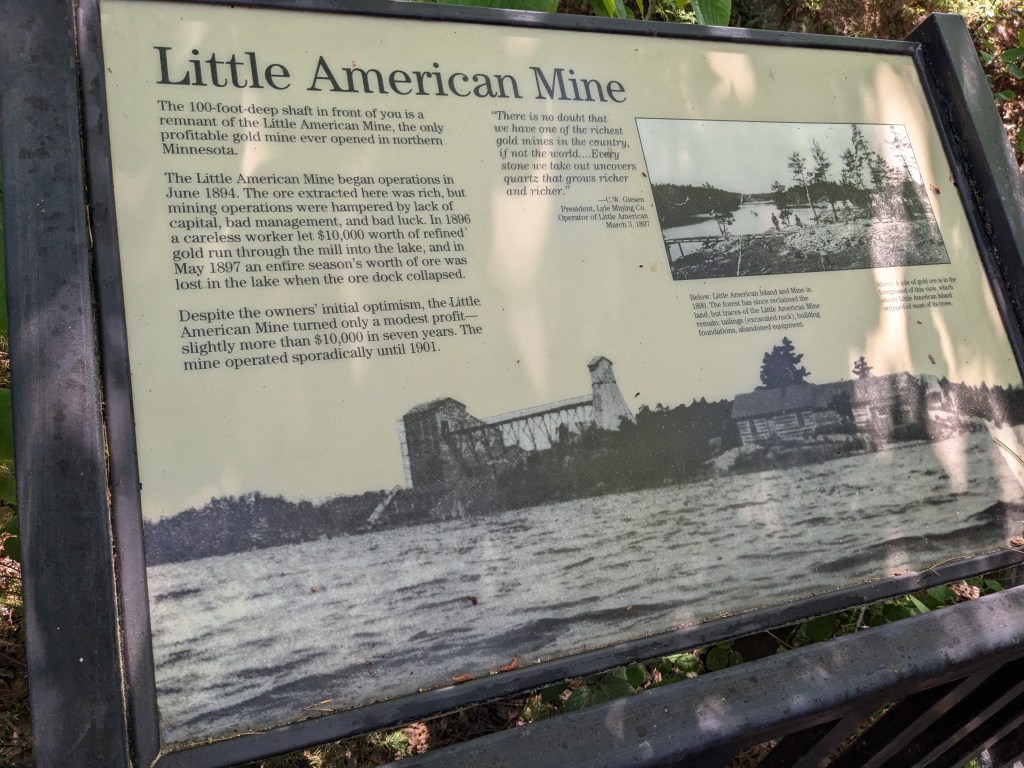
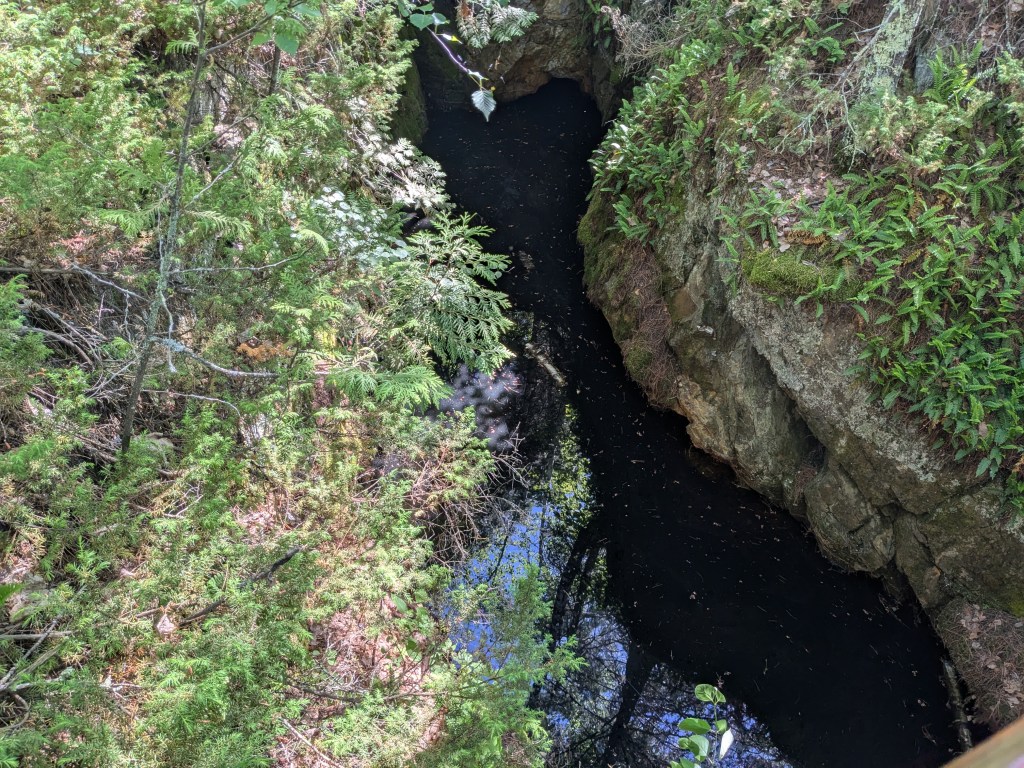
The history was interesting, but mostly I just enjoyed the beauty of the woods and lake on a Minnesota summer day… first cousin to a Texas April day. Ranger Peter told us that International Falls, Minnesota has a 158-degree Fahrenheit (88-degree Celsius) differential between its highest and lowest recorded temperatures, so I was glad to be there near the top part of the scale!
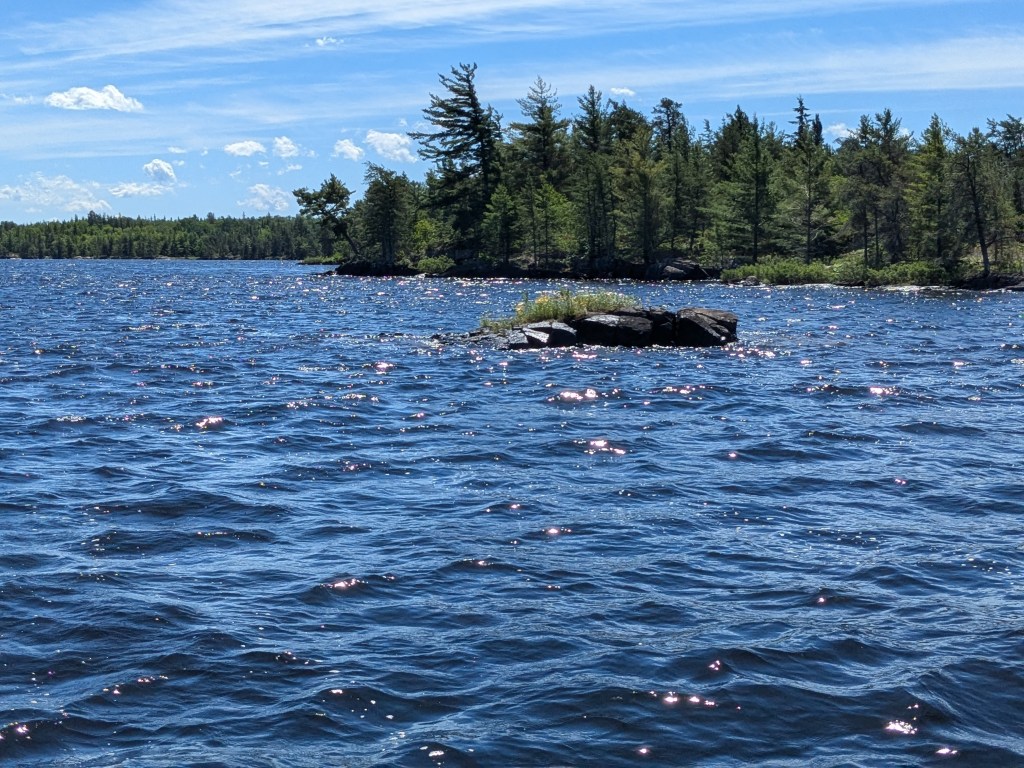
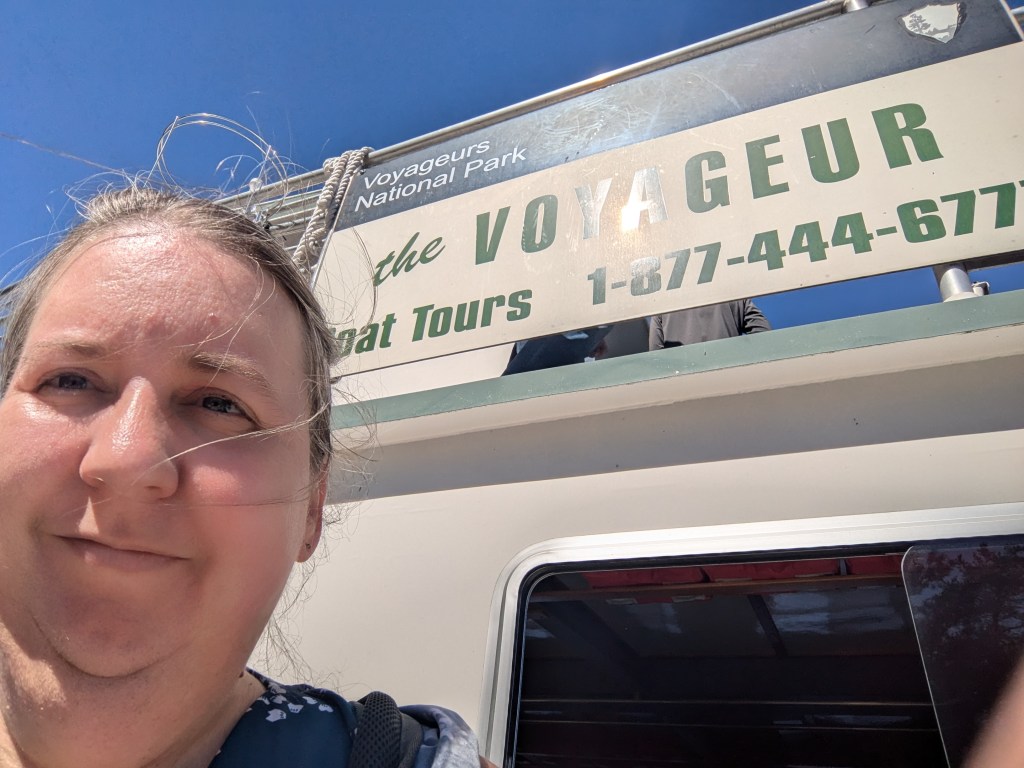
Ranger Peter is clearly a birding enthusiast and was able to point out a lot of feathered fauna to us, including Turkey vultures, cormorants, a loon, and several bald eagles. I tried to get pictures of the eagles, but that’s hard to do without a telephoto lens, and the results aren’t worth sharing here. So here’s a selfie instead.
The boat tour was great, but somehow I felt like my Voyageurs National Park experience would be incomplete unless I kayaked to the Kabetogama Peninsula itself, as the original fur traders might have done in their canoes. Fortunately, there was a very short (less than 1 mile) paddle-way from the Visitors’ Center marina to the Black Bay Beaver Pond trailhead. The trail promised a view of beaver lodges, too. I am not very good at getting in and out of my kayak unless there is a VERY easy landing place, so I was a bit insecure about getting out at an unknown landing for a hike, but I decided it was worth the effort. So I loaded my kayak into the back of my truck and took it to the Visitors’ Center to launch.
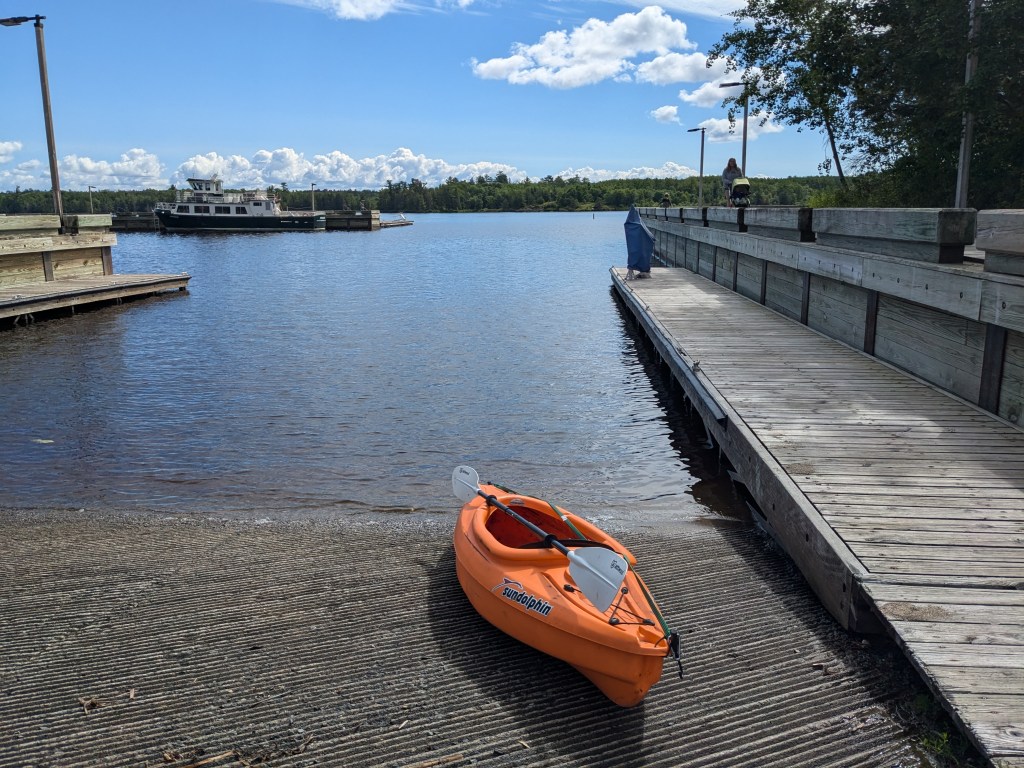
It was a perfect day, sunny and not windy with hardly a ripple on the water. Paddling across to the peninsula was easy, and thankfully there was a nice smooth landing place. The most challenging part of the adventure turned out to be following the half-mile of trail to the beaver pond.
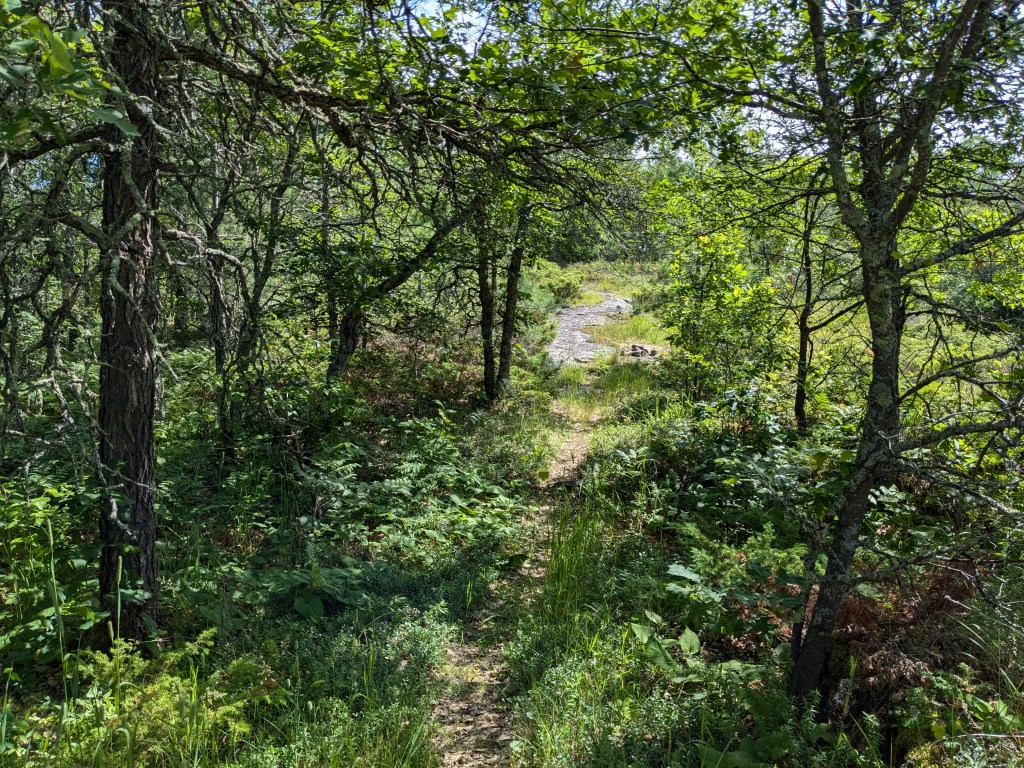
It was overgrown, and in some places ran out onto slabs of rock where there was no visible trail bed or markings. On one of these I lost the forward trail and had to cast around for a while before I found it. (I still knew the way back, so I wasn’t “lost-lost.”) Can you see the trail here? I couldn’t.
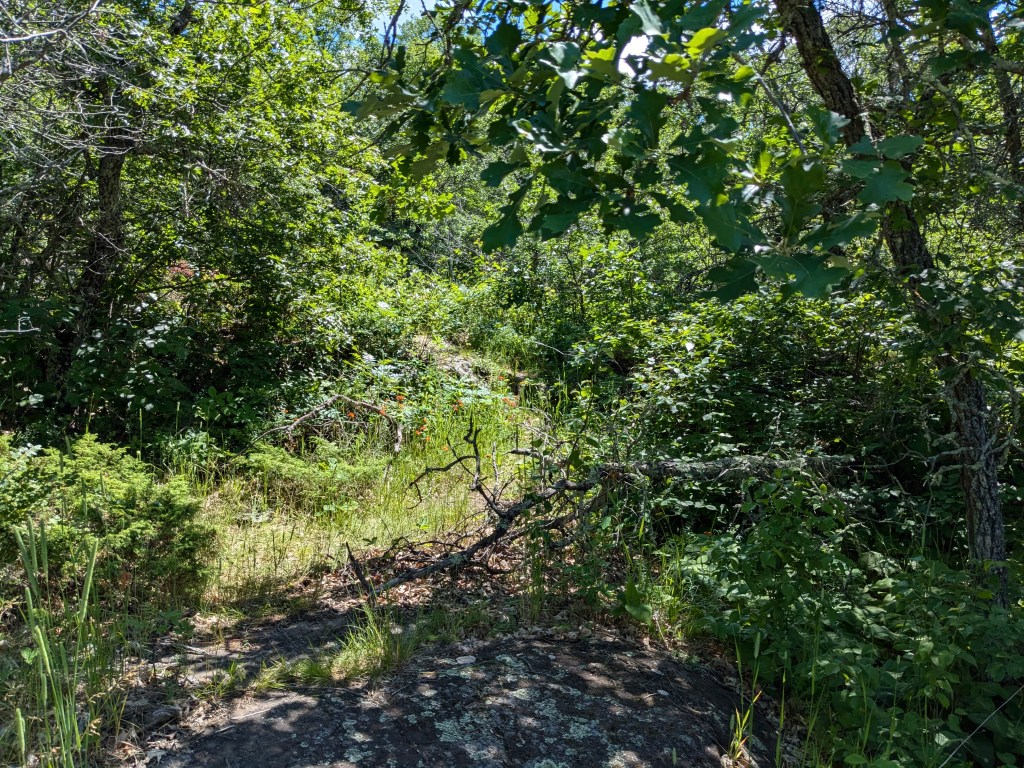
Also, Texas mosquitoes and flies ain’t got nothing on Minnesota swarms. I doused myself repeatedly in Deep Woods Off, including my hair to keep them away from my ears, but it only slightly curbed their enthusiasm.
But it was worth it. When I reached the pond, there were two beaver lodges set in the midst of thousands of lily pads and water plants. I couldn’t see the beavers, but I heard wood-gnawing noises coming from the surrounding woods. I spotted two deer and a water bird, too. I just stood there a while and soaked in the incredible peacefulness.
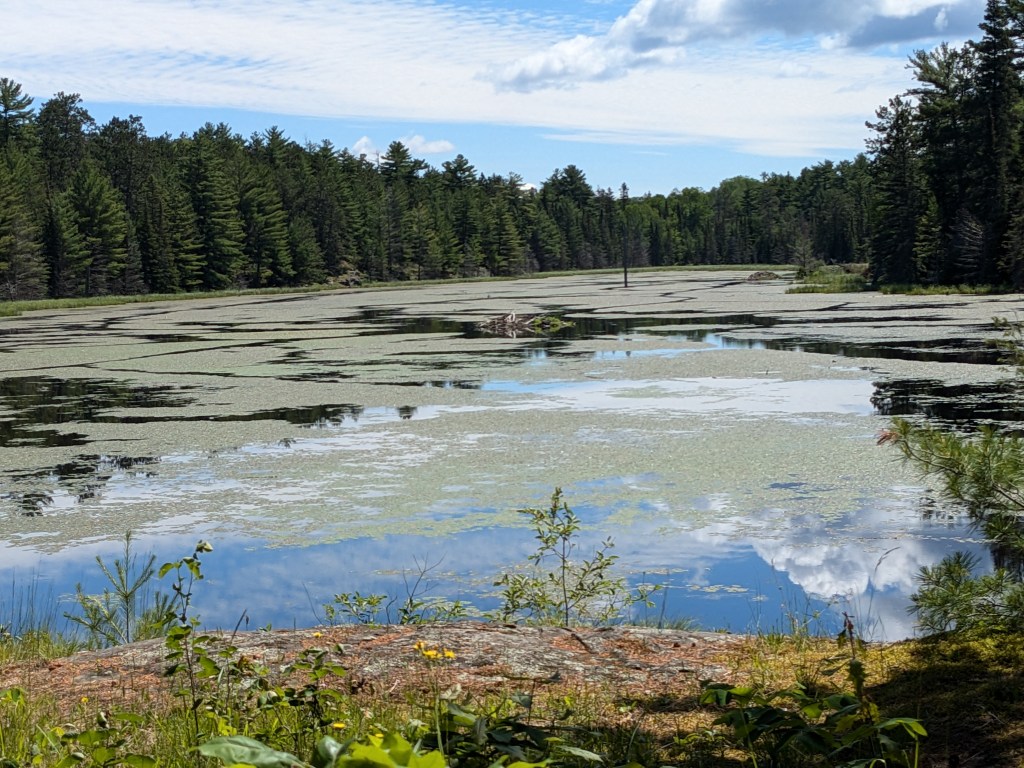
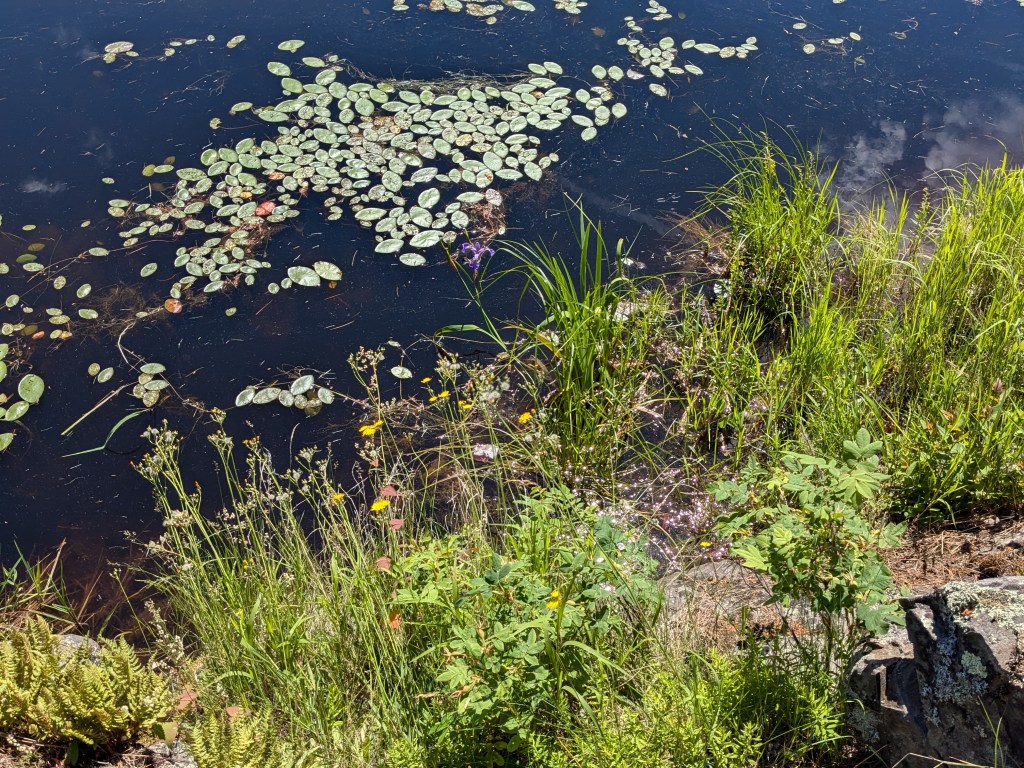
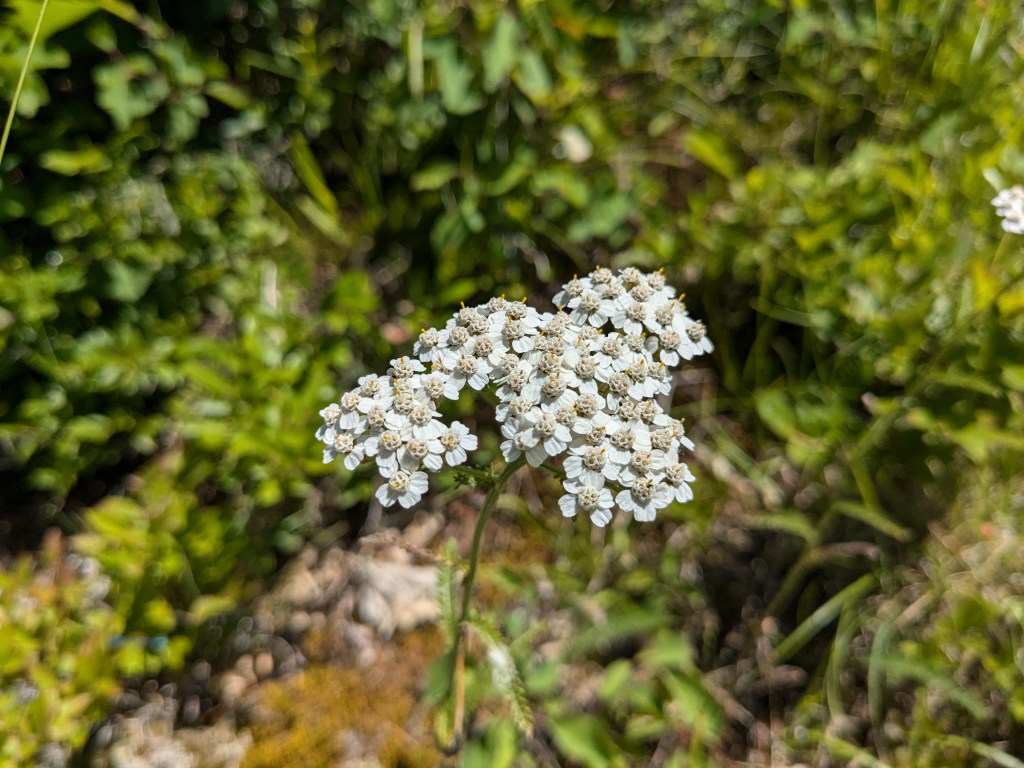
I hung around for a while hoping to spot the beavers, but eventually I hiked back to the lake and paddled back to the marina.

Ironically, my chance to see a beaver came later. I decided to take one more paddle on the lake from my campground, but when I got out of the canal I discovered that the wind and waves on the open lake were a bit too much for my meager paddling skills. So I turned back into the shelter of the canal and decided to explore it. The canal was shaped kind of like a pi symbol (π) with the upper left corner connected to the lake and the two legs connected to a public boat ramp and my campground’s marina, respectively. The upper right corner was a dead-end, so I paddled down that way. I wanted to get a closer look at a couple of mallard ducks that I had spotted.
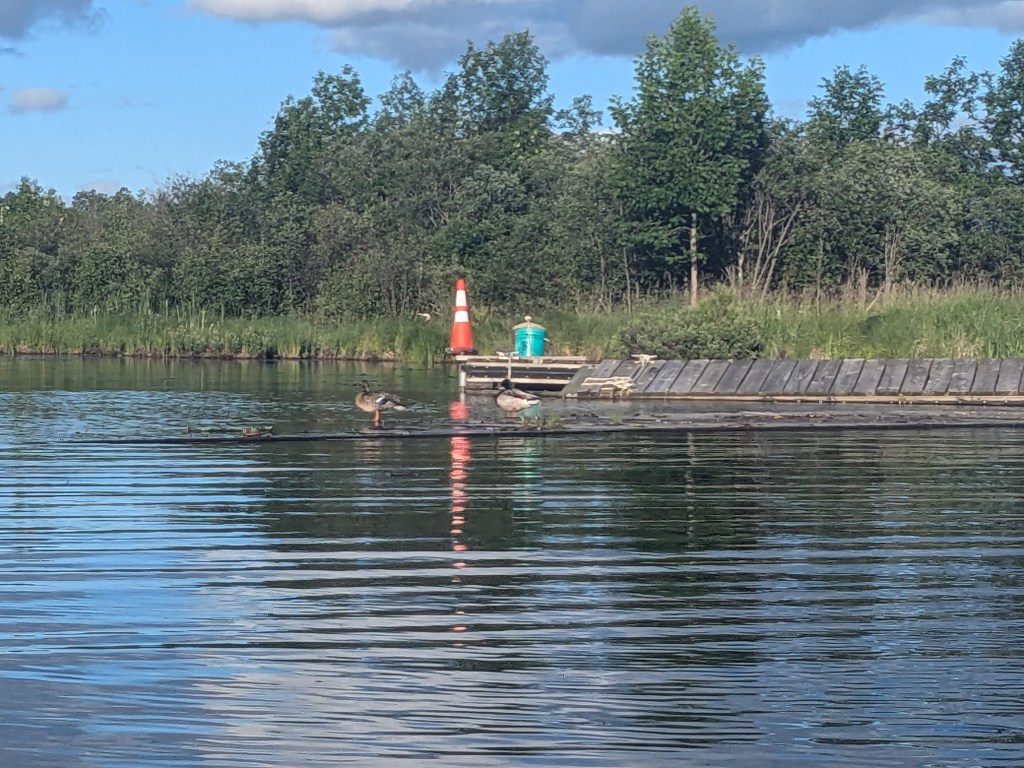
I communed with the mallards and a great blue heron and a red-winged blackbird that flew past. And then something brown and furry swam past me a few feet away. I followed it and lost it and found it again, and finally fumbled my phone out of its pouch long enough to get a short video.
I struggled for a while to figure out if I was looking at a beaver or an otter. They are very different (and very different sizes) when you can see the whole body, but it’s not so easy when you can just see a tiny bit of head! But he dived several times and I thought I glimpsed the big flat tail, and then finally he climbed out on the bank to nibble on forage. He was still so deep in the shrubs that I couldn’t see him, but the chewing sounded like a beaver, and when he finally stood up and peered at me over the top, the height was a beaver’s. He slipped back into the water and made an emphatic splashing dive, so I figured I had stayed long enough. I went away and left him in peace.
It was a magical capstone to a magical week. I think Voyageurs ranks right up there among my favorite parks that I have visited so far. It doesn’t have dramatic mountains or canyons, but I’m in love with the blue water and deep woods and long summer days. I know I wouldn’t survive winter there, but it might be among my top picks for a summer home.
 Vivian's RV Vignettes
Leave a comment