
On Saturday, I made my first national park visit from my new base at Camp Lutherwood. Capitol Reef National Park is actually almost exactly halfway in between my old site at Dead Horse Point State Park and the new one (I passed it on the way), but timing-wise, it worked out better for me to double back and visit it on the weekend – a 2.5 hour drive each way.
I meant to get up very early and arrive at the park in the cool of the morning to make outdoor exploration more pleasant. This high-altitude desert can drop into the 50s F (10C) overnight and rise over 100F (38C) during the day, so timing is everything. It’s also monsoon season here, meaning we’ve gotten afternoon thunderstorms every single day that I’ve been here so far. That thankfully drops the temperature, but you don’t want to be hiking on an exposed ridge in a lightning storm. Unfortunately, when Saturday morning rolled around I just wasn’t feeling it. I turned off my alarm and went back to sleep for a couple of hours, so I didn’t arrive at the park until around noon.
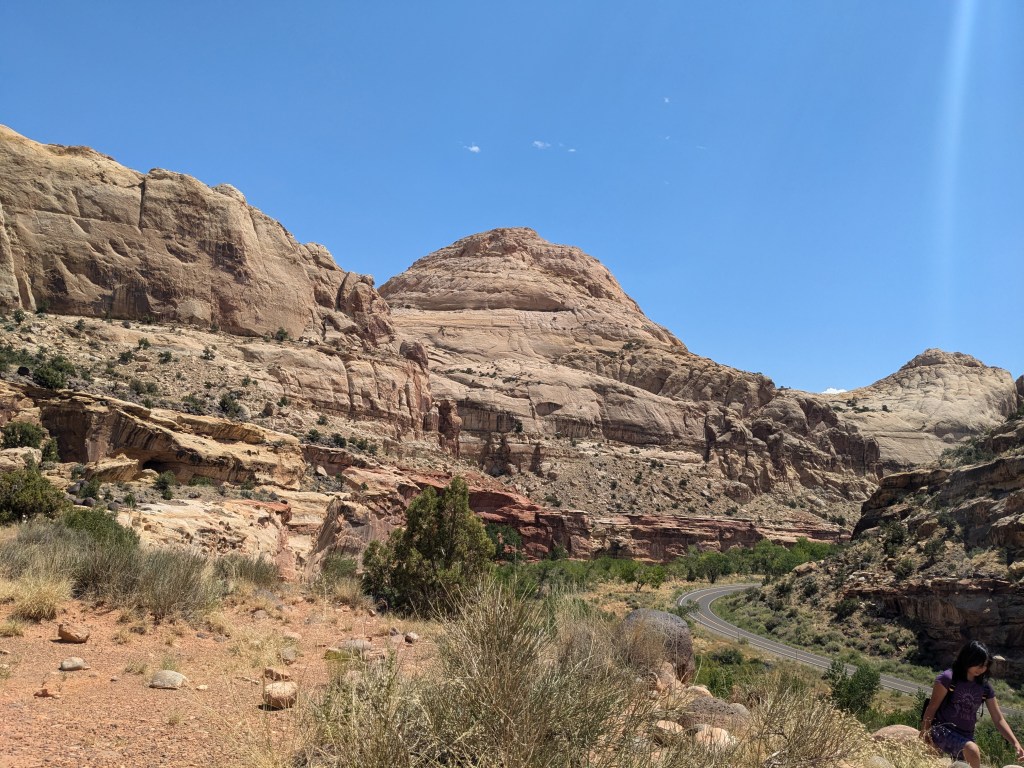
Before I looked it up, I vaguely assumed that the name “Capitol Reef” had something to do with the geology of the inland sea that is said to have covered this part of the country at some point in the past. But it turns out that the early settlers used the term “reef” to refer to ridges of land that were difficult or impossible to cross on foot – sort of a metaphor comparing them to the reefs that wreck ships on the sea. Capitol Reef’s double ridge and deep gorges make such a formation, and the “Capitol” part came from the white sandstone domes that fancifully bear resemblance to the U.S. and Utah Capitol buildings.
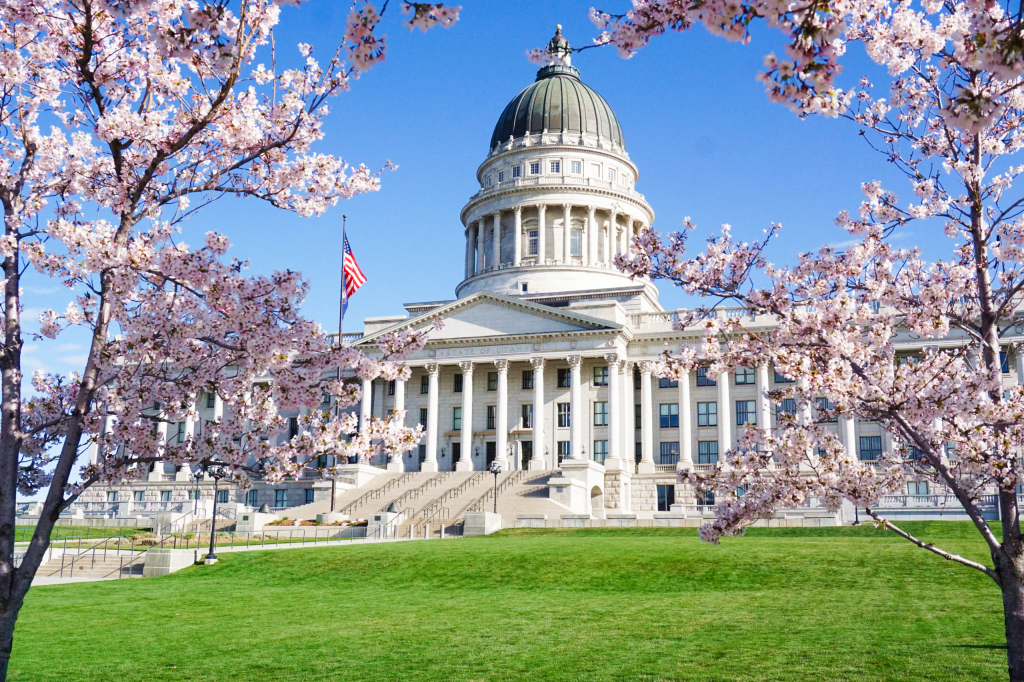
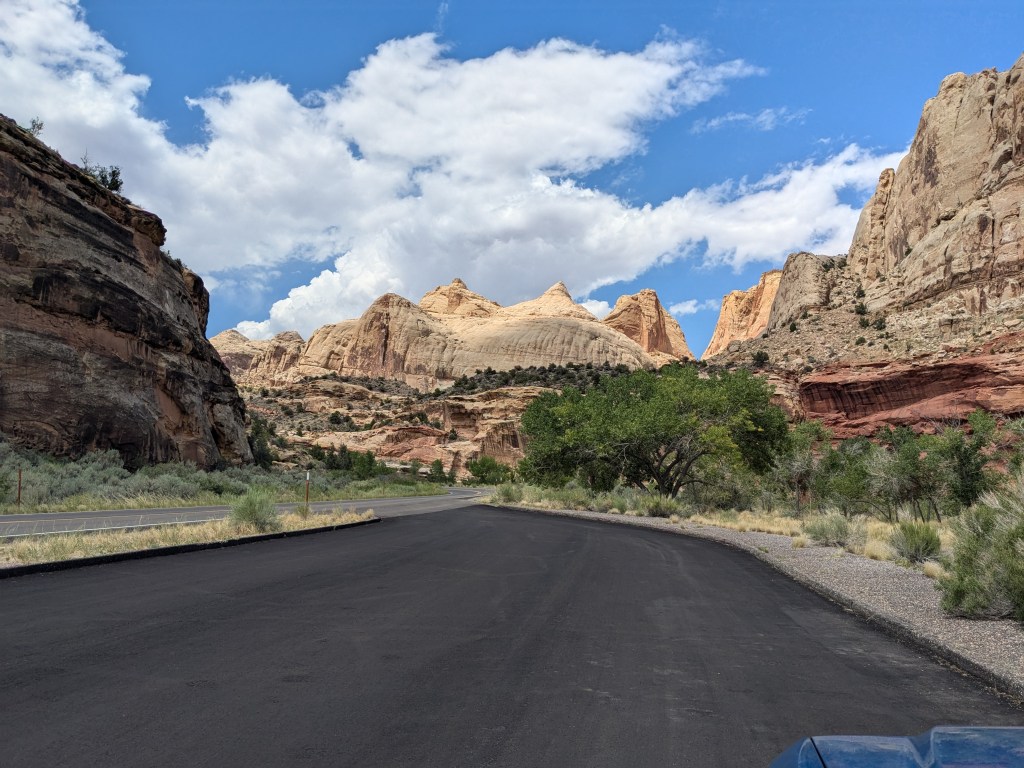
The park is a long, skinny band of land running north to south. It is crossed east to west in the middle by Utah Route 24. One nice paved road runs south from 24 as a scenic drive through the most dramatic landscapes of the park (imaginatively named “Scenic Drive”). The Visitor’s Center is at the junction of UT-24 and Scenic Drive, as is the historic area of Fruita, where early Mormon settlers lived and planted apricot, cherry, peach, and apple orchards.
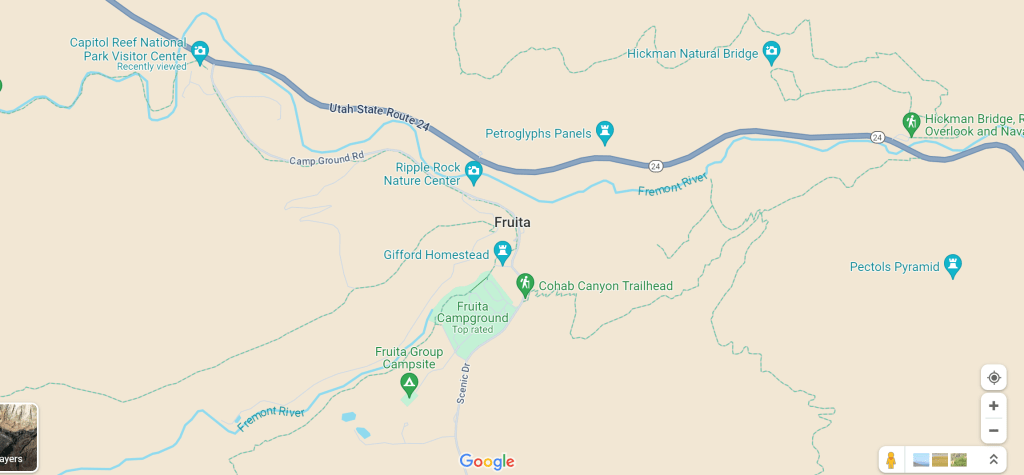
Unfortunately, Scenic Drive, which runs down into Capitol Gorge, is closed for reconstruction this summer past the Fruita Campground. (I know the National Parks always have construction and improvements going on somewhere, but it feels like I’ve run up against a lot of that this summer. I said earlier that Wind Cave was closed completely, and though I didn’t mention it, the Grand Viewpoint in Canyonlands at the end of the mesa was also closed.) This meant that my options for driving in the park were very short and limited. There ARE other roads in the northern and southern parts of the park, but they are unpaved and mostly 4WD only.
I had made up my mind to give hiking a try, even though the day was already hot by the time I got there. The Hickman Natural Bridge trail is “only” 0.9 miles and is rated “moderate” on the park website. I noticed it had a 400-foot elevation gain (about the height of a 30-40 story building!) which made me a bit skeptical, but I was game to try it.

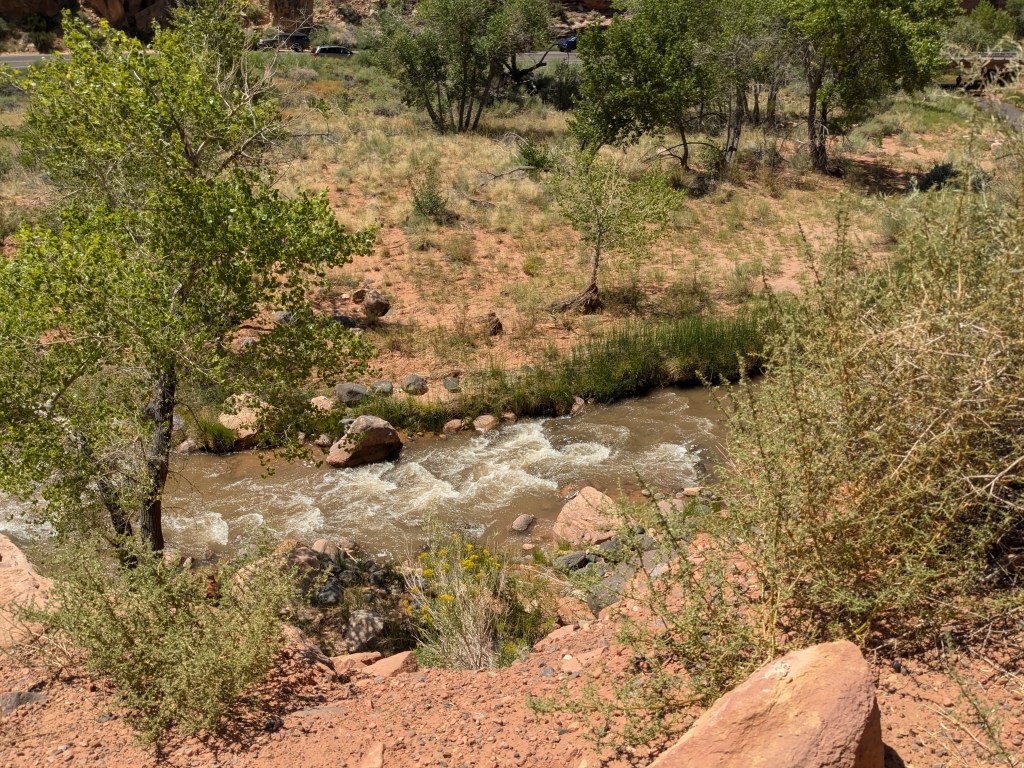
It started out fairly level along the Fremont River, but pretty soon it started climbing steeply uphill.
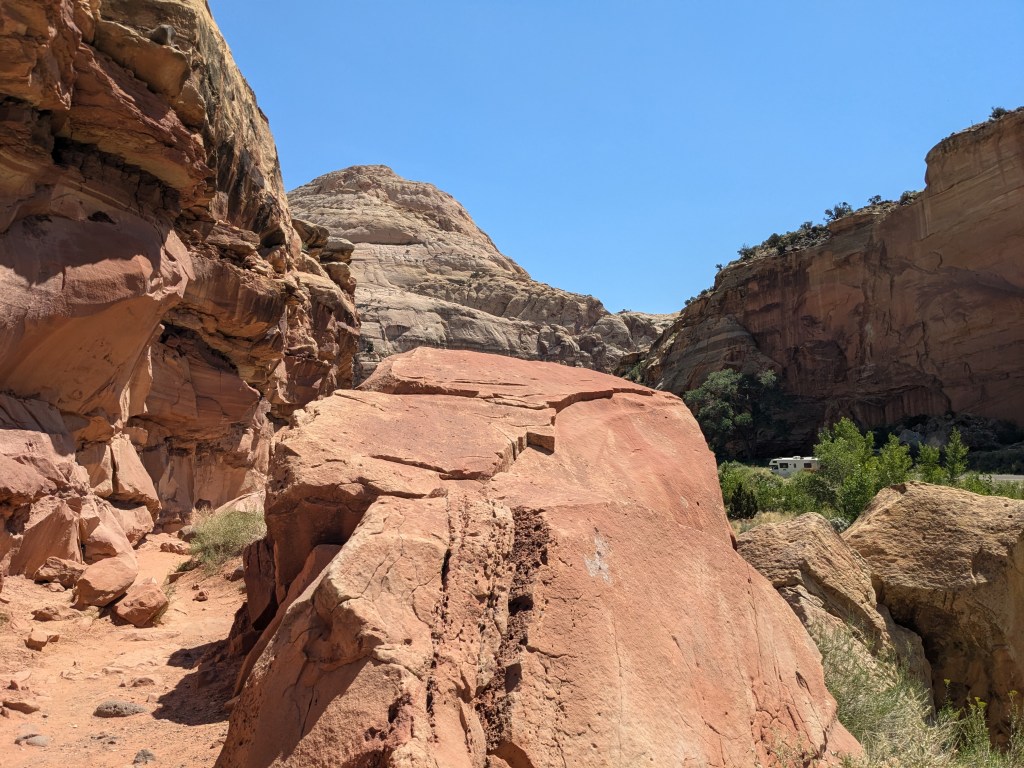
I was actually hiking under an umbrella to give me some shade. (A number of other hikers who passed me said, “Good idea!”). It helped some, but not enough. Here’s the thing: I really enjoy a nice walk in the woods on fairly level ground in moderate temperatures, like in the Sam Houston National Forest at home during the spring and fall. But I just don’t like desert hiking. I am very prone to heat exhaustion, especially when there’s no shade. I’m also not good at steady uphill climbing, especially at high altitude. Put it all together, and by the time I reached interpretive station #5 on the trail, I had to admit that I was just torturing myself.

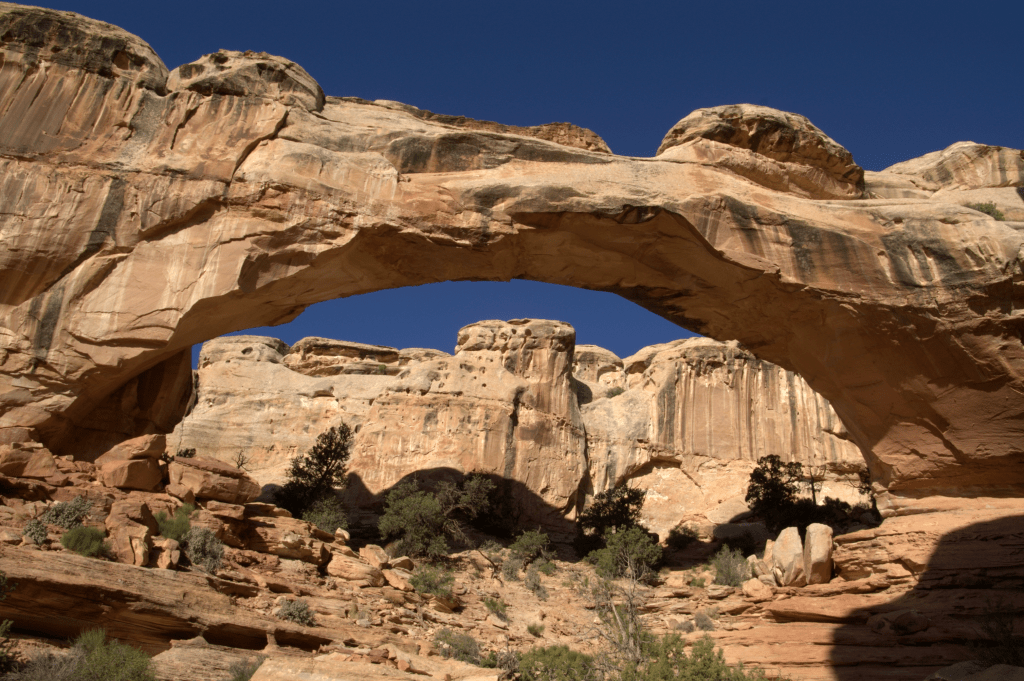
Some nice German teenagers on their way back down assured me that the ridge I could see just above me was the highest point on the trail…. but that meant that the trail descended on the other side, and then I’d have to climb back up it on my way back. My body said “no,” and I listened to it. Past stubbornness has taught me the unpleasant consequences of not doing so. Besides, the Hickman Natural Bridge would have been interesting, but I didn’t feel like my life was incomplete without seeing it.
By the time I got back to my truck, I was hot enough that I’m glad I turned back when I did.

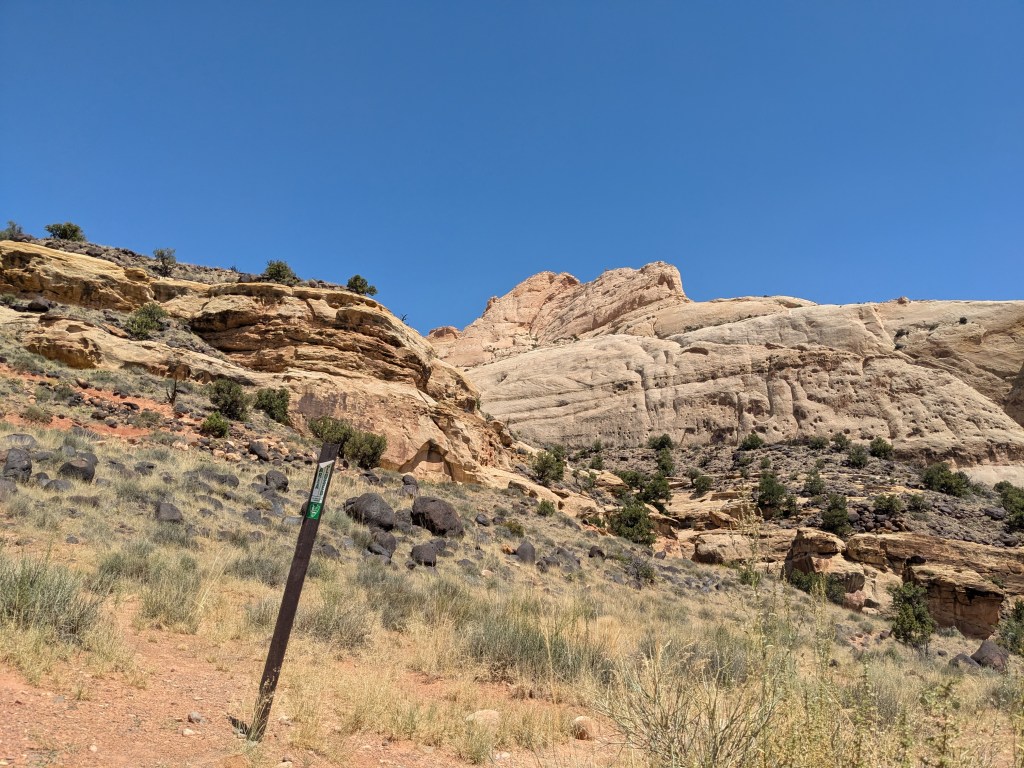
I’m glad that my very short hike did give me a good view of some of the “capitol dome” features for which the park was named, though!


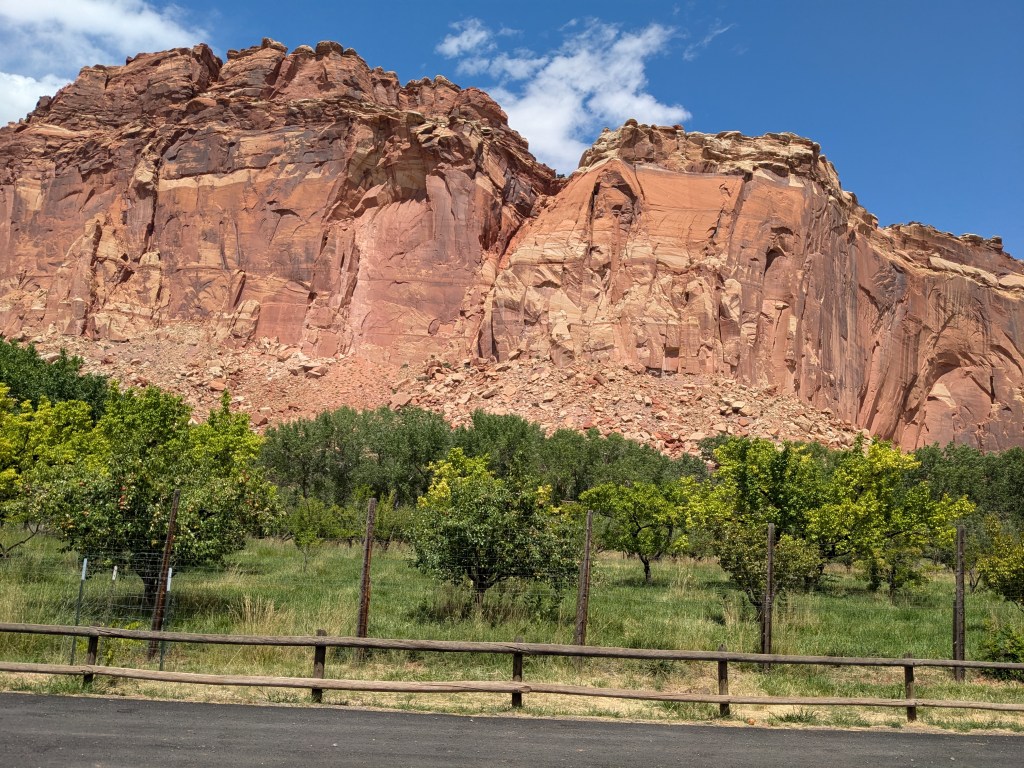
With hiking off the table, I decided to see what I could see by car, so I drove along UT-24 to the eastern edge of the park. The different layers of sandstone in the cliffs make for a colorful spectacle.
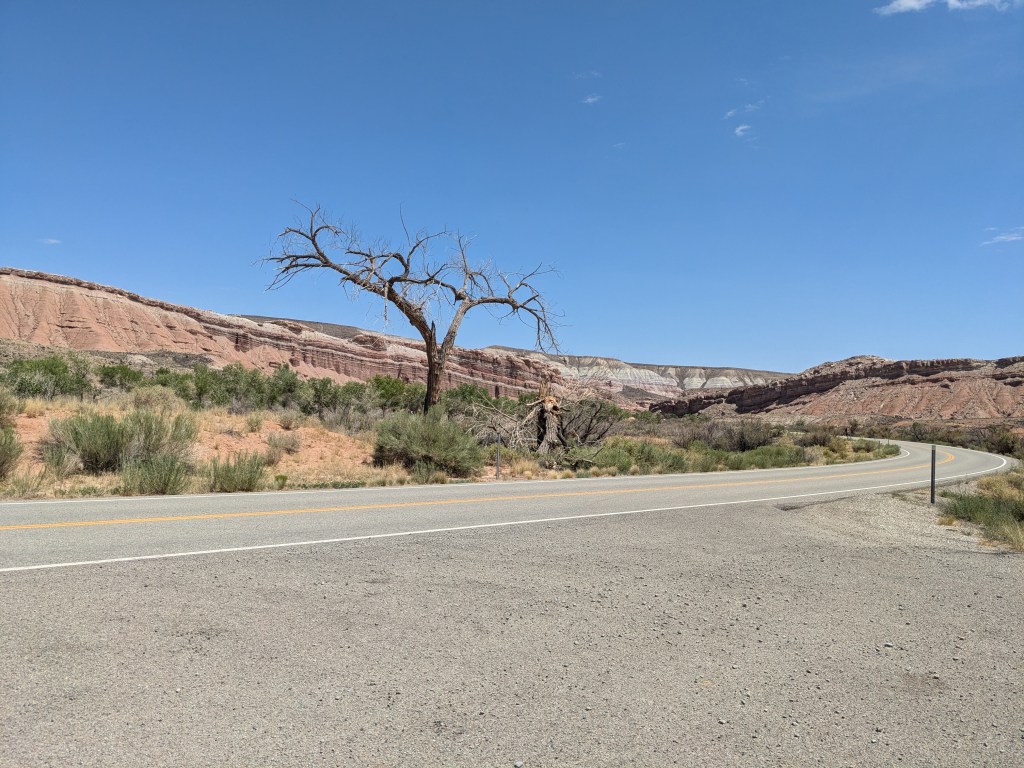
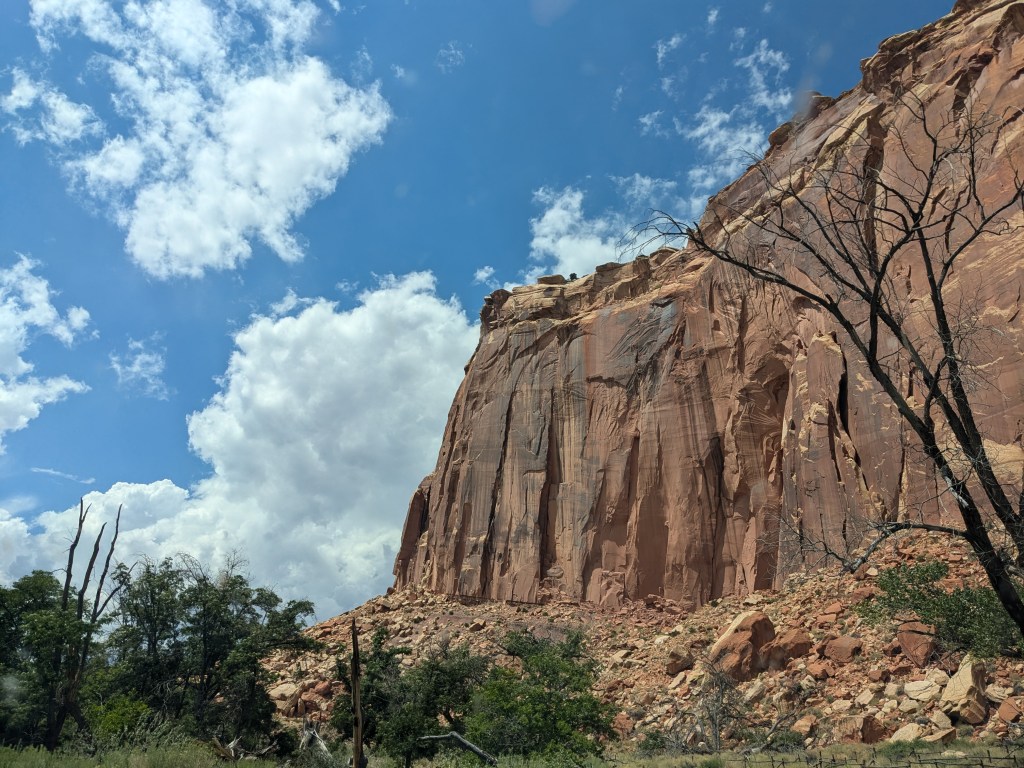
Turning back to the Visitors’ Center, I passed the Petroglyphs Panels, where ancient Native Americans left their own graffiti art.

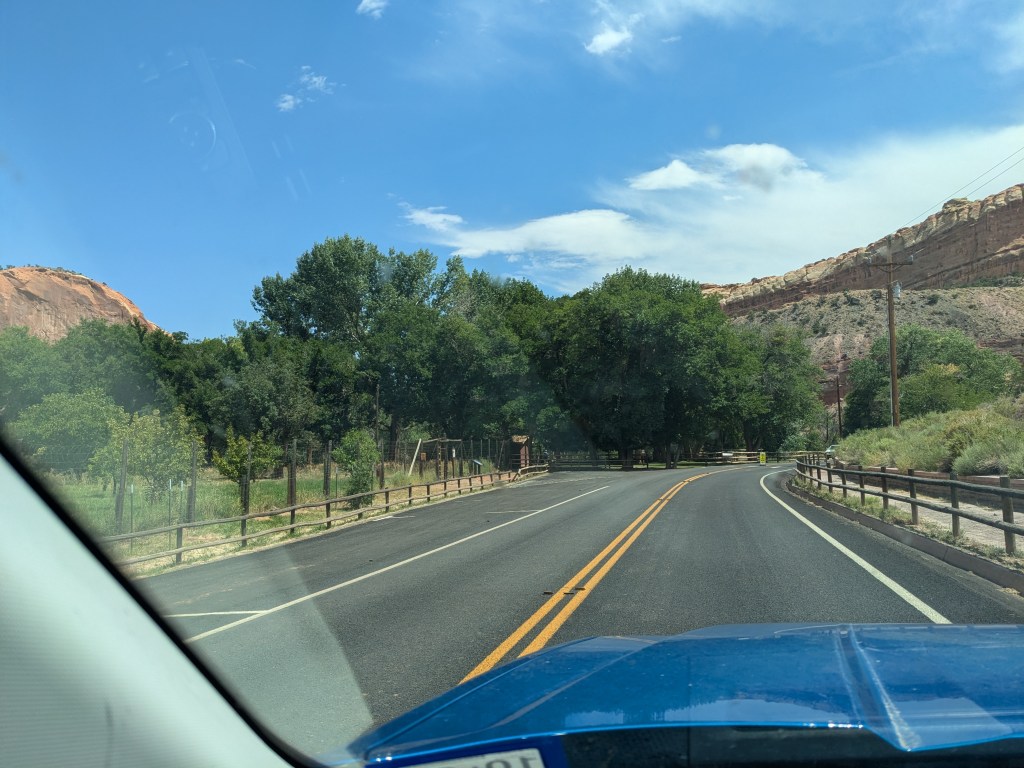
I turned down the little stub of Scenic Drive that was open.
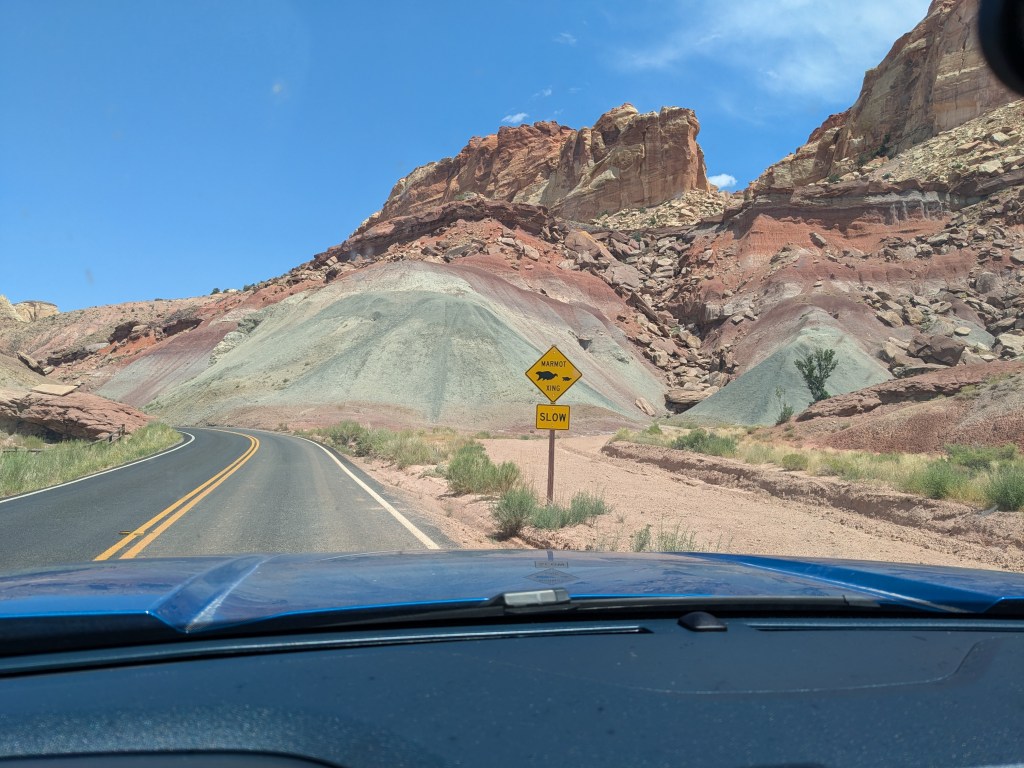
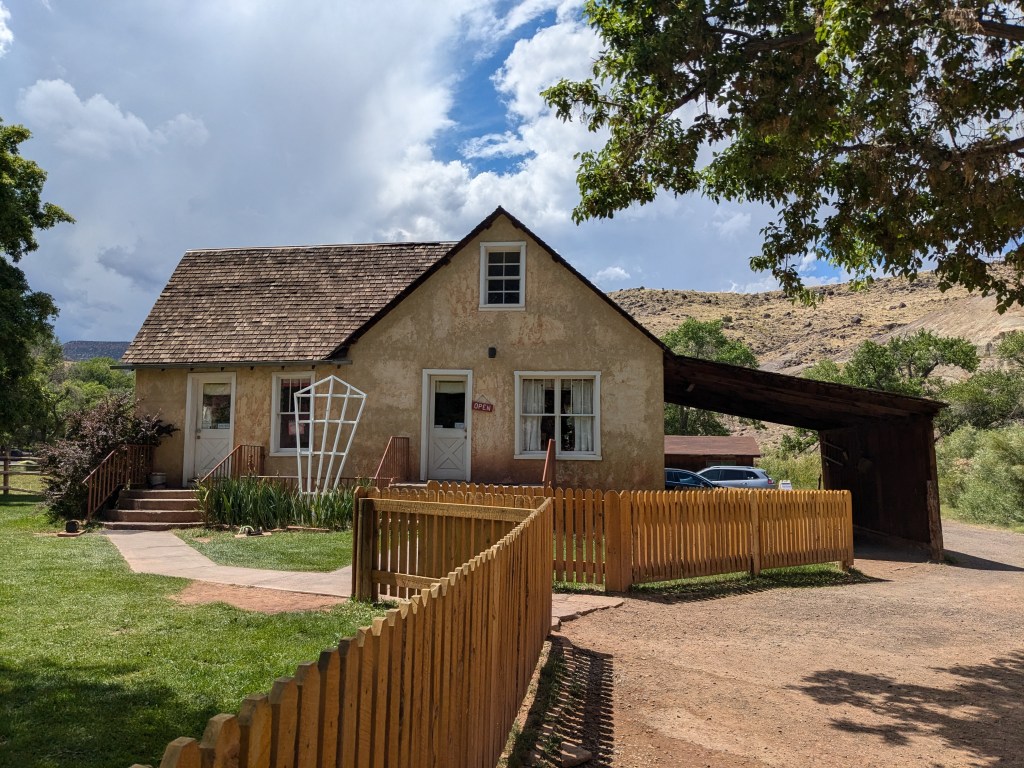
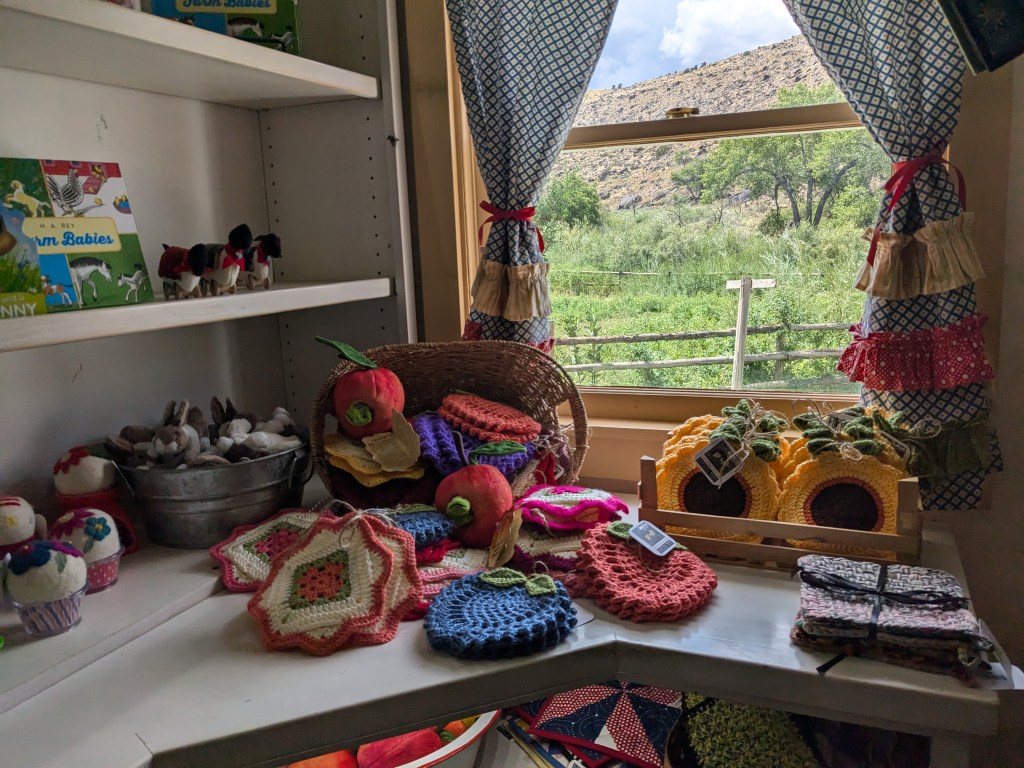
At the north end near UT-24, Scenic Drive runs through the preserved homesteads of Fruita. Those early settlers really added improvements there along the banks of the Fremont River, creating a nice little oasis in the desert. I stopped in at the Gifford Homestead, which has been preserved as a gift shop selling replicas of the sorts of goods that the original inhabitants might have made and sold (including fruit pies!).

I rounded off my trip with a visit to the orchards. The National Park Service maintains them with their heirloom fruit varieties using the same irrigation ditches dug by the original settlers. And they are open to the public for U-Pick-Em harvesting.
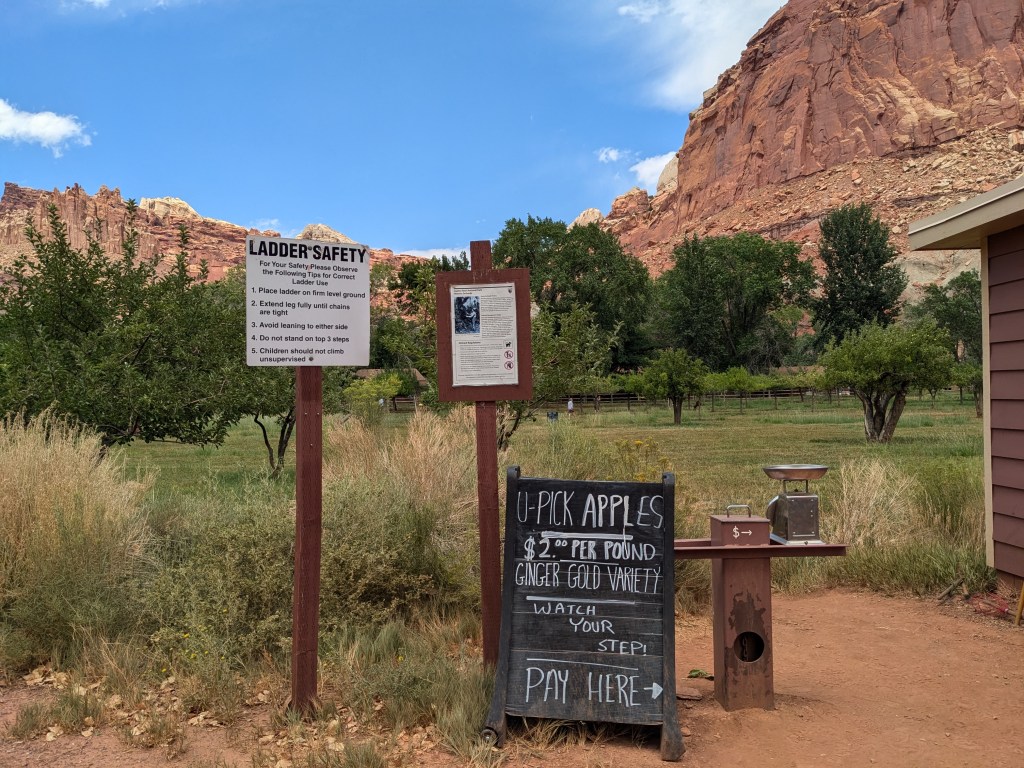
Apples were the only thing still in season, so I decided to snag myself a few. The Park Service thoughtfully provides pole pickers if you don’t like to climb ladders.
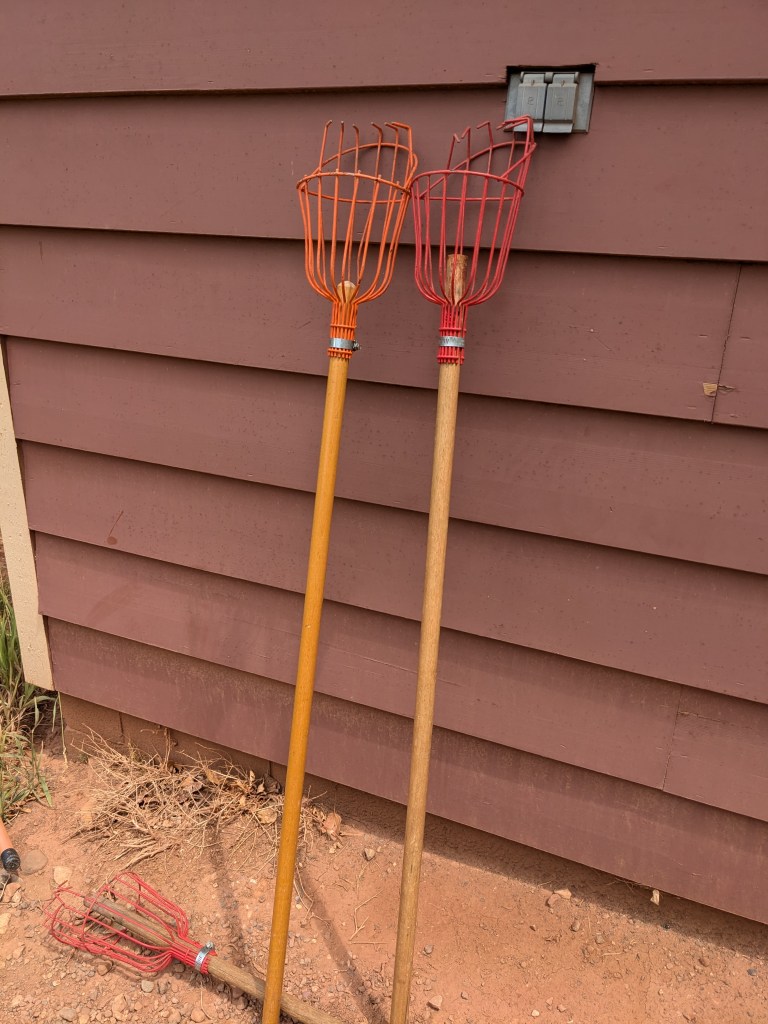
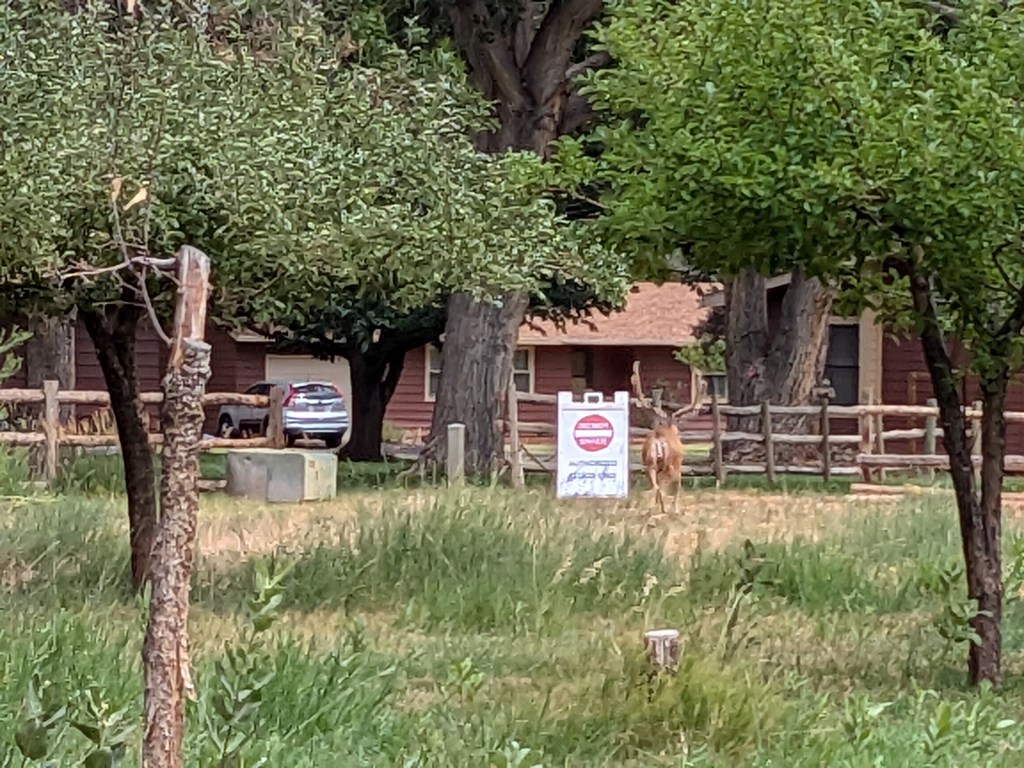
I had never actually done U-Pick harvesting before. But when I entered the orchard, I noticed that humans weren’t the only ones benefitting from it.

It was a little challenging to find apples that were ripe enough but hadn’t already been picked or fallen to the ground. In the end, I picked two apples off a tree and gathered one windfall that seemed undamaged.
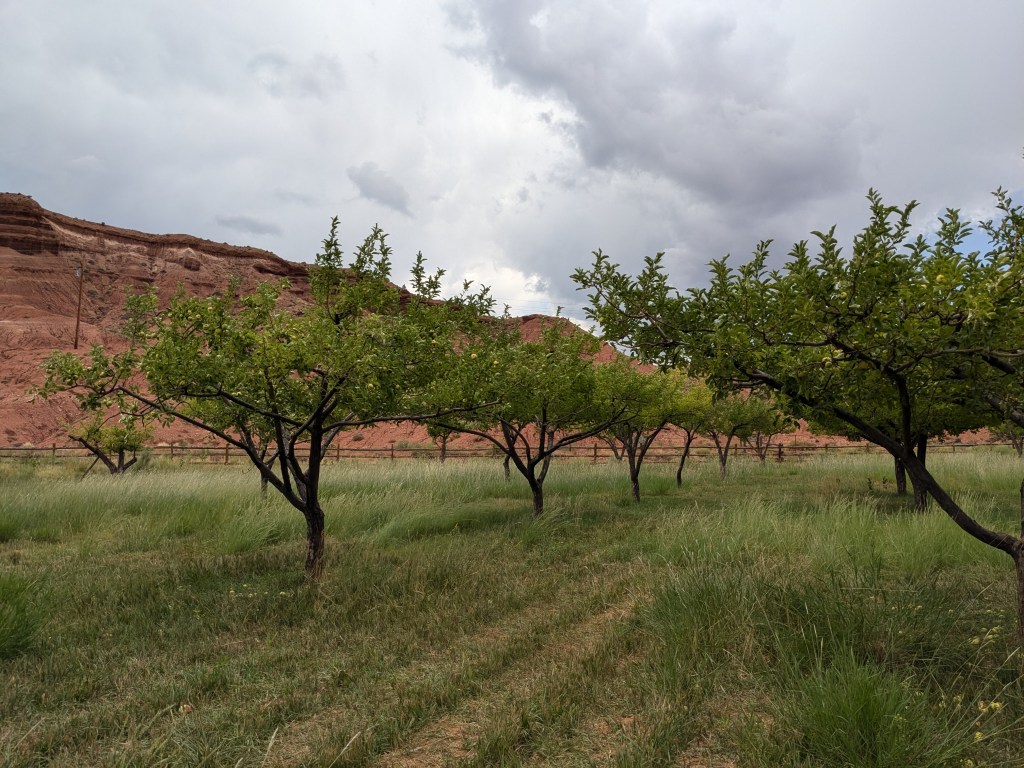
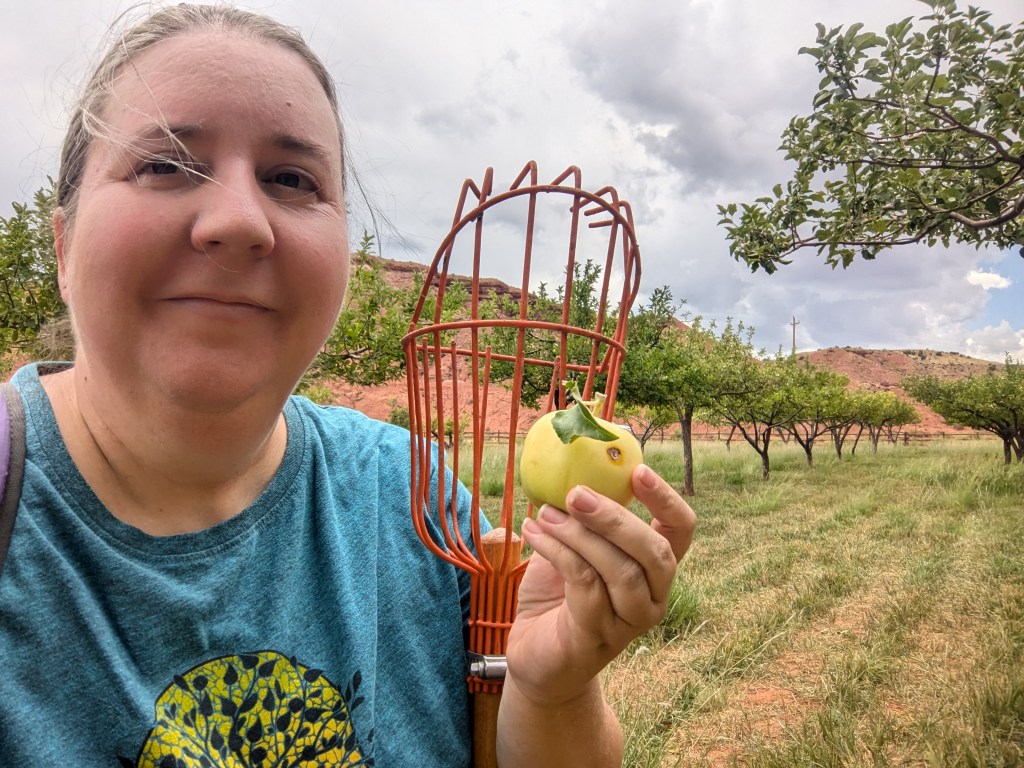
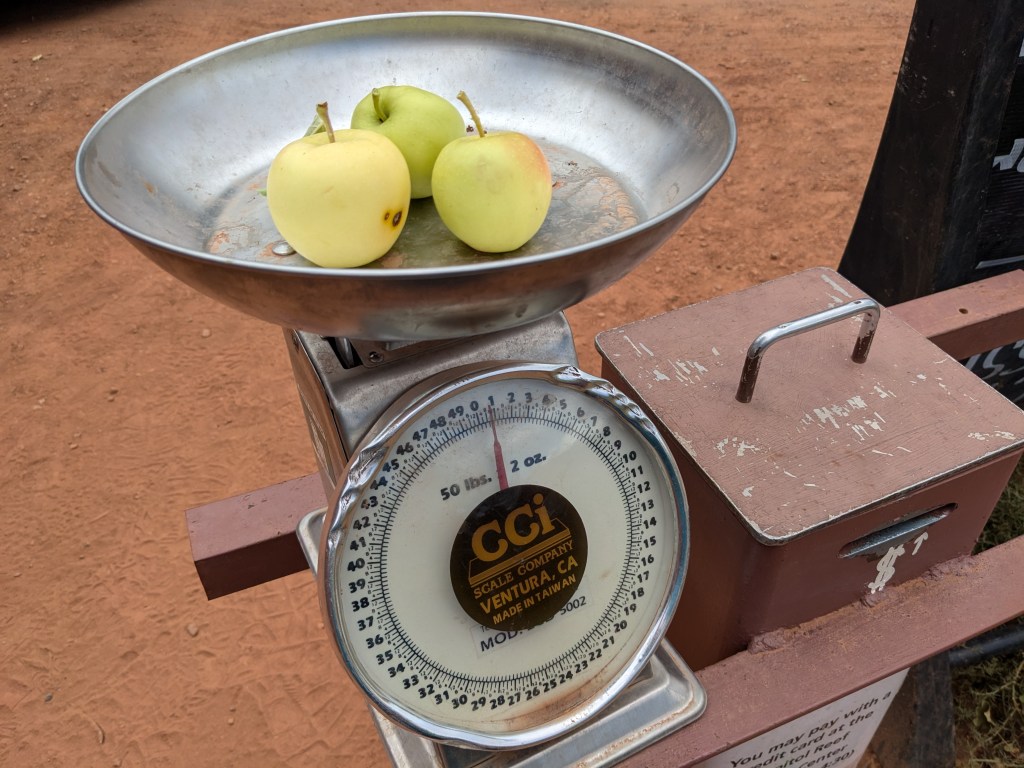
I ate the windfall already (not bad!), but I’m giving the other two more time to ripen if they will.
At that point, I had seen what was within my reach, and the afternoon storm clouds were starting to roll in, so I packed it up and headed for home. Fortunately next week’s drive is much shorter and I’m hoping to get an earlier start, to enjoy the park before the day gets so hot!
 Vivian's RV Vignettes
Leave a comment