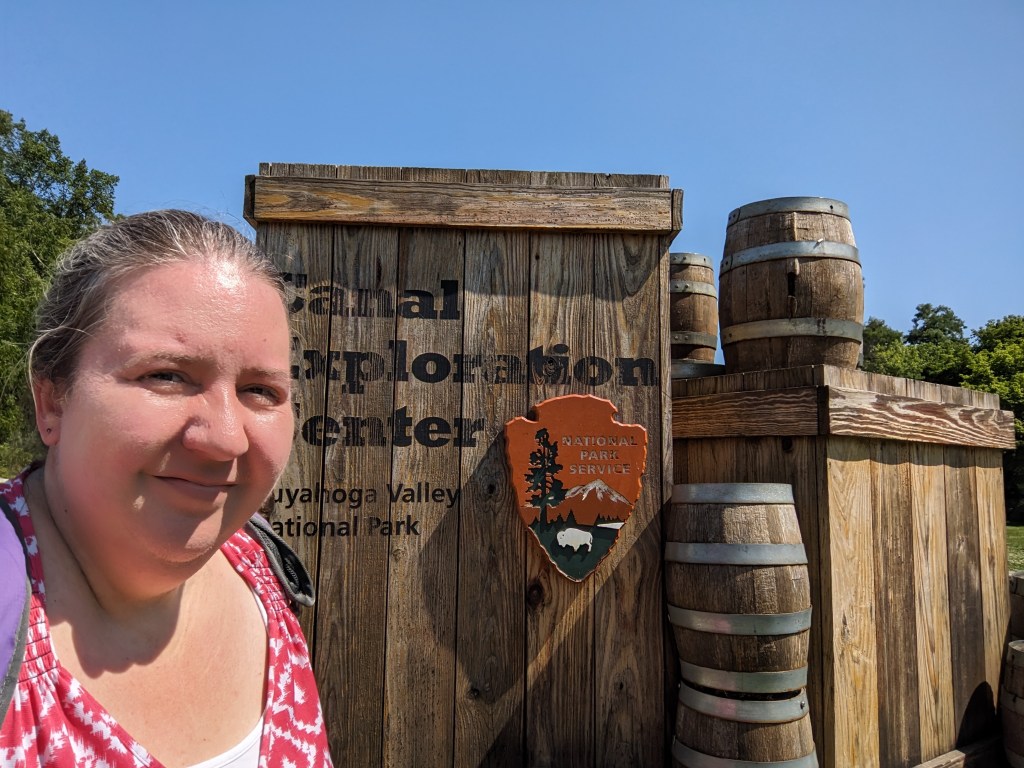
I spent much of my Fourth of July exploring Cuyahoga Valley National Park in Ohio. Cuyahoga is one of those parks that blends in with the surrounding community, without gates or admission booths or fees. I passed through one part that looked like an ordinary municipal park, with people grilling out around picnic tables and kids playing in a splash pad. But it does preserve some lovely wooded areas and waterfalls around the Cuyahoga River, as well as the historic Ohio & Erie Canal.
The Ohio & Erie Canal was built in the 1820s as a “road made of water” to connect Lake Erie with the Ohio River. The canal was just wide and deep enough to accommodate barges loaded with goods, which were pulled by mule teams walking along the tow path beside it. Floating the barges instead of putting them on wagon wheels allowed the mules to tow much heavier loads with less effort, and avoided the problems of bumpy dirt roads that turned to impassable mud in bad weather.
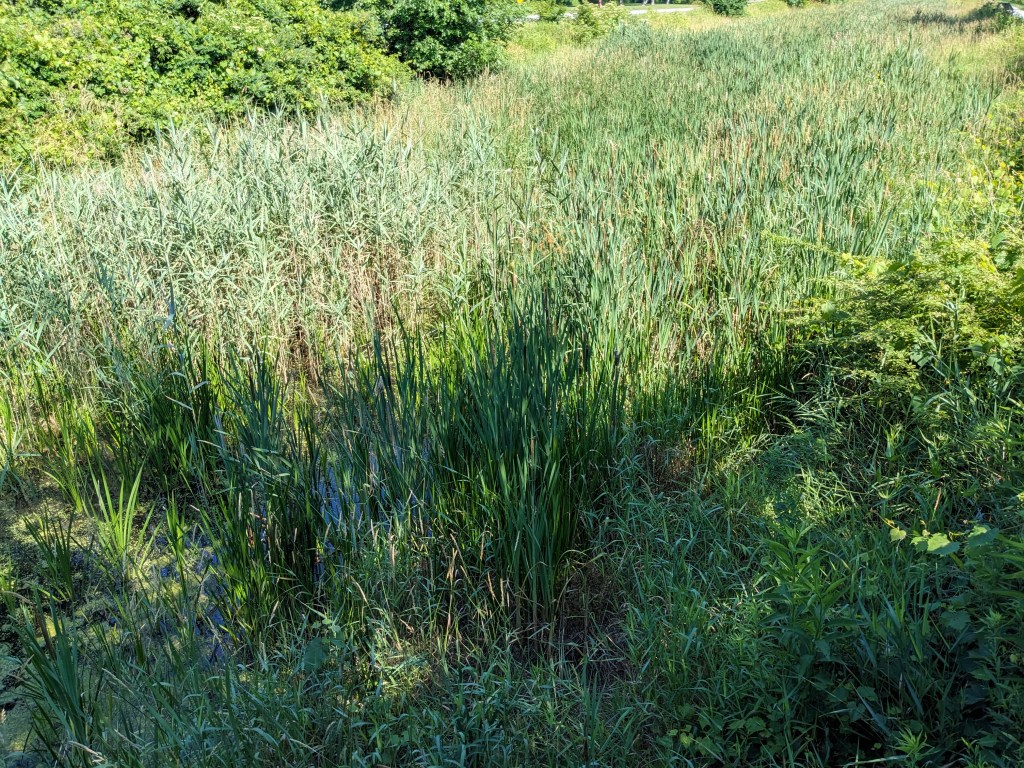
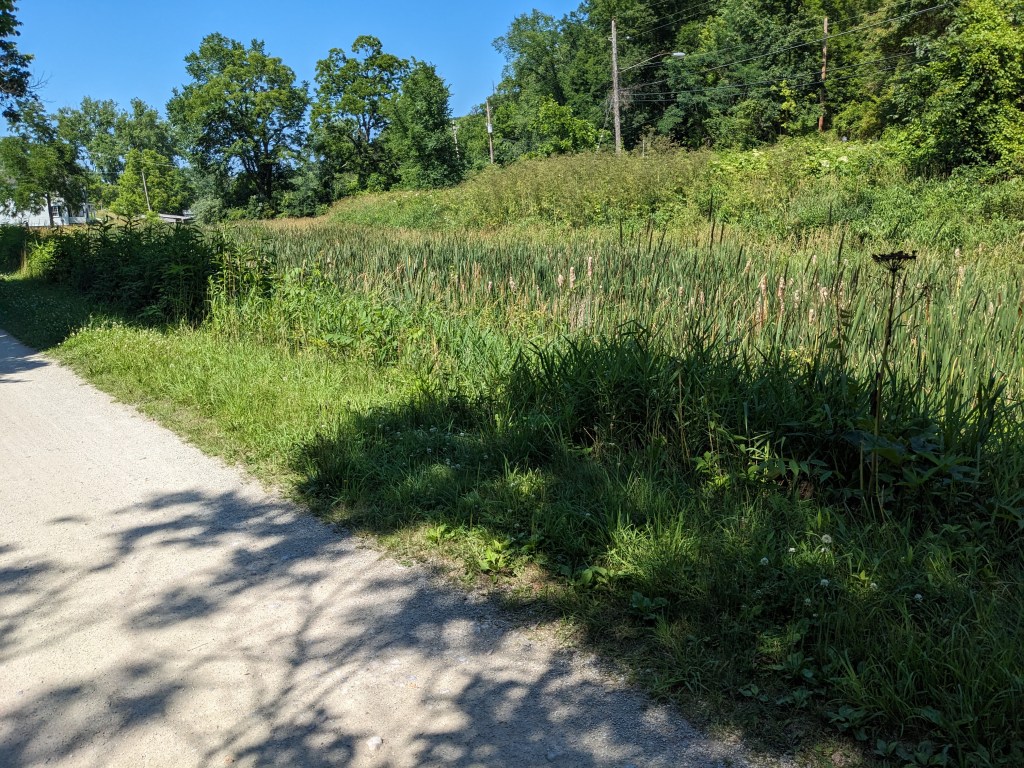
The canal has of course been out of commission as a transportation route for decades, and is now filled pretty much bank to bank with reeds, making it a great natural habitat for aquatic life. The tow path beside it has been turned into a nice hike/ bike/ equestrian trail, one of the major features of the park.
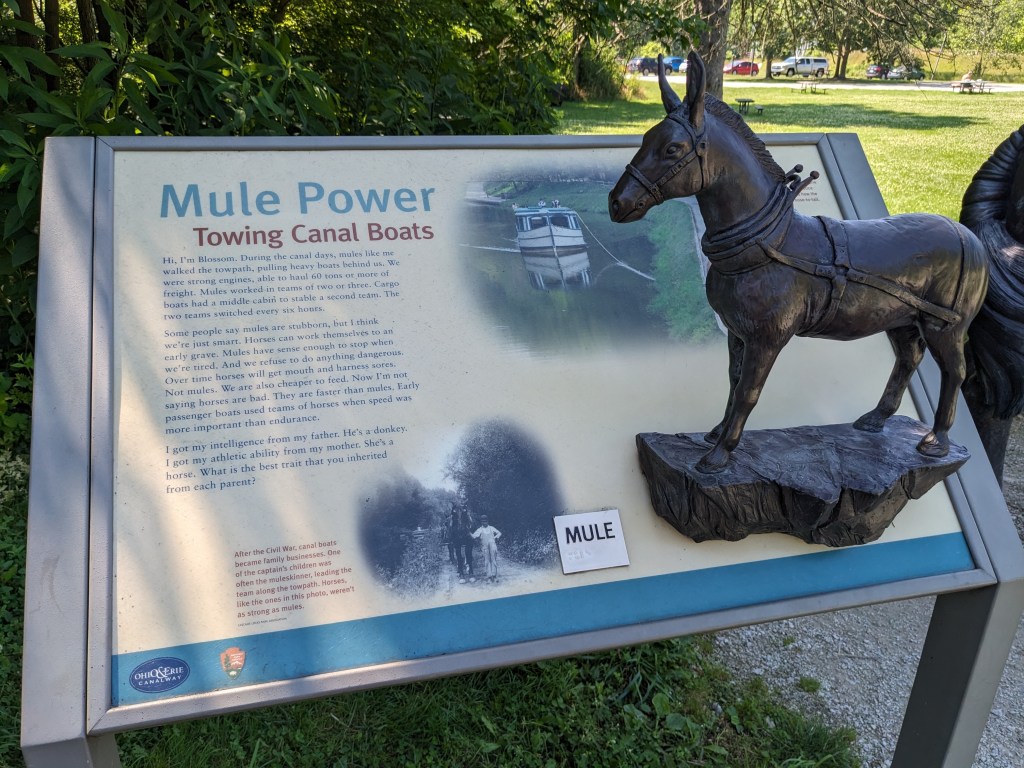
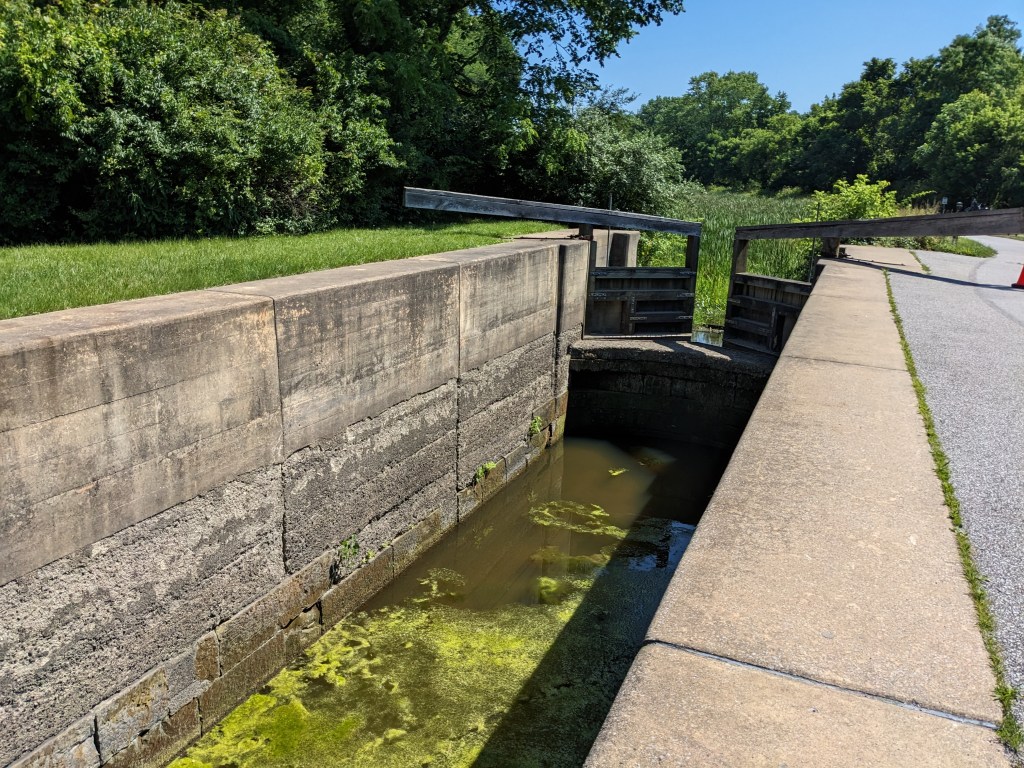
Historic features of the canal are preserved with lots of interpretive signs. I saw a lock where the canal level changed, and boats could be raised or lowered by adding or removing water.
But the most interesting feat of engineering to me was where the canal crossed over a creek by an aqueduct. I was walking along the tow path when I realized that I was coming up to the spot near the road where I’d seen the creek earlier, and I was trying to figure out in my head how the aqueduct and creek crossed one another without flowing together. Then I reached the spot and saw how it was done.
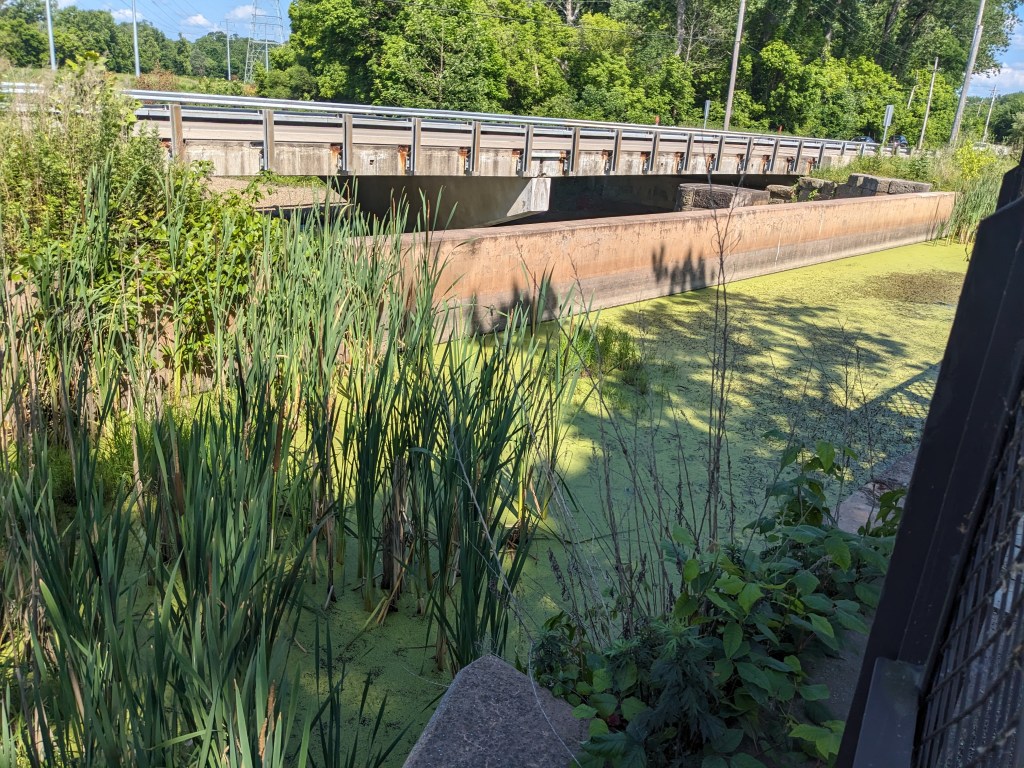
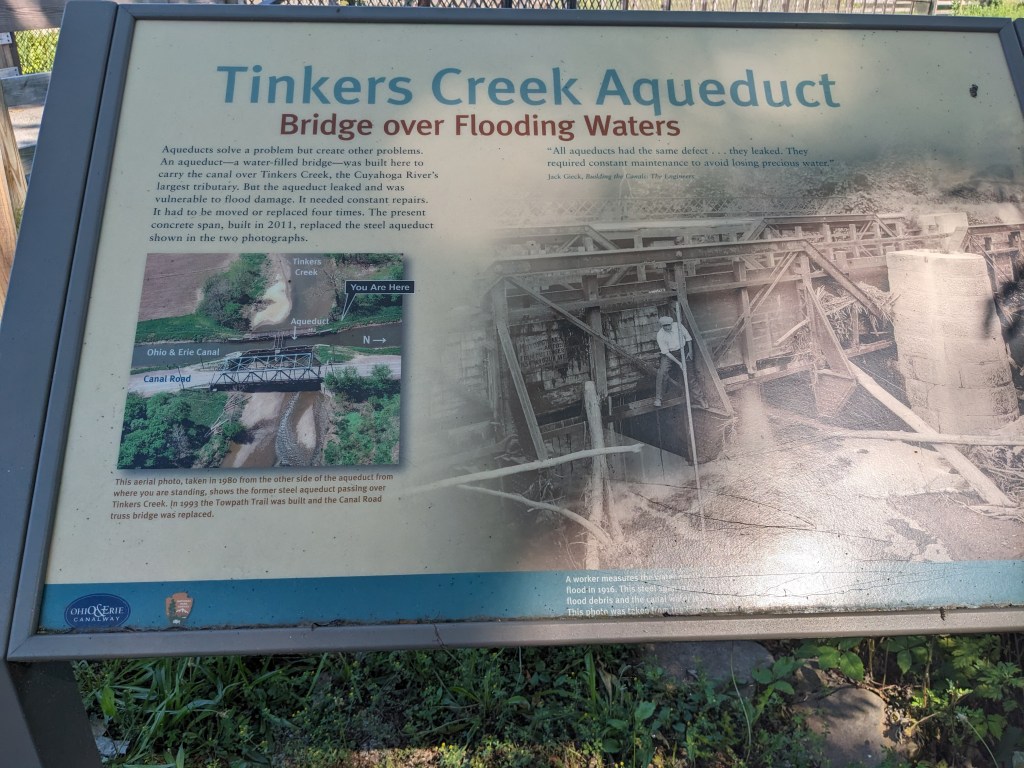
Pretty impressive.
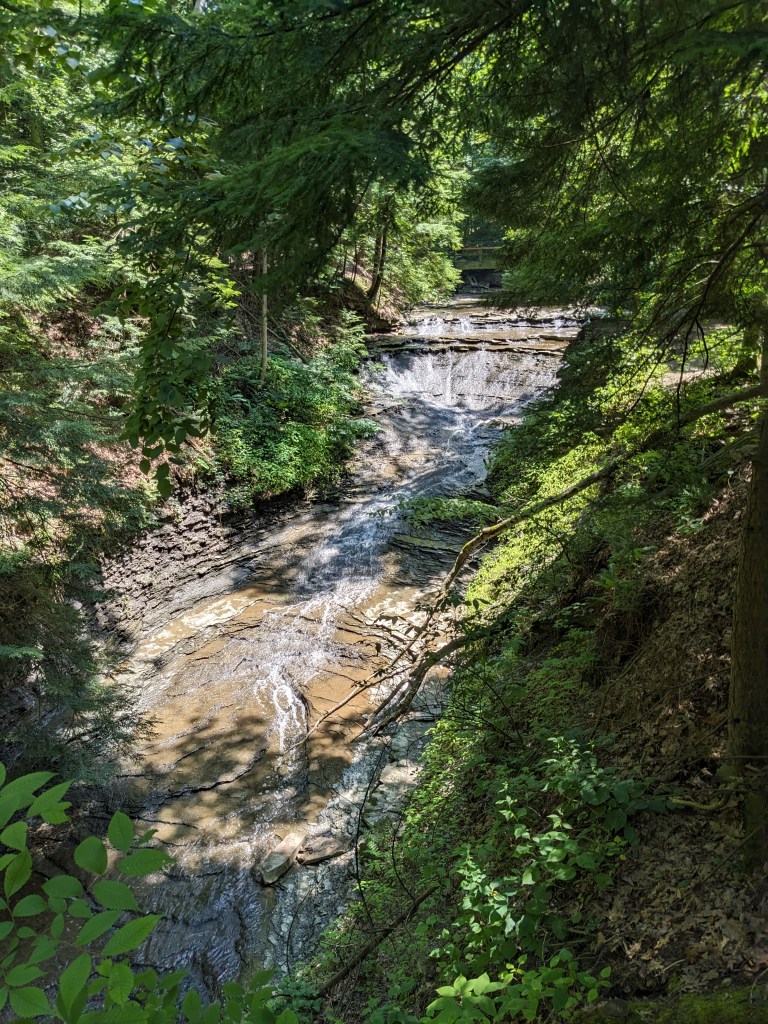
I also saw a couple of beautiful waterfalls in Cuyahoga. The first was Bridal Veil Falls on Tinker Creek, a short hike into beautiful deep green woods.
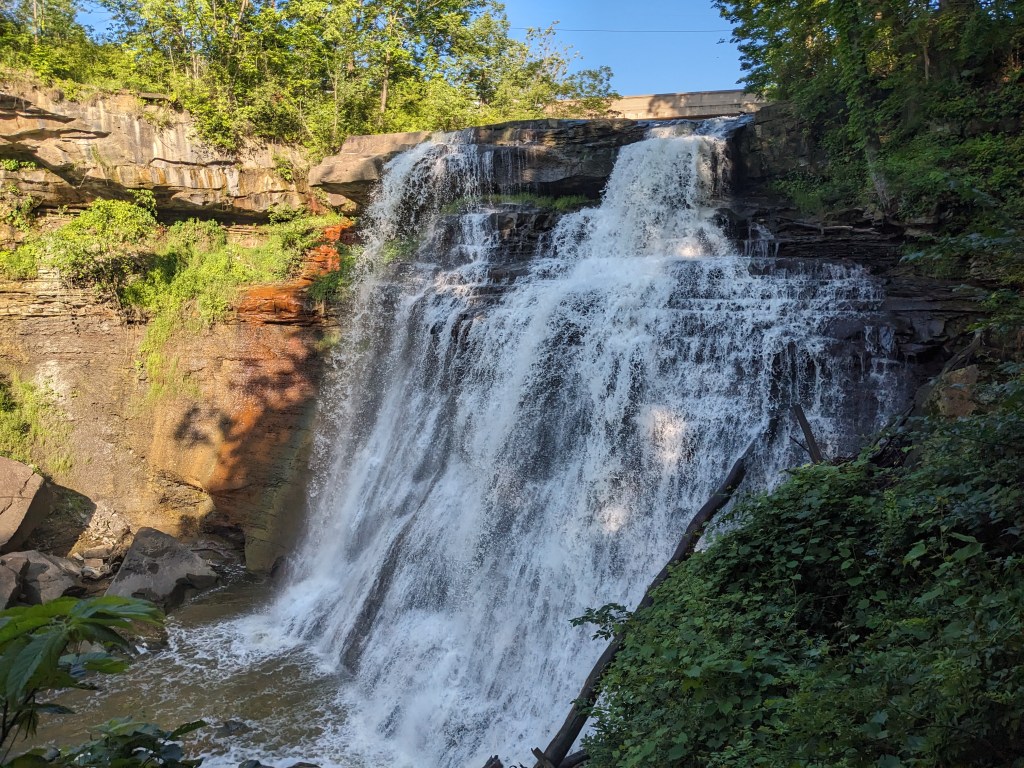
The other waterfall is Cuyahoga’s most photogenic centerpiece, Brandywine Falls. I actually tried to go there first thing, but the parking lot was so full that they were turning people away. So I went back at the end of the day and was thankfully able to get in. It’s a really majestic waterfall.
“A reflection on Independence Day:
“When I set out on this journey to see all the National Parks, I knew that I generally enjoy traveling alone, but I also knew that holidays are the time I’m most likely to be homesick and miss being with family. Holidays are just better celebrated together, when you can.
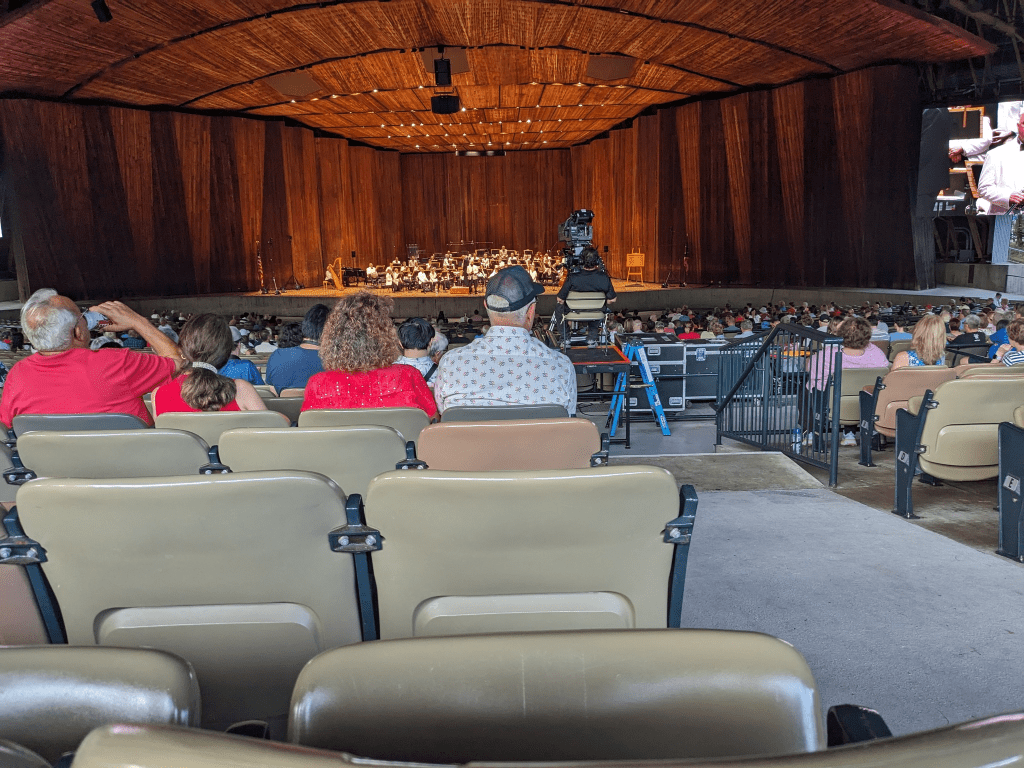
“This evening, after visiting Cuyahoga National Park, I went for a “taste of home” dinner at Texas Roadhouse. When I came out around 7:30 pm, I Googled for fireworks shows nearby, and discovered that the Blossom Music Center had an orchestral concert with fireworks starting at 8. I like orchestra concerts on the Fourth; after all, they’re less likely to attract the “drunk and disorderly” crowd than rock/ pop shows. It sounded a lot like the shows the Houston Symphony does every year at the Cynthia Woods Mitchell Pavilion and Miller Outdoor Theater, which I have attended many times, right down to finishing off with the 1812 Overture. (The website mentioned that concert-goers might revolt if they left that off the program.) More home cooking comfort food for me.
“It wasn’t until after I’d bought my ticket, found my seat, and looked at the program that I discovered that the 1812 Overture wasn’t on it. I looked back at the website and discovered from the time stamp in the URL that it was from 2017. Oops. But all was not lost. The conductor, Loras John Schissel, was inserting a number of pieces that weren’t listed on the program (including the Musicians’ Strike by Fahrbach… what a riot!) and I hoped that the 1812 Overture might be saved for an encore.
“But when we got near the end of the program, Mr. Schissel took a moment to explain why the 1812 Overture would not be included this year. After all, it’s a bit of a quirky tradition in the first place that we honor United States Independence Day with music that is about a 200+ year old war between France and Russia. And in light of the ongoing situation in Ukraine, instigated by Russia, he just didn’t feel right playing it.
“I can understand and respect that. Everything he said was true. But I had a little bit of a different feeling about it personally.
“You see, the 1812 Overture has always deeply moved me, for reasons I can’t entirely explain. As a little kid, before I even knew anything about the history of the battle, I listened to it over and over again on vinyl record. (Yep, I’m that old.) Something in it spoke to me, and still does.
“In the War of 1812, Napoleon’s French soldiers fell victim to the classic blunder: they got involved in a land war in Russia. Russia at that time (as in our time) was not a happy or a just land, necessarily, but the people drew together and fought for their home. At first it went poorly for them, but the terrible Russian winter eventually decimated Napoleon’s supply lines (as always happens when someone is foolish enough to invade Russia), and eventually the invaders were repelled from the land. The end of the Overture is a triumphant clamor of bells and trumpets to announce the victory as the routed French soldiers run home pursued by cannon fire.
“I see the Overture not as a song of Russian nationalism, but as the anthem of those who fight for their Home, however imperfect it may be, standing up against the invader and the wolf at the door. Right now, that is the exact situation of the Ukrainians. I wish there was a brave conductor and orchestra who could play back the Russians’ own story to them to remind them of what it’s like to defend your Home against an unjust invasion. Maybe empathy could succeed where logic and debate have failed.
“Of course, that’s why the 1812 Overture is, after all, connected with U.S. Independence Day. We fought for our Home and won. And we keep fighting for it. We stand up to international bullies. We stand up to hate. We fight against unjust, coercive laws (from both ends of the political spectrum) that threaten our homes and families and the well-being of the vulnerable. Every #MeToo victim who comes forward stands up to the unjust invasion of their body by a predator. Every time an unborn baby or an undocumented immigrant or a fatherless child is protected and helped, the wolf is driven away from the door for another day.
“Ram Dass said, “We’re all just walking each other home.” So much of the time, it feels like we’re lost in that blizzard, the whirling chaos of strings and clashing national anthems in the Overture. But every once in a while, we make it to the threshold and see firelight and warmth and know that we’ve reached a safe place together, a place where we can sing in triumph. We’ve come just that one step closer to creating the haven of a just society, driving off the forces that would wreck it. And that’s worth remembering and aspiring to on Independence Day.”
The next day, I moved on to Kentucky to see Mammoth Cave National Park. This was an interesting stop for me in that I’m not sure if I had really been there before or not. In general, I’m not visiting parks this year that I’ve been to before, even places like Indiana Dunes and the St. Louis Arch where my previous visit occurred before they were designated as national parks, simply in the interest of time because I’ve got so much ground to cover. But with Mammoth Cave, I haven’t been able to clearly remember for the last 20 years or so whether I actually went in the cave or not. I know that I set out to visit it on September 20, 1997, with my college roommate and her uncle who was visiting her and another friend from Asbury. I know we made the drive over there. And after that, my memory is kind of a blank. I *THINK* we arrived and discovered that we couldn’t visit the main cave that day for some reason, and so we went and visited another nearby cave instead. But I couldn’t swear to that at all. I usually have a pretty good memory for that sort of thing, but I’m attributing my lapse in this case to trauma. When we returned to campus that evening, I learned that my favorite singer in the world, Rich Mullins, had died. At 19 years old, it was the first time I had experienced the sudden and unexpected death of someone important to me. Interestingly, I recently asked Natalie (the friend who went with us that day, and the person who told me about Rich Mullins’ death) whether we got to go in to Mammoth Cave or not, and she couldn’t remember either!
At any rate, I decided that if I couldn’t remember my previous visit, it didn’t count, so I went again. This time I purchased a tour ticket in advance to make sure I could get in. There are a lot of different options, but I went with the “Historic Tour” that covers about 2 miles of trail within the cave with over 300 feet of descent and ascent. It’s a pretty good workout! The cave is a steady 54F (12C) year-round, which certainly felt cold when I first went in, but I was sweating by the end.
Unlike Carlsbad Caverns where I went last year, Mammoth Cave is a “dry” cave. There is a little bit of water present in places, and the cave was originally gouged out of limestone by water, but it doesn’t have active stalactites and stalagmites like Carlsbad. The walls tend to be worn in smooth wavy patterns by the flow of ancient rivers. It’s majestic in its own way when you are surrounded by it, but harder to capture in photos than a wet cave with fantastic figures all around.
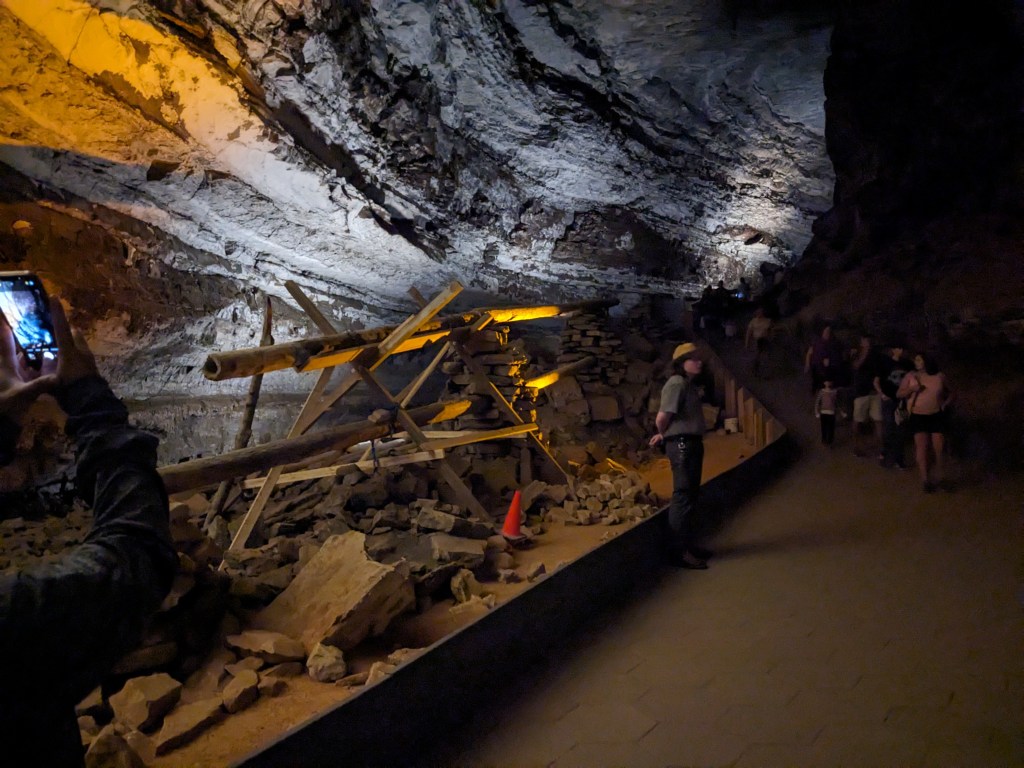
Our tour guide, Hunter Wood (“Yes, that’s my real name, let’s just get that out of the way…”) told us about Mammoth Cave’s history, including its importance to the War of 1812 as a saltpeter mining operation (to make gunpowder… “The rockets’ red glare, the bombs bursting in air,” etc.). After the war, saltpeter became less profitable, and the cave’s owners turned to tourism to make money off it. He showed us what the cave looked like with only the light from the tiny little lanterns they used in those days, and then what it looked like when the lights went out completely.

Yeah, you really can’t see your hand in front of your face.
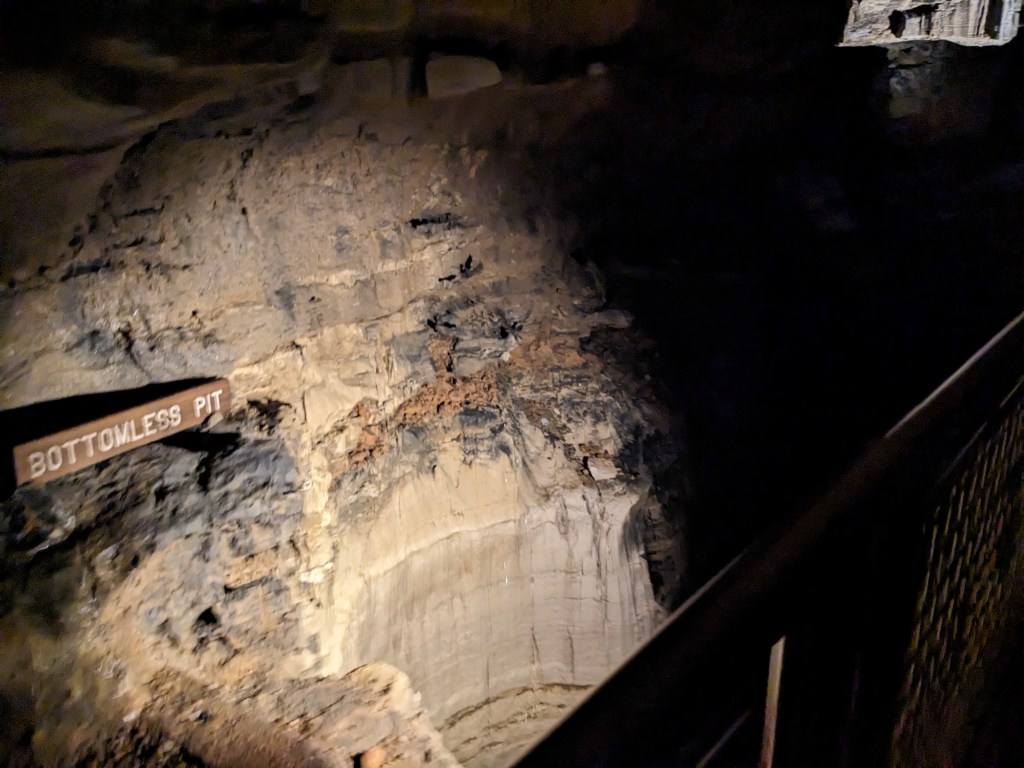
They gave us fair warning before we went in that our route would be challenging for people with fear of heights and claustrophobia. I got a quick picture of crossing the “bottomless pit” (over 100 feet deep, not actually “bottomless”), but I couldn’t take pictures in the really claustrophobic parts (“Fat Man’s Misery” and “Tall Man’s Agony”) because I couldn’t stop and hold up the line. However, I can report that we wriggled through a 200-foot-long crack where our path at times was so narrow that we had to sidle through sideways, and so low that we had to crouch over double.
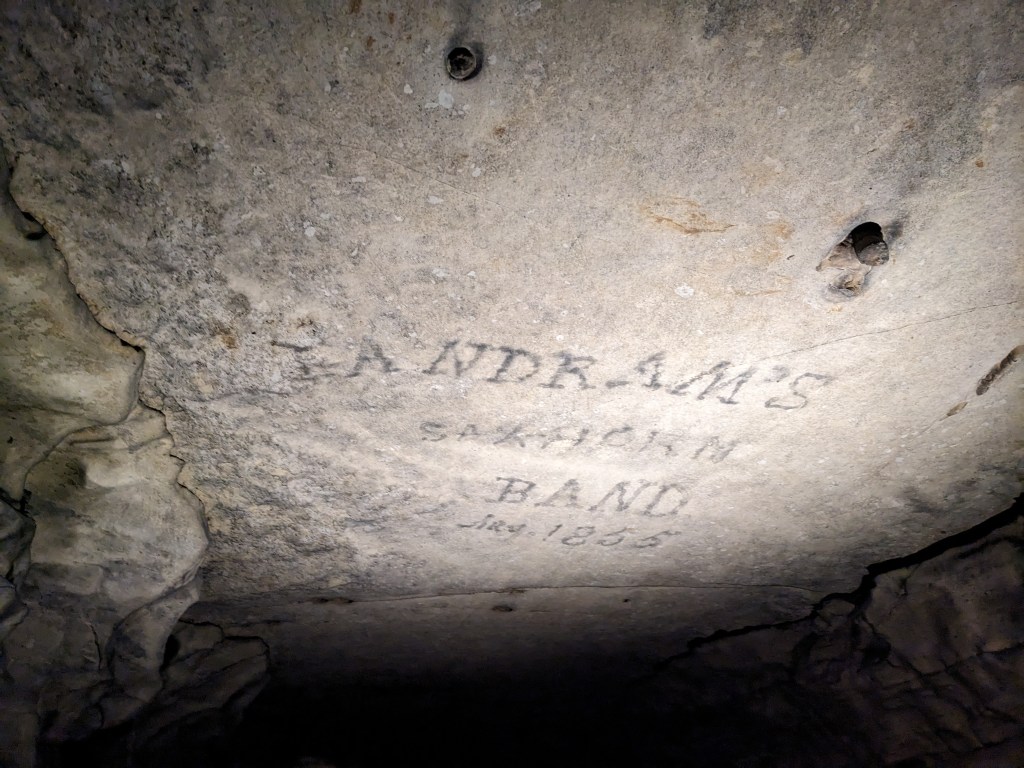
Hunter also told us that marks on the cave walls before 1941 are considered “historic graffiti,” while anything newer than that is considered “a felony.” I thought this piece of historic graffiti was cool, just for its age.
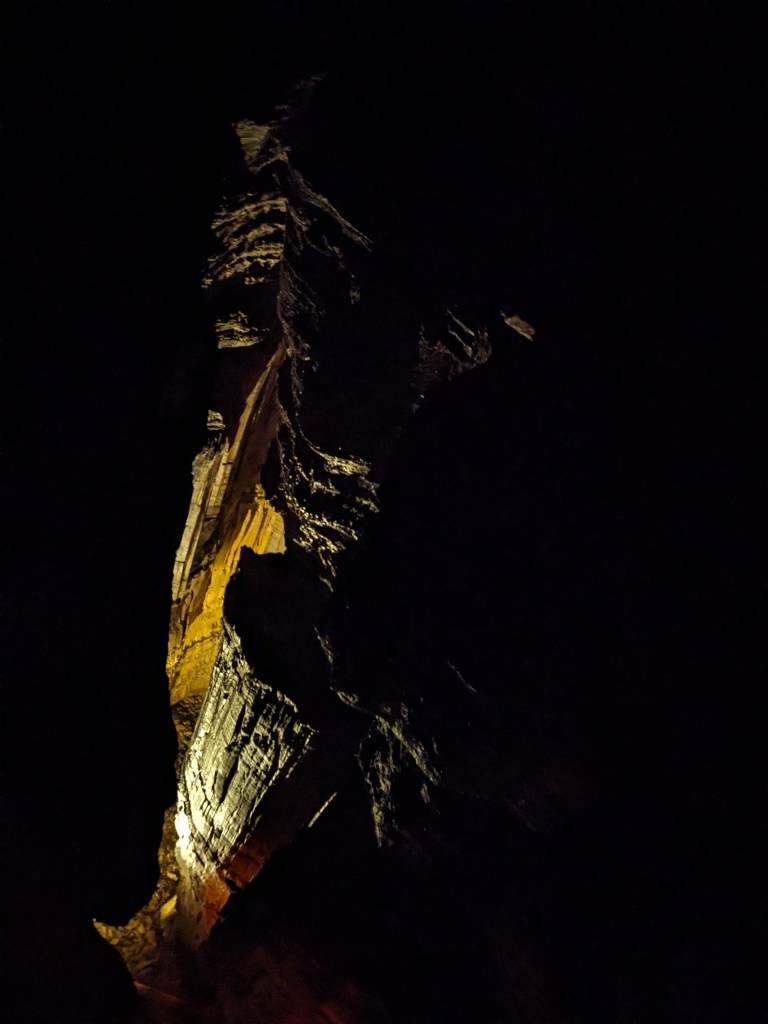
Climbing back up to the surface was the real workout. At one point we went up a “fire tower” with (we were told) five stories’ worth of stairs, in the impressive vertical space of Mammoth Dome.
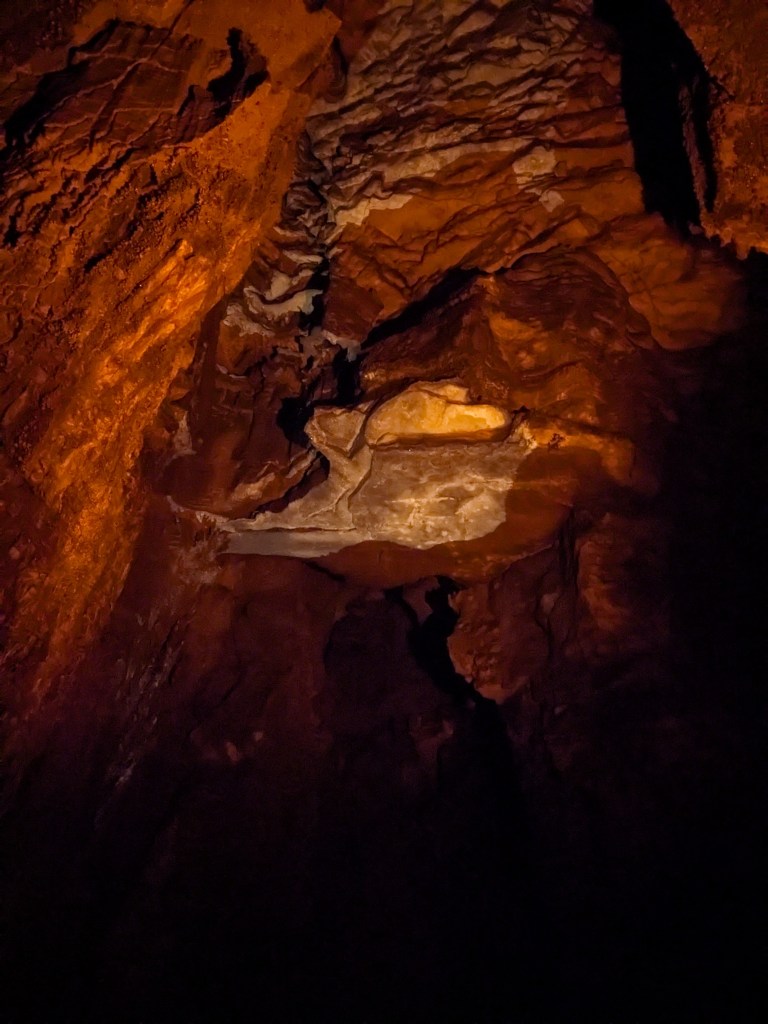
And then there was one last flight of stairs to get out, into the hot humid Kentucky summer air.
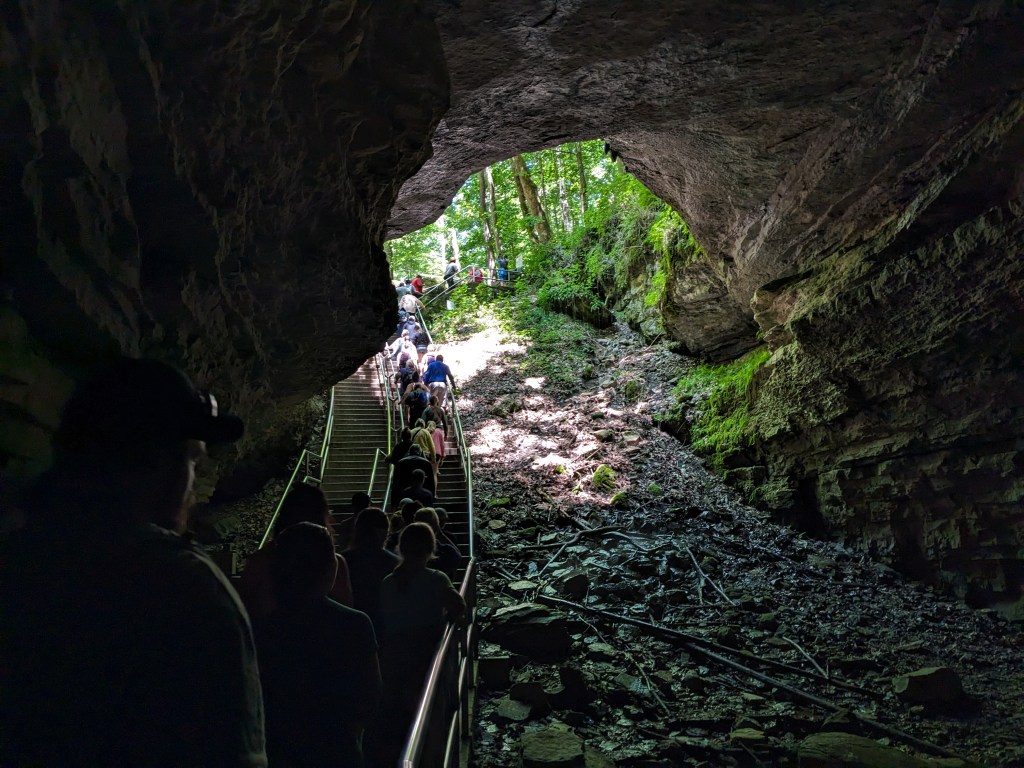
At least I know for sure now that I have indeed been to Mammoth Cave. 🙂
My next stop is not a National Park. I’m actually down at Johnson University, where I’m a PhD student, for a leadership summit. After that, I’m stopping at my undergrad alma mater, Asbury University in Kentucky, to see how the campus is doing these days and hopefully connect with a few old friends. The National Park Tour should resume later this month with Voyageurs and Isle Royale in Minnesota and Michigan.


Leave a Reply