I was originally supposed to leave Utah on Thursday September 5, but as it turned out, my clients had some big deadlines on the 5th and the 6th, so I rearranged plans and pulled out on Friday afternoon. My target was Tucson, Arizona, which was a solid 8 hours of driving, so I broke it into two days with an overnight stop at Thousand Trails Verde Valley in between.
My Facebook post explains the continued time confusion:
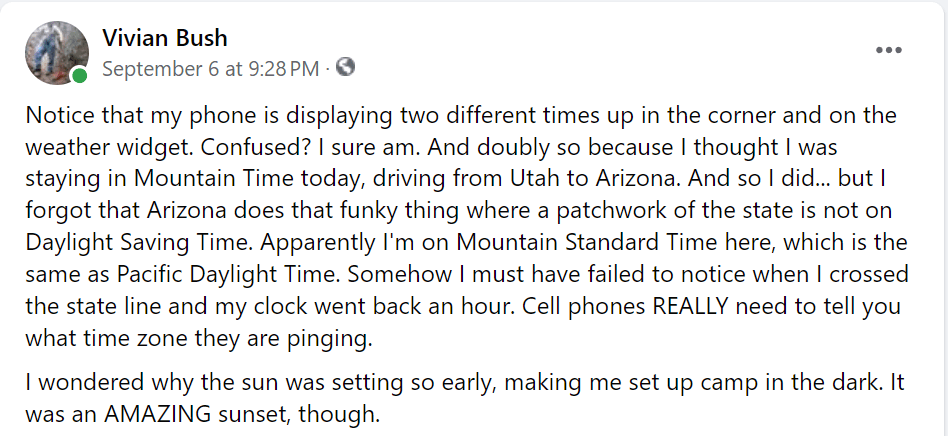
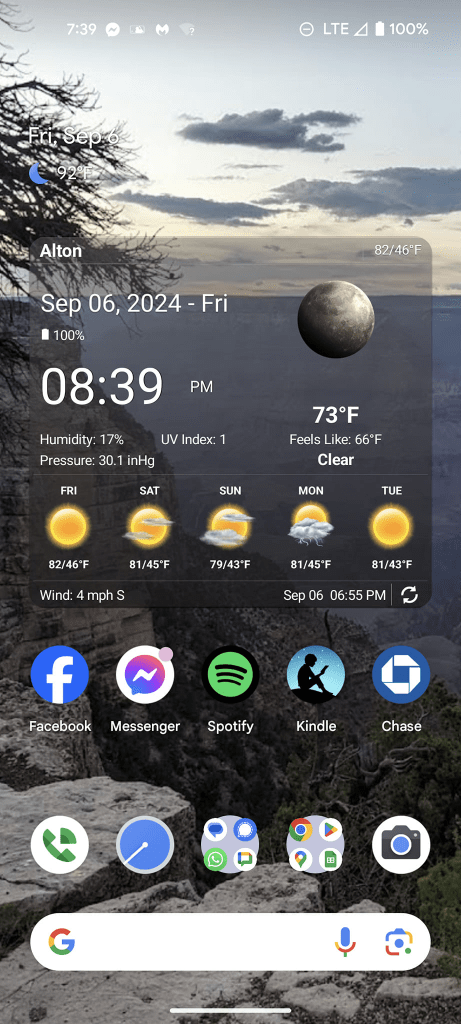
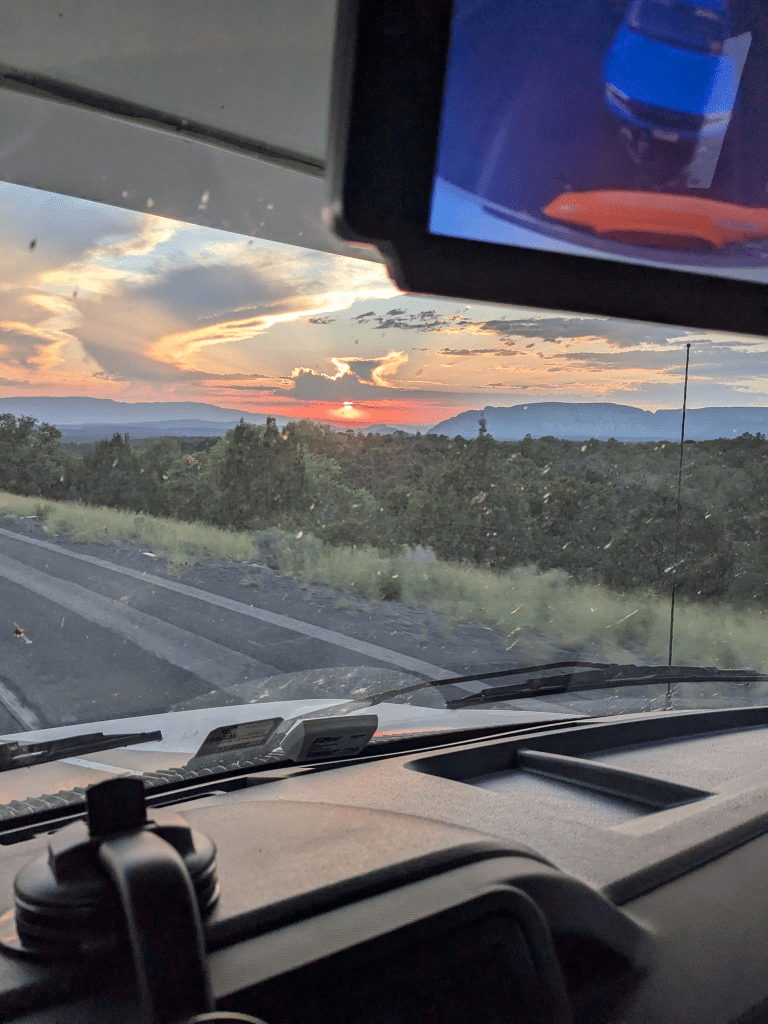
The sun kept setting “earlier” than I thought it should, so both days I arrived at my campsite at the tail end of twilight when I needed a flashlight to see what I was doing instead of an hour before the light faded. This is not ideal for getting an RV situated and plugged in. Then, to make matters more confusing, when I visited Saguaro National Park my cell phone must have pinged off a tower somewhere that WAS on Daylight Saving Time (in the Navajo Nation, maybe? They do practice DST) so my phone jumped back ahead an hour and my truck clock (which sets itself from my phone) got stuck on that for most of the day. There’s something to be said for having a clock that DOESN’T reset from cell towers as you move, so that you have a fixed point of reference to work out the time if you’re not quite sure where you are in relation to time zone boundaries. In fact I keep several of those in my RV, but I don’t have one in my truck. I still say cell phones need to tell you when they make a change like that. [/end rant]
At any rate, I made it to Tucson Saturday night and set out to explore Saguaro National Park at dawn on Sunday morning.
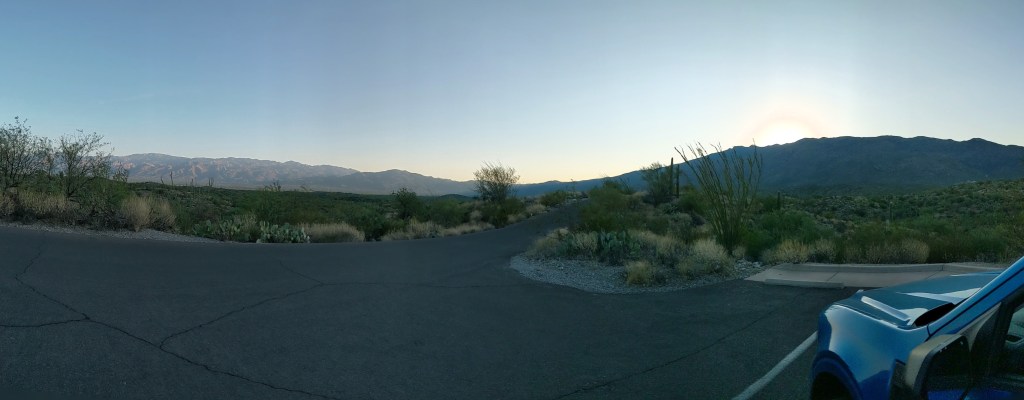
The park has East and West districts, separated by the entire width of the city of Tucson. I only went to the East district, nestled in between the outskirts of the city and the Rincon Mountains. Saguaro is located in the Sonoran Desert which covers southern Arizona and northern Mexico. The Sonoran Desert is a bit different from other southwestern U.S. deserts in that it has wet, temperate winters and rarely freezes (due to its relative position to the Pacific and Gulf of Mexico). This gives it two wet seasons per year instead of one and allows it to support a wide variety of life that is sensitive to extremely cold temperatures. Among those is the mighty saguaro cactus.
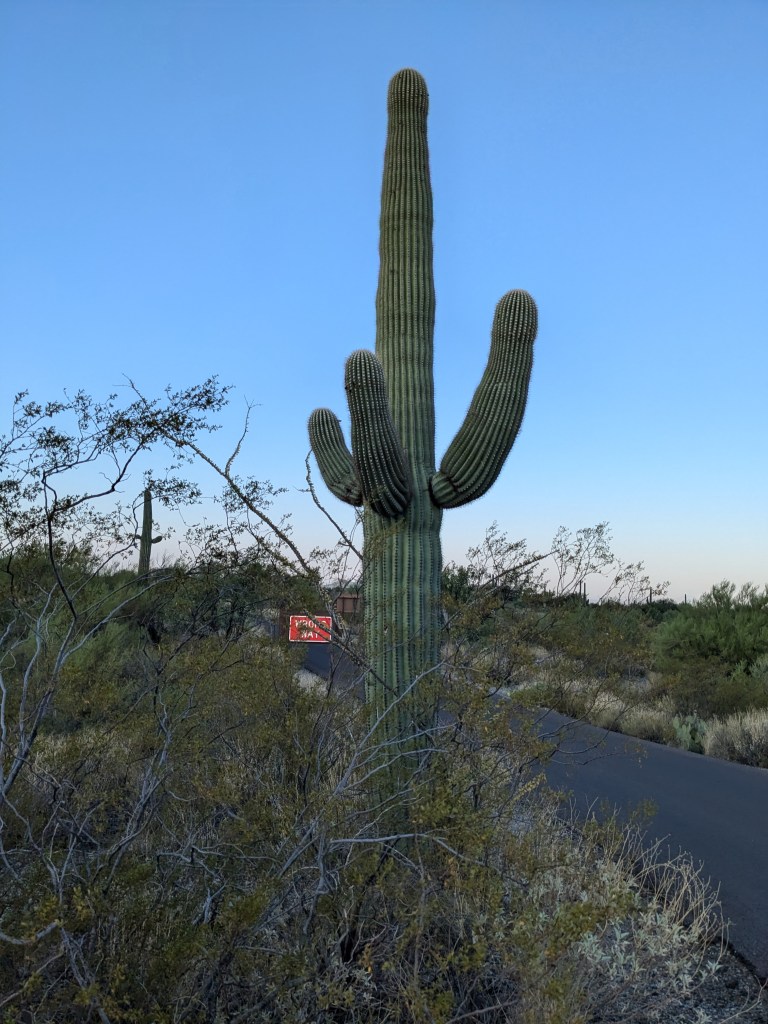
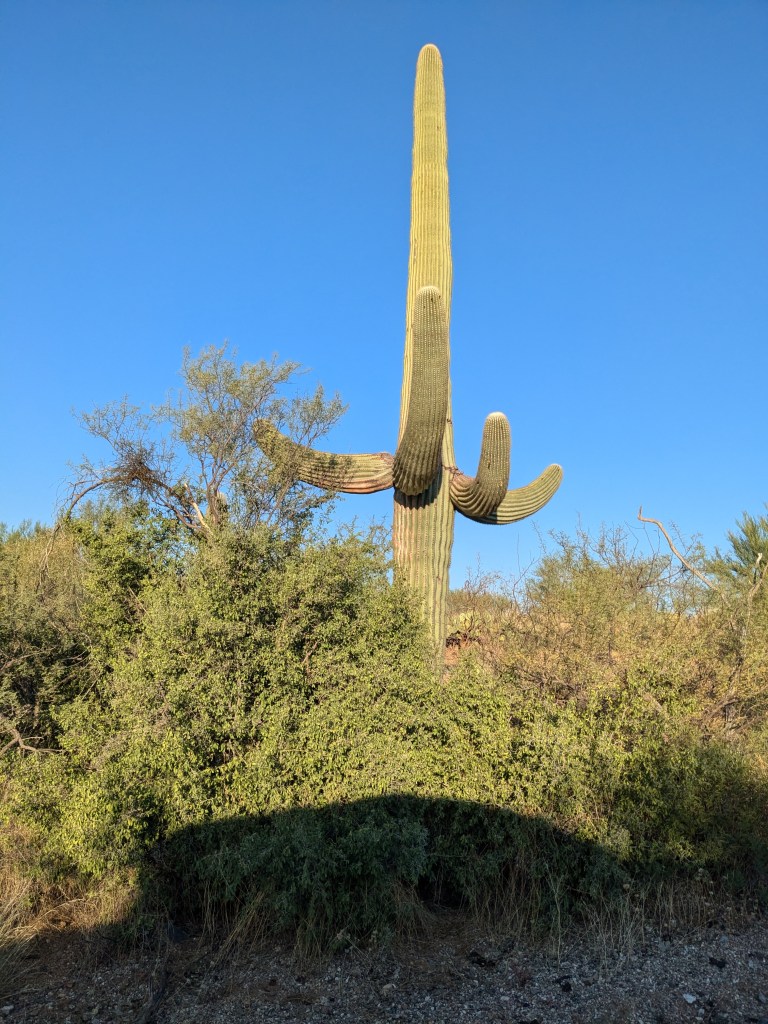
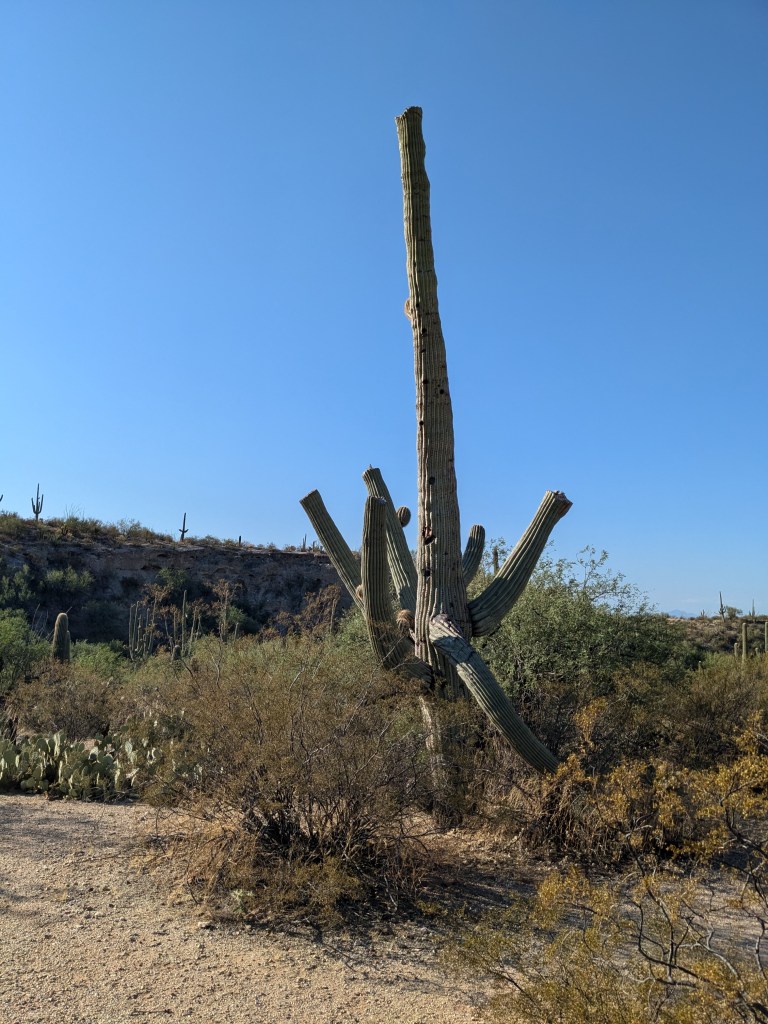
The saguaro, of course, is the iconic feature of the Arizona desert; every school child learns to draw one. I particularly liked this one that looked like it had been drawn by a middle school boy with one thing on his mind.
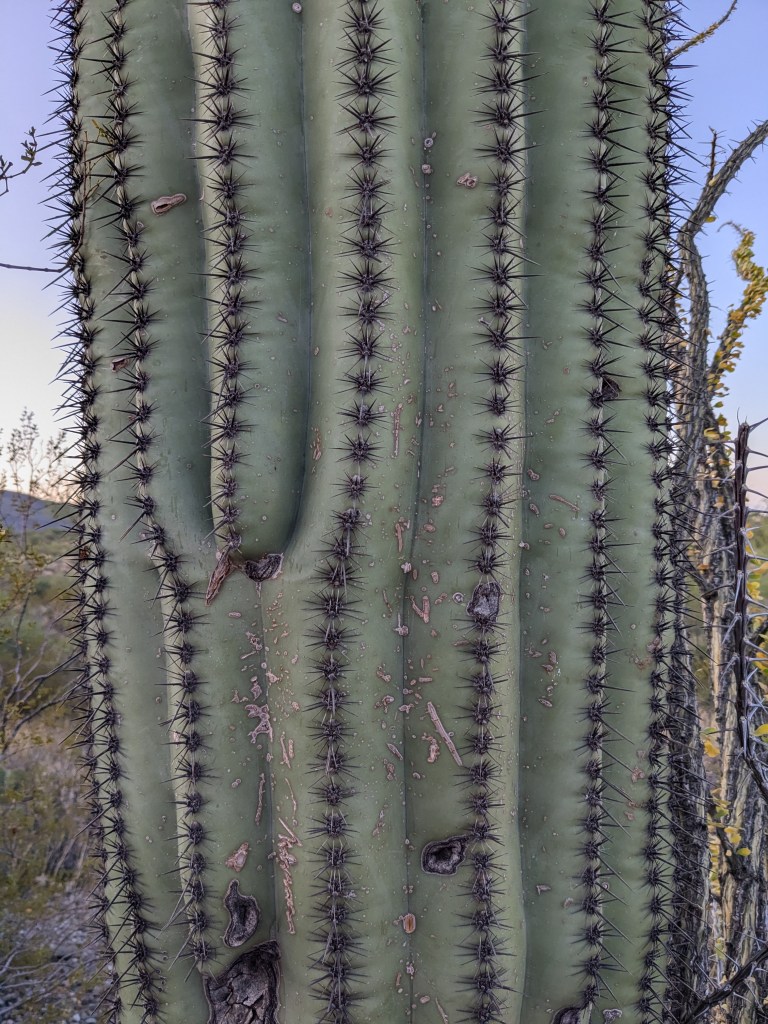
Up close, they have a tough, firm green skin with solidly spiked needles growing on ridges.
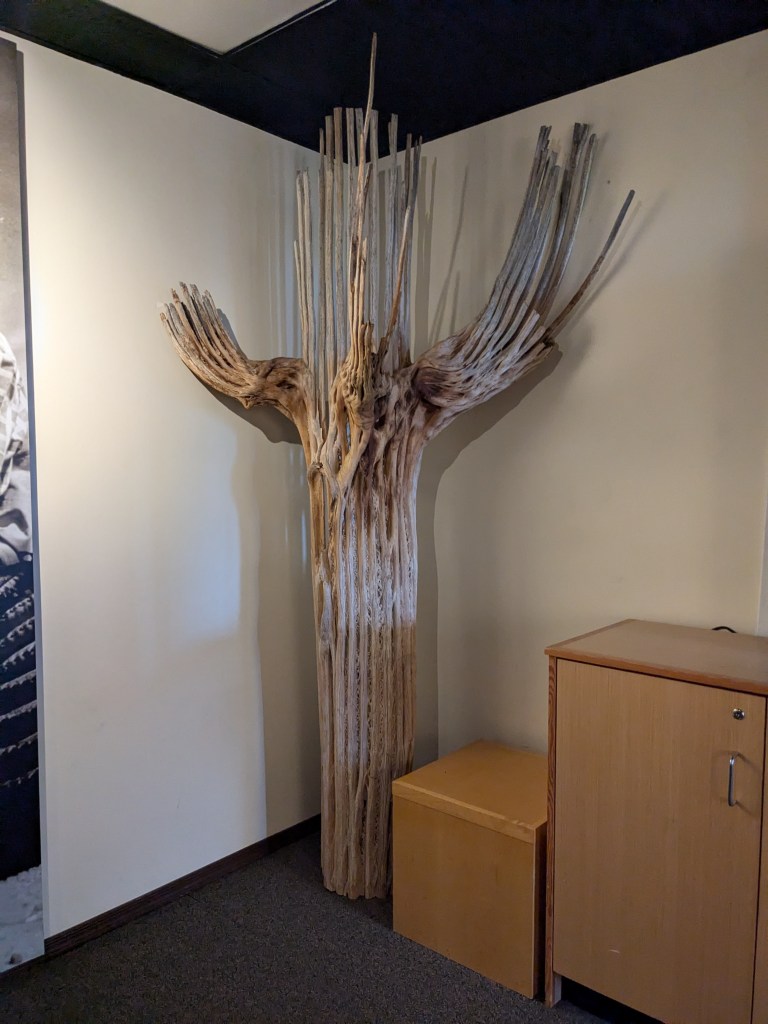
I learned that they actually have a wooden “skeleton” underneath that skin which gives the whole plant its structure.
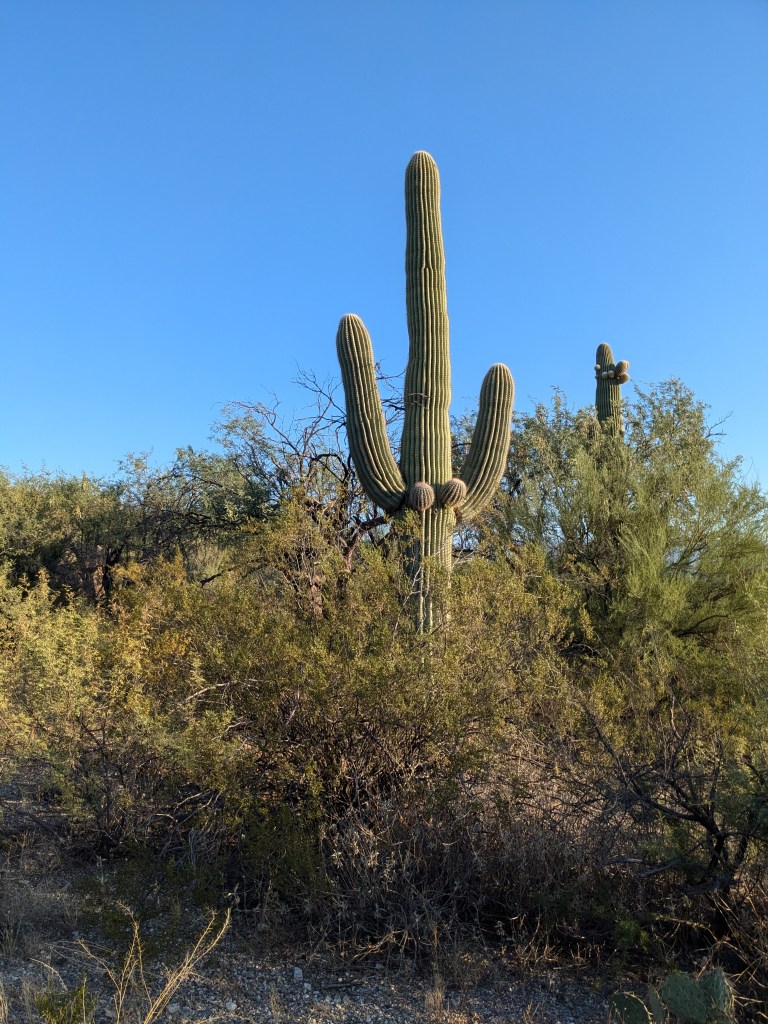
Saguaro National Park has one of the most prolific saguaro “forests” anywhere. It was even thicker prior to the 1930s, when the park area first began to be preserved. But a couple of hard freezes in the 1930s and 1960s did a lot of damage. It turns out saguaros don’t do well if they are frozen for more than 20 hours at a time. To make matters worse, cattle used to be grazed on the land, and they did so much damage both to cactus seedlings and to the “nurse trees” (scrub bushes) that provide necessary shade to the seedlings that no new cacti were surviving. By the 1970s, there were dire predictions that the saguaro might go extinct by the 1990s. So the Park Service bought up the grazing rights and kicked the cattle out, and sure enough new cacti began to grow.
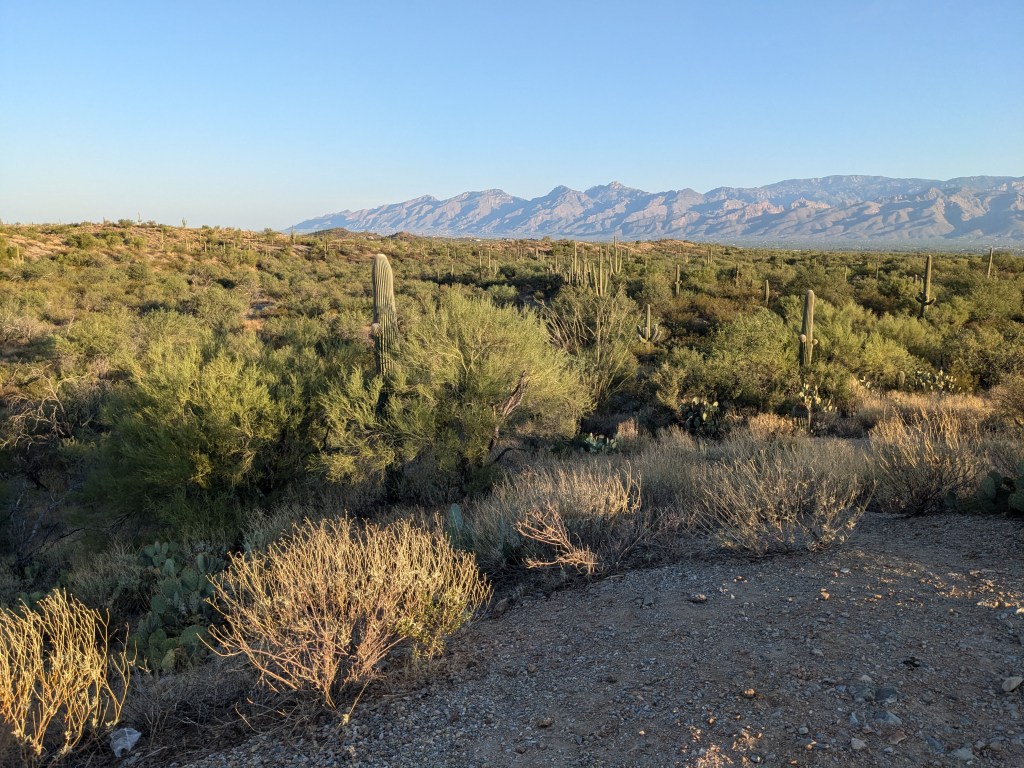
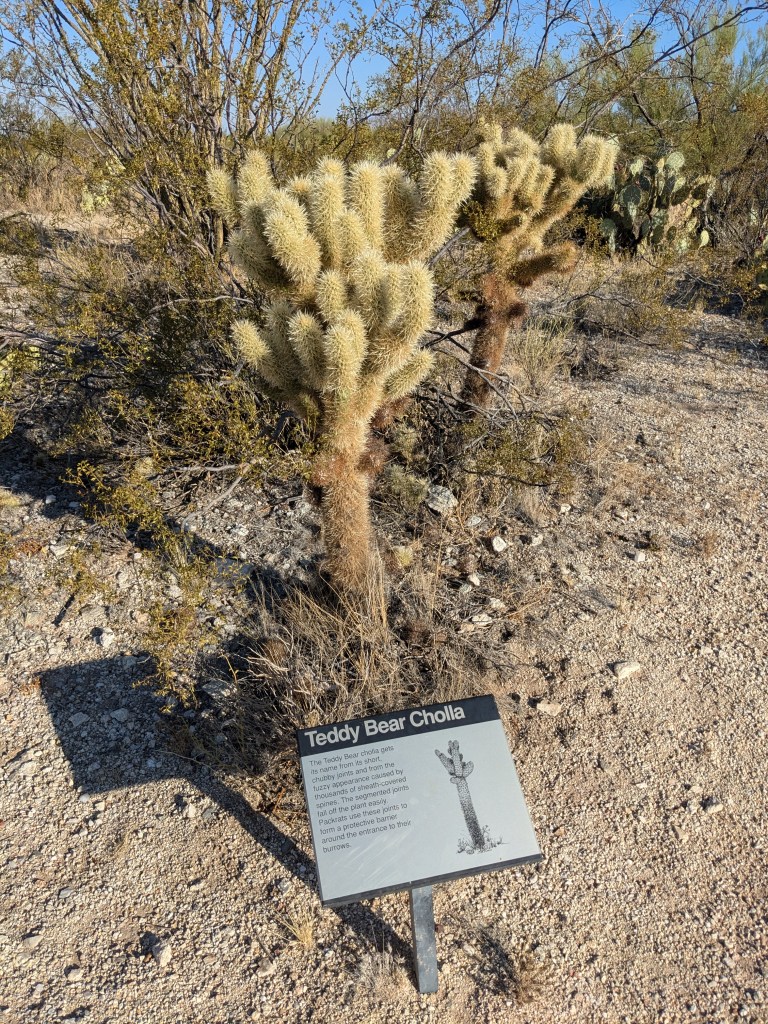
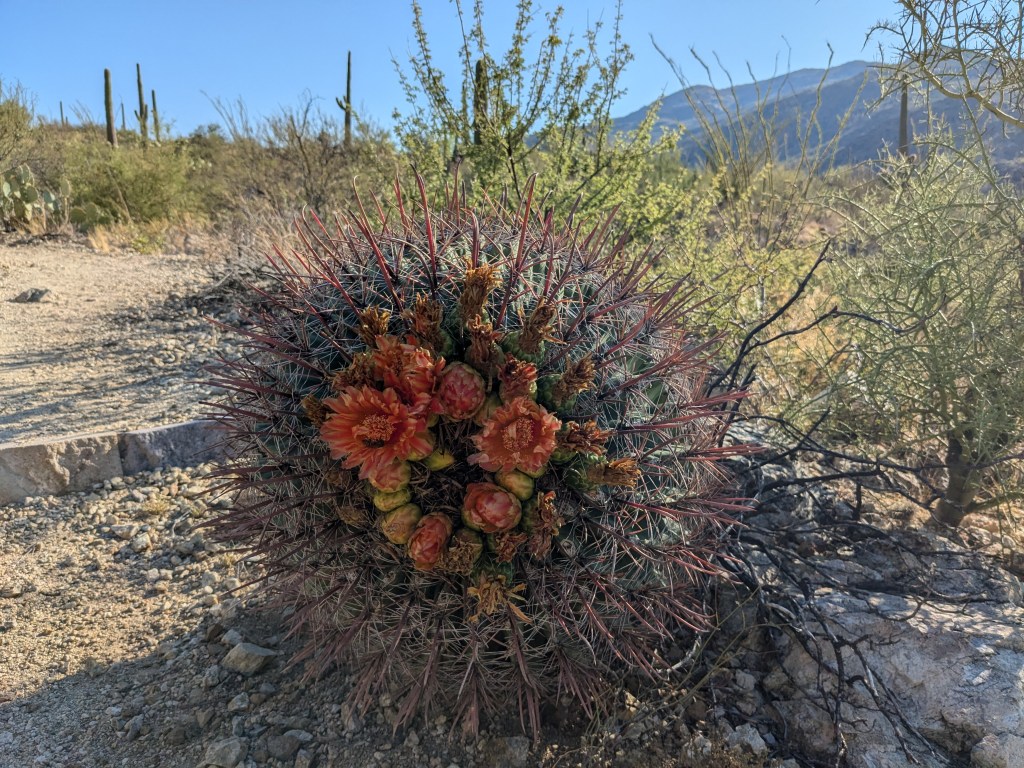
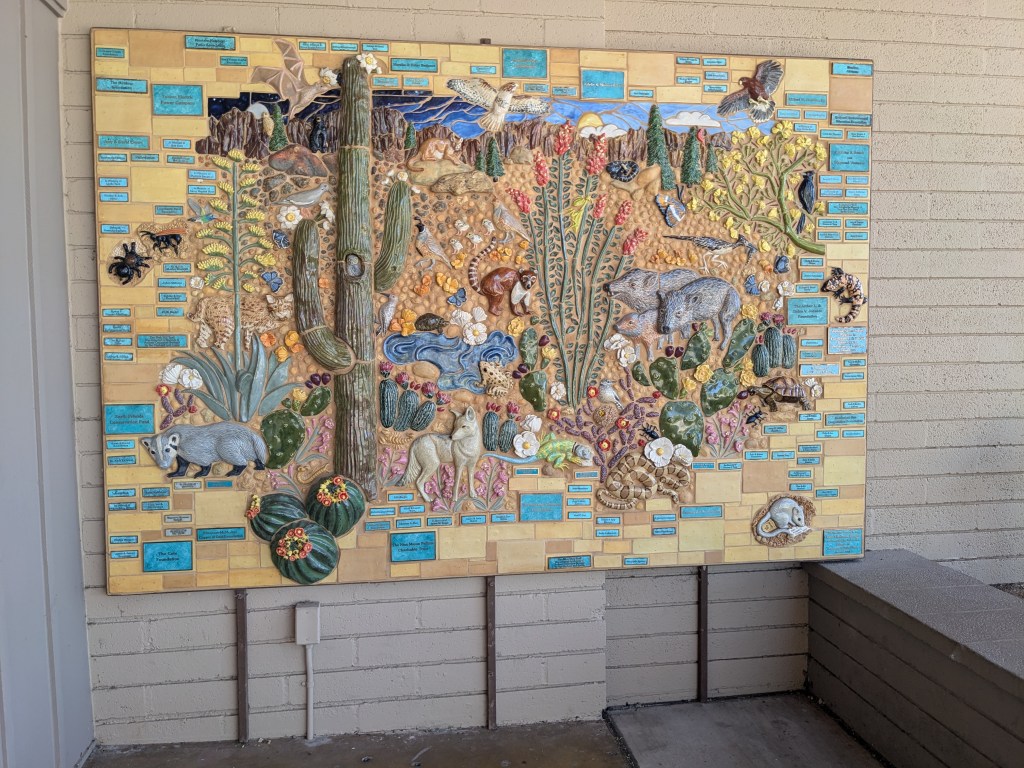
The park actually has a couple dozen different species of cacti in addition to the saguaros, including prickly pear, barrel cacti, and others.
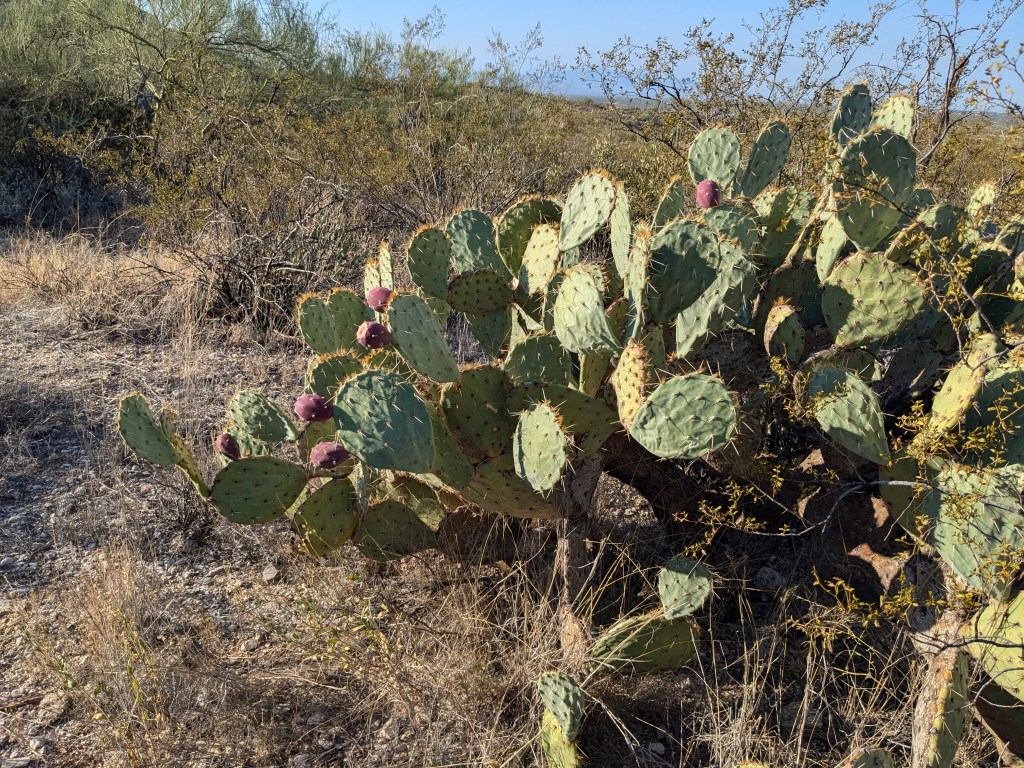
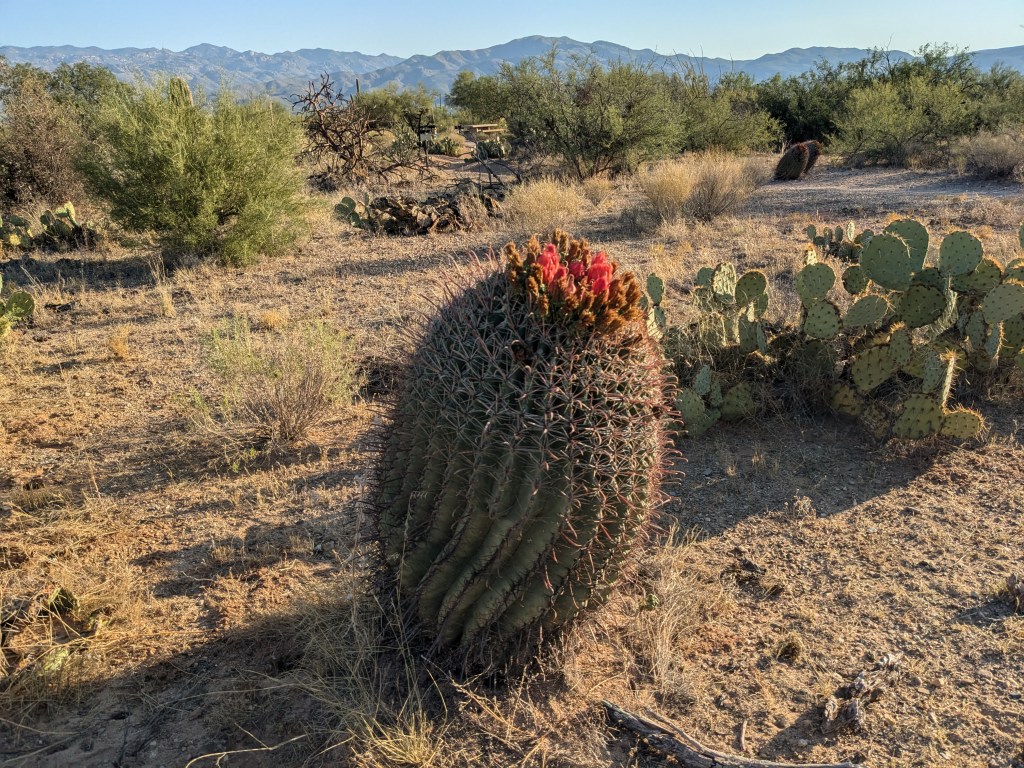
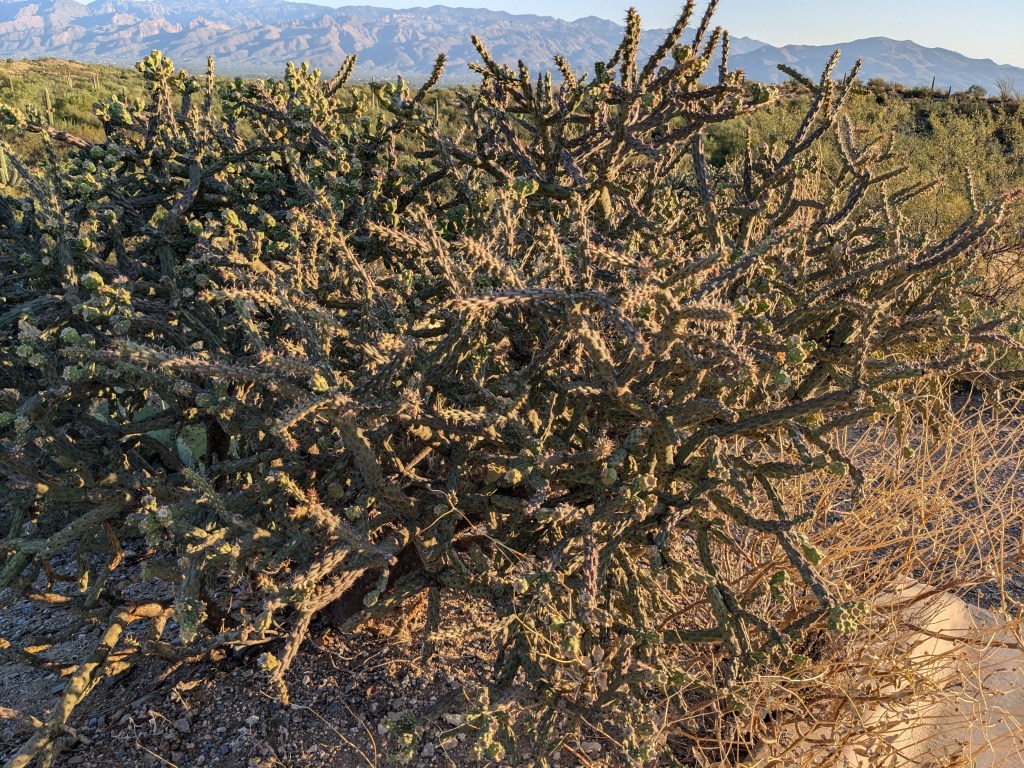
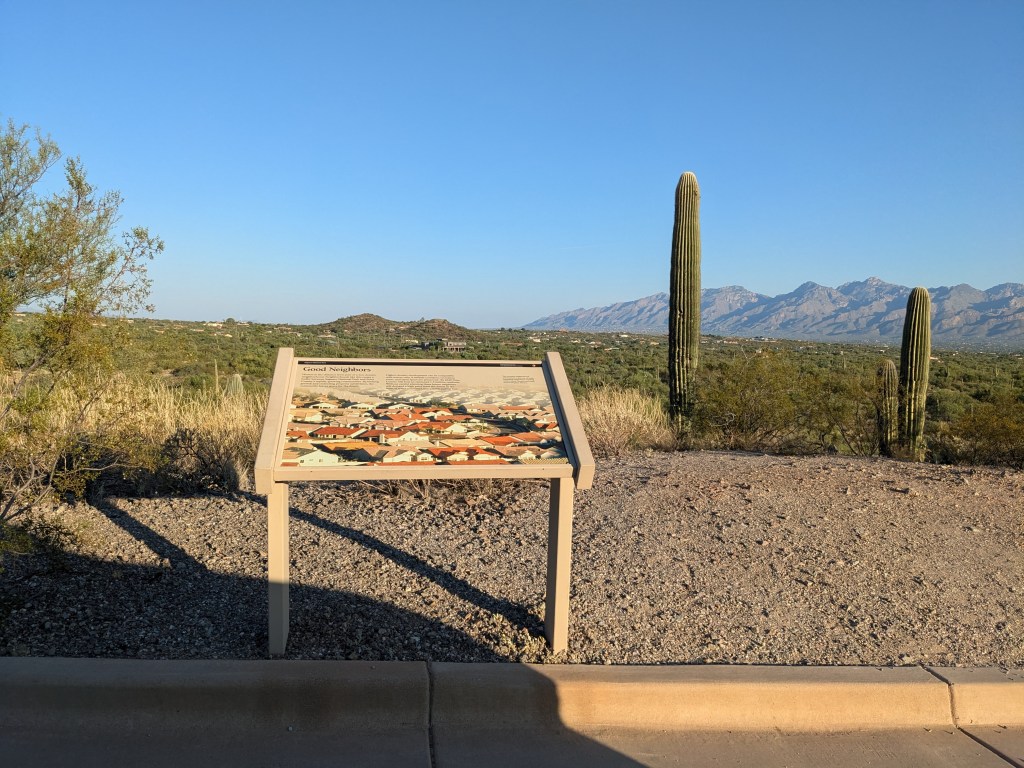
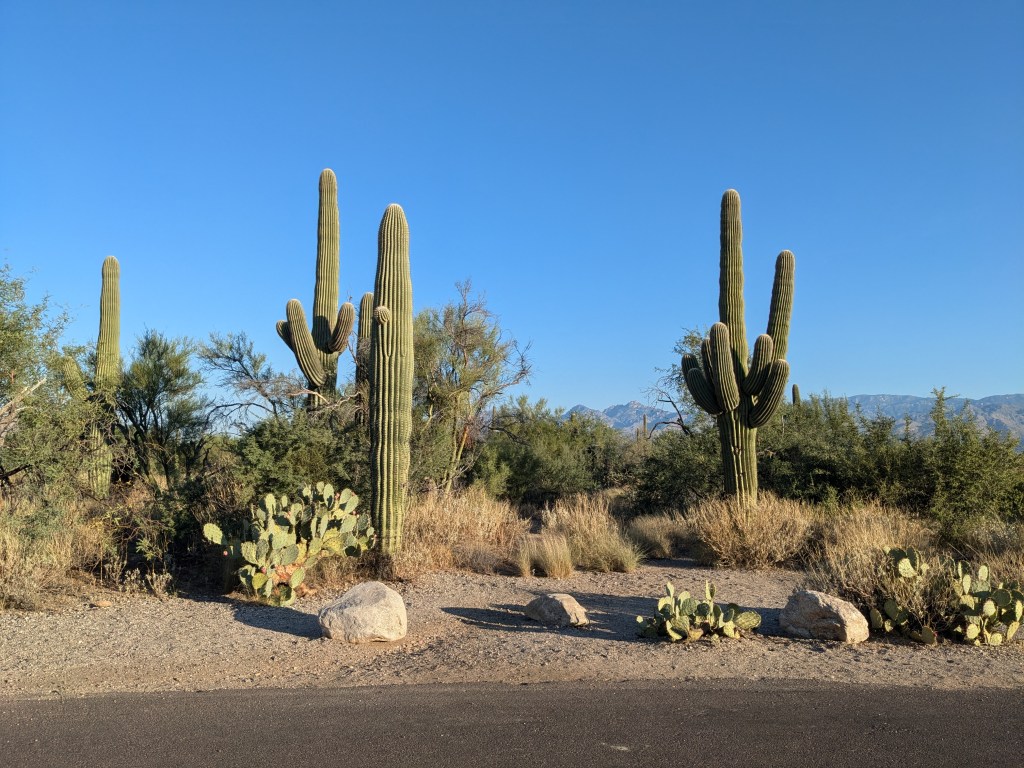
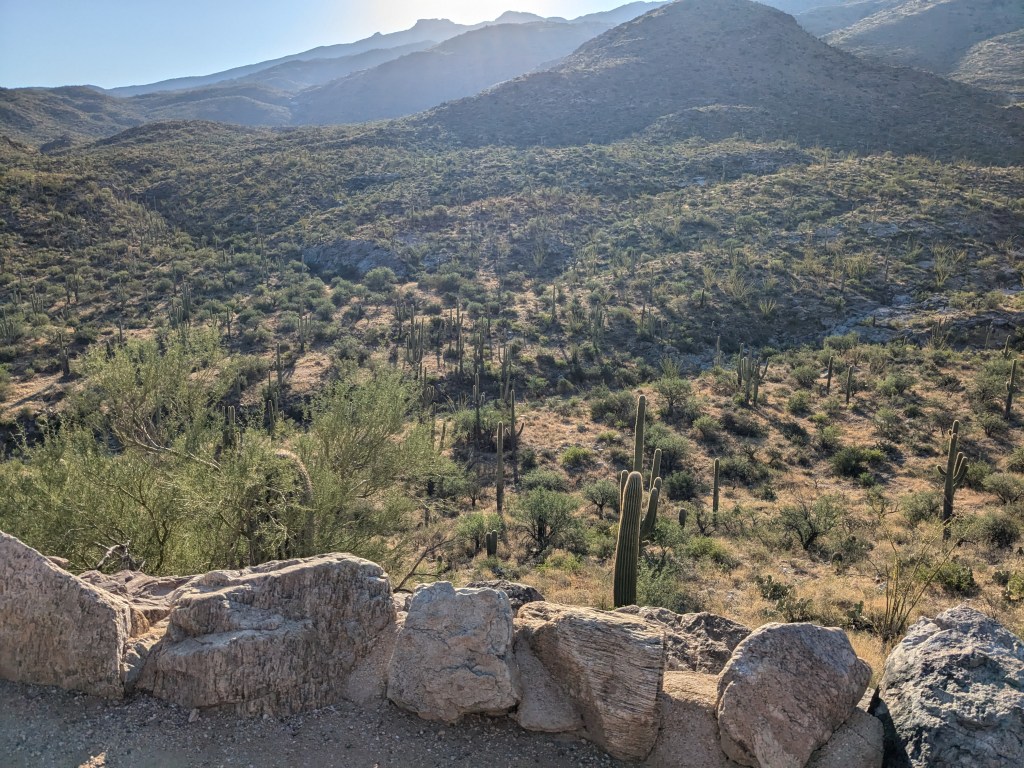
The East District has an 8-mile loop road, Cactus Drive, which takes you through some of the highlights of the cactus forest, so I started with that. It provides lots of views of cactus, as well as the surrounding mountains and the back yards of nearby Tucson homes that come right up to the park boundary.
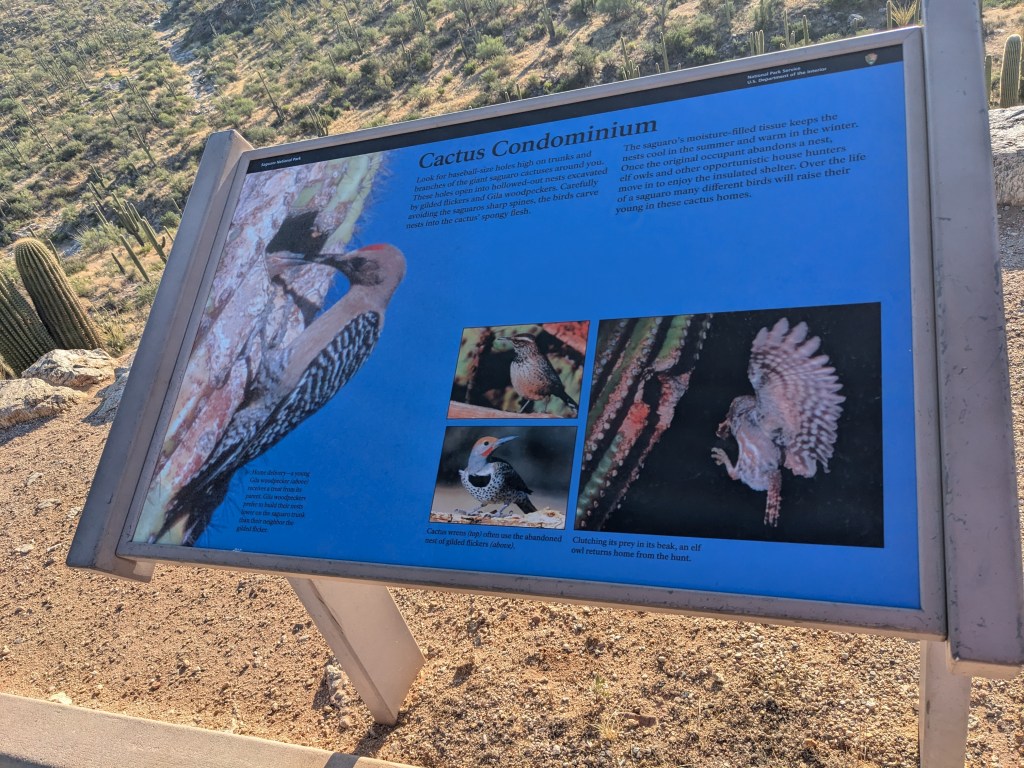
I was especially interested to learn about the species of birds (including one woodpecker) that drill holes in saguaros and make their nest cavities there.
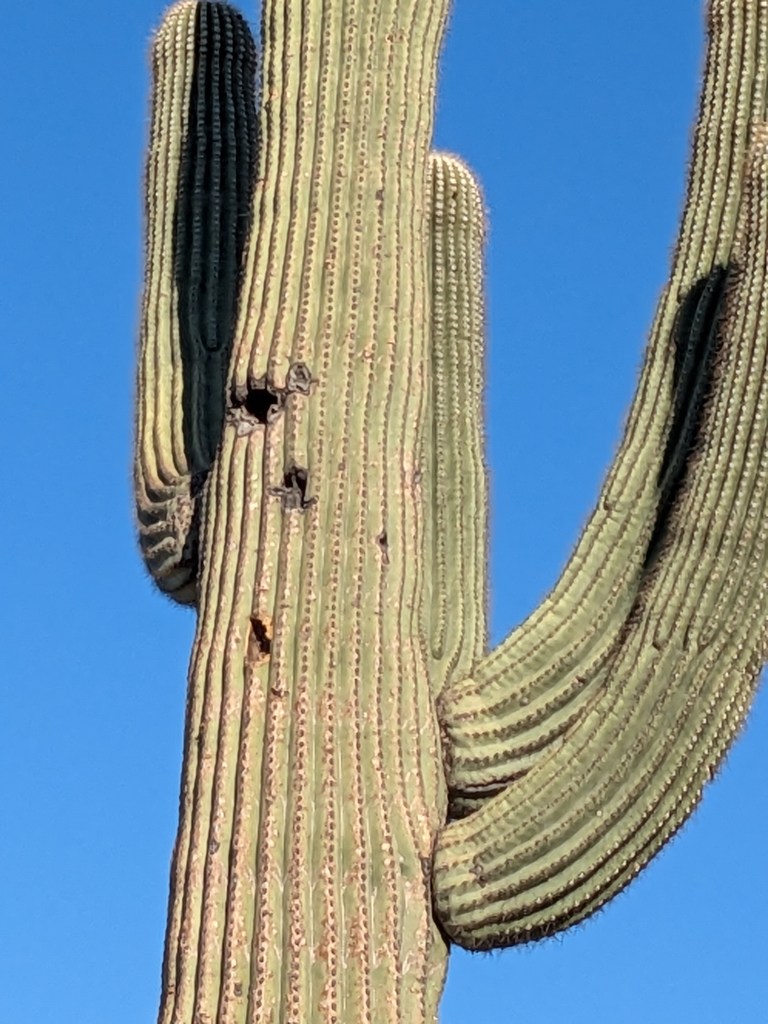
I did, in fact, spot some nests on some of the saguaros.
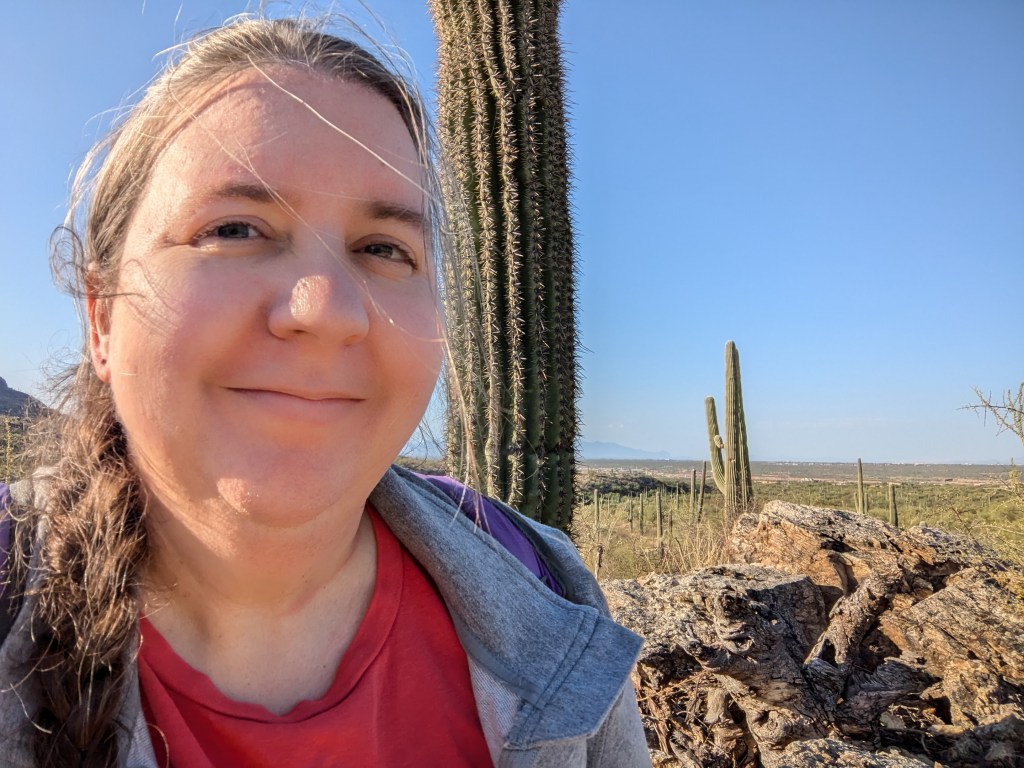
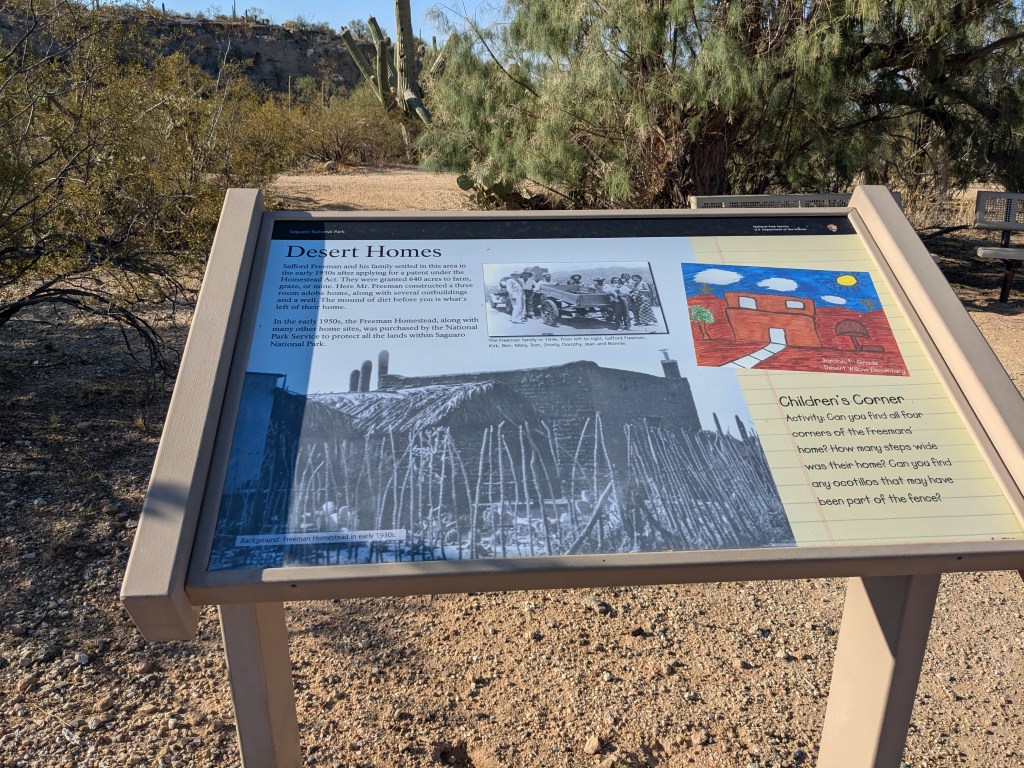
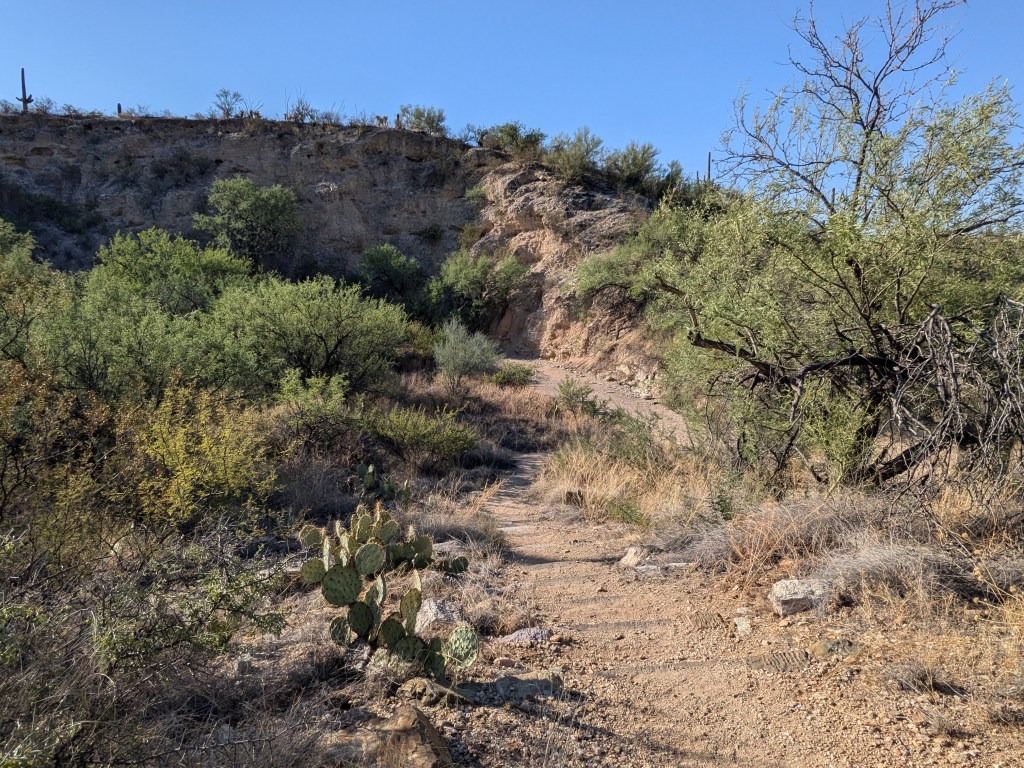
Near the end of the driving loop, I got out and did the one-mile loop hiking trail to the Freeman Homestead. The Freeman family claimed their 640 acres under the Homestead Act before the park existed, and the National Park Service eventually bought up the land. While the Sonoran Desert is teeming with life adapted to its harsh environment, I can’t image trying to make a living farming there.
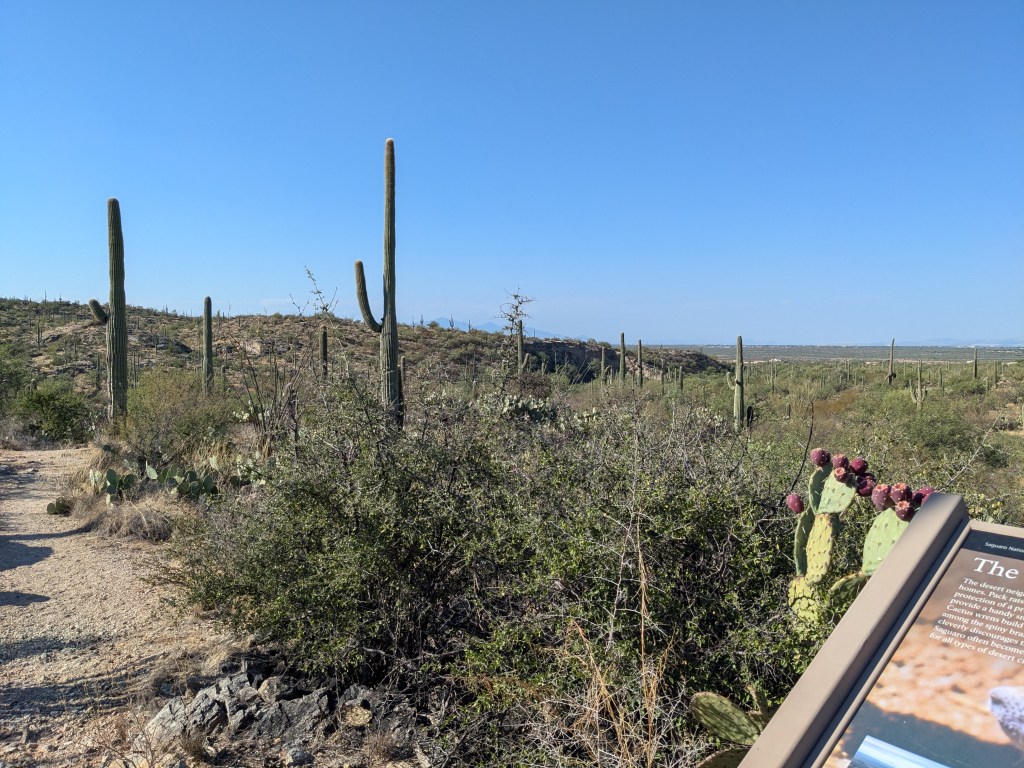
After my hike, I made my way back to the Visitor’s Center (open as of 9am Mountain Standard Time… I think…) and learned a few more things:
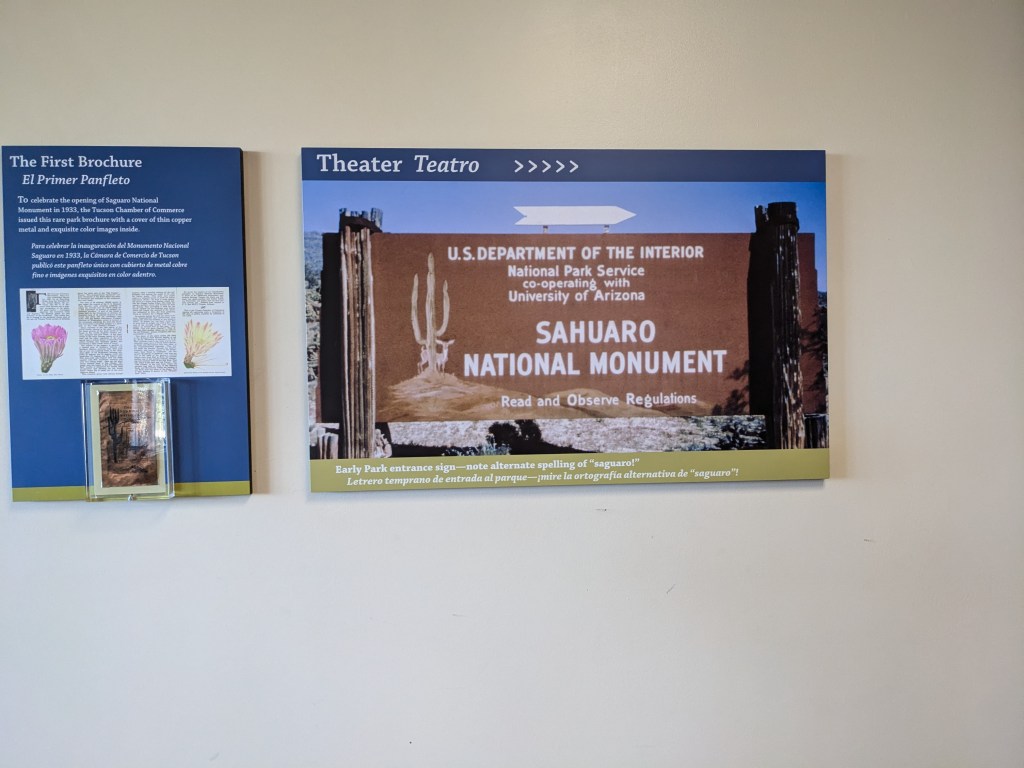
- I’ve been pronouncing “Saguaro” wrong all my life. I was saying “sag-WAR-o” but the ranger said “SWAR-o” and all the people in the interpretive film I watched said “sah-WAR-o.” I think the latter pronunciation is most widely accepted. There was a picture of an old sign that actually spelled it “Sahuaro.” I’m sure there are historical and linguistic reasons for putting the “g” in there, but it sure is confusing.
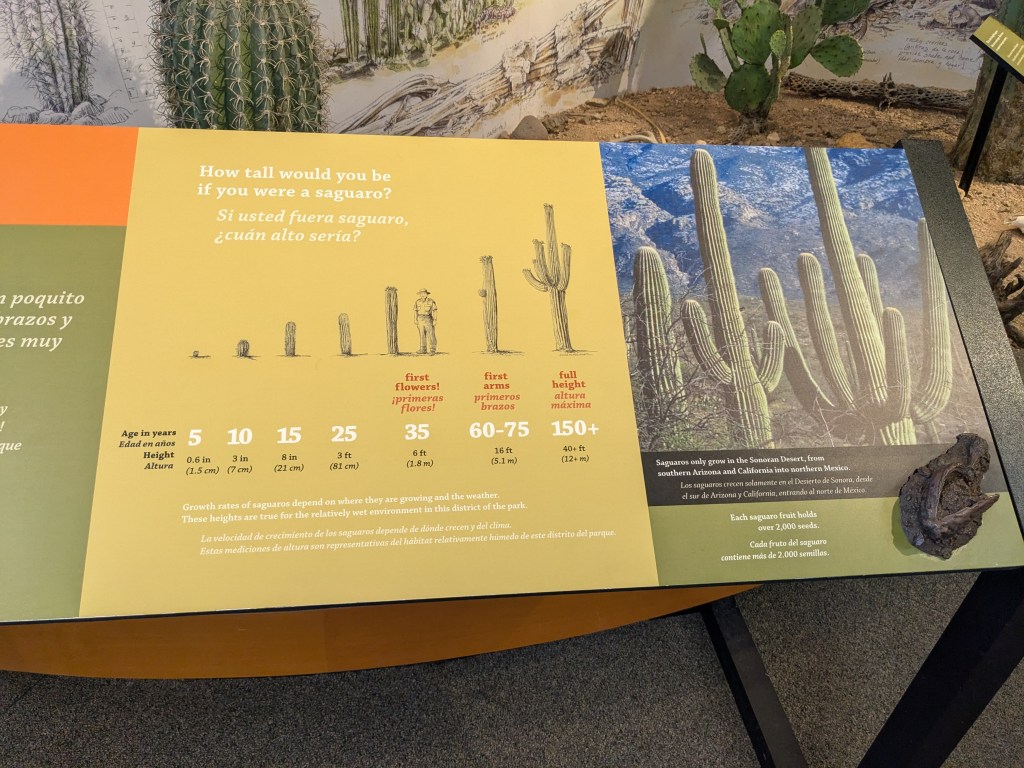
2. Saguaros grow very, very slowly. It’s mind-blowing how old the big ones are.
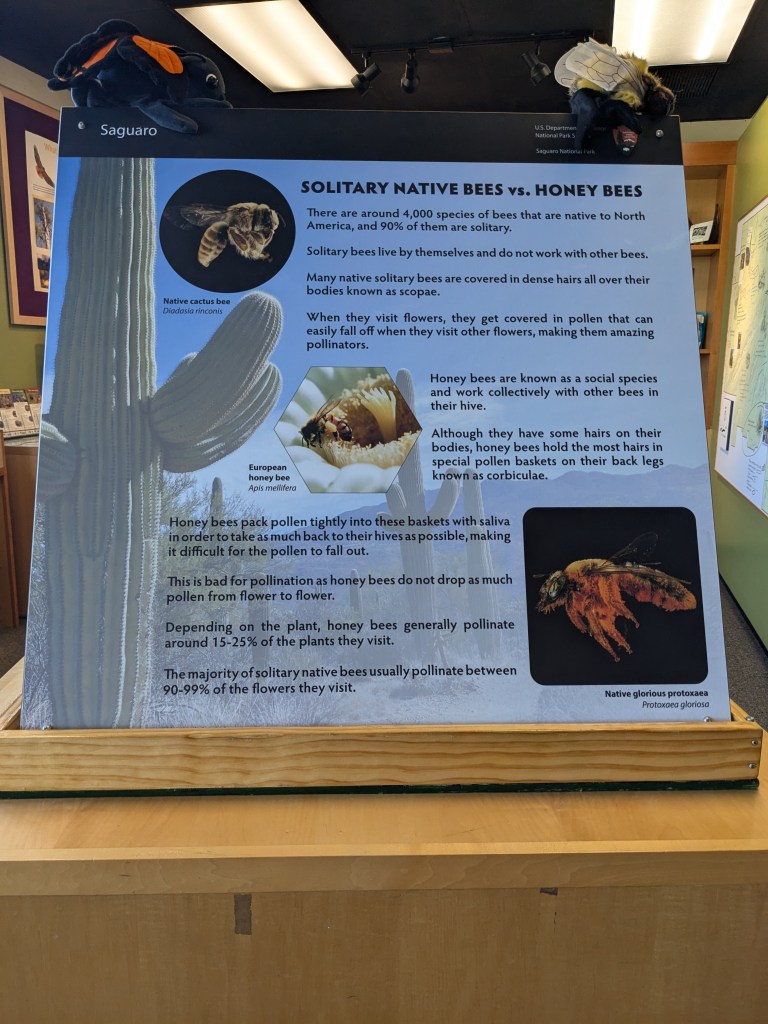
3. Not all bees live in hives. (I saw a bee in a cactus flower earlier on my hike…).
Of course, Cactus Drive is only a tiny fraction even of the East District of the park. I watched the interpretive film in the Visitor’s Center and saw footage of the higher elevations, which (as in Great Basin NP) are covered in lush pine forests. There’s a primitive campground up at the top, Manning Camp. But there is no motor vehicle road to get up there; you have to hike uphill for miles or take horses/ mules. My little flat-ish one-mile hike had been enough for me, so I wasn’t down for that. I asked the ranger about it, and he advised me to drive up to Mount Lemmon instead. It’s outside the park, but offers some of the same type of countryside as the wilderness area maintained within the park.
Later in the day, I took that advice. I should mention that I am “moochdocking” here in Tucson in someone’s front yard. I belong to a website called “Boondockers Welcome” where people generously offer up spots like that to RVers for free for a night or two, so the Gordon family has given me a place to park and let me plug in my RV to 15-amp power via extension cord. I’m extremely grateful for the free spot. But my RV normally runs on 30 amps of power and I don’t dare try to run my main air conditioner on 15. I have a portable AC that runs on 7 amps, which works great at night. But I found that it couldn’t cope at all with the 102F (39C) midday temperatures. After sweltering for a while, driving up into the mountains sounded like a good idea, so I went. Going up from 3,000 feet to 8,000 feet dropped the temperature from 100F to 64F, and changed the scenery from stands of saguaro to ponderosa pine. It was really an amazing contrast.
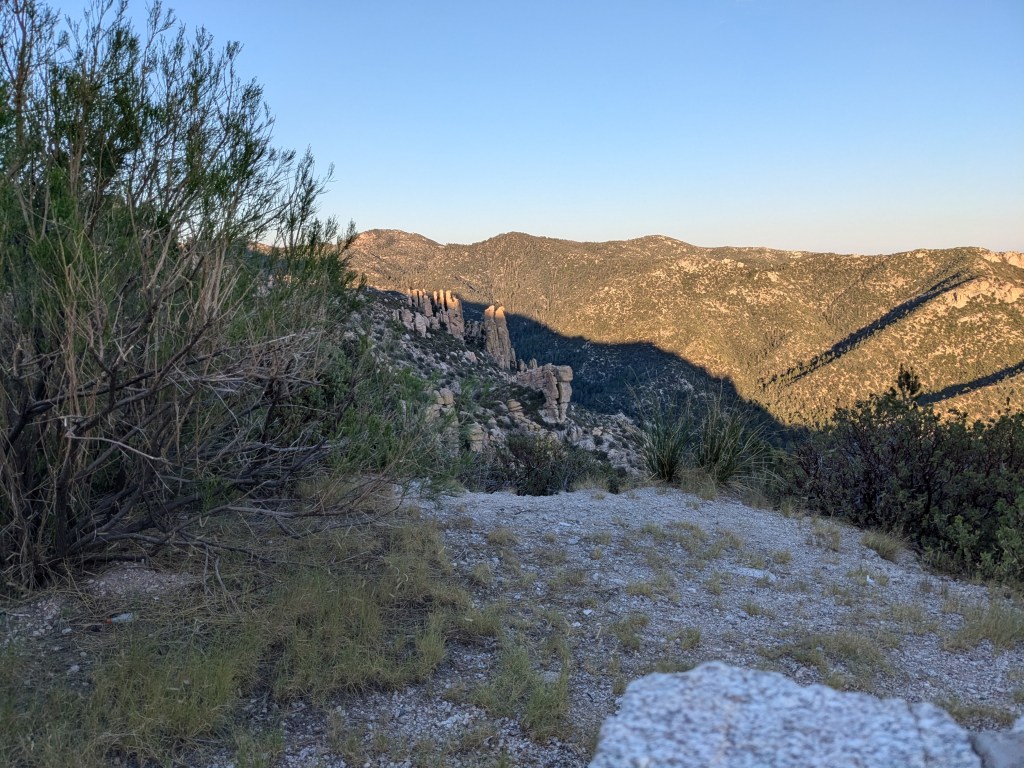
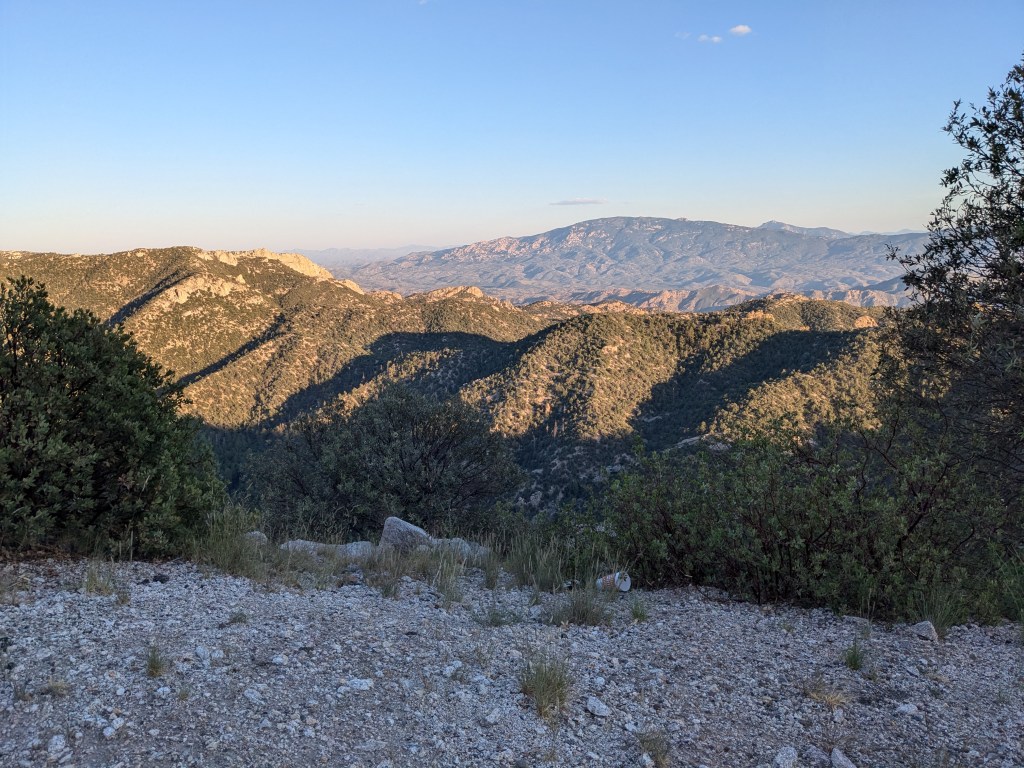
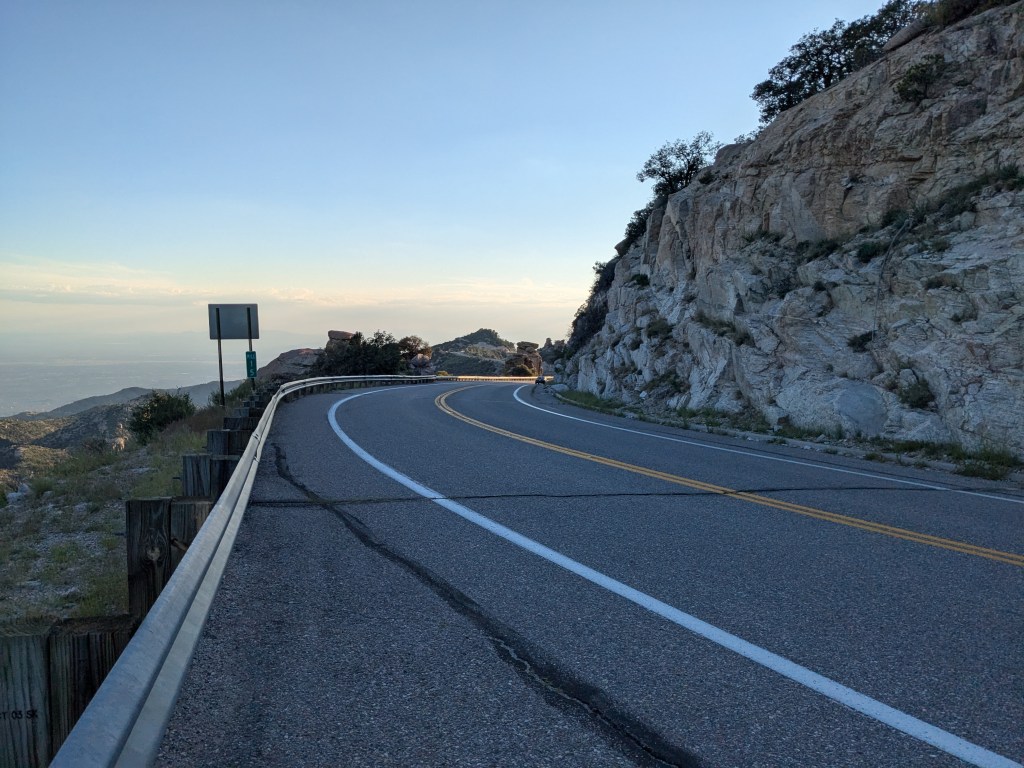
I drove back down in the dusk, with a crescent moon hanging over the lights of Tucson that were spread out on the valley floor like a carpet.
So, there is only one more national park on my list for this trip. Tomorrow I set out for New Mexico. At least I know they will be on Mountain Daylight Time!


Leave a Reply