For our second full day in Hawaii, we took a glass-bottom boat tour.
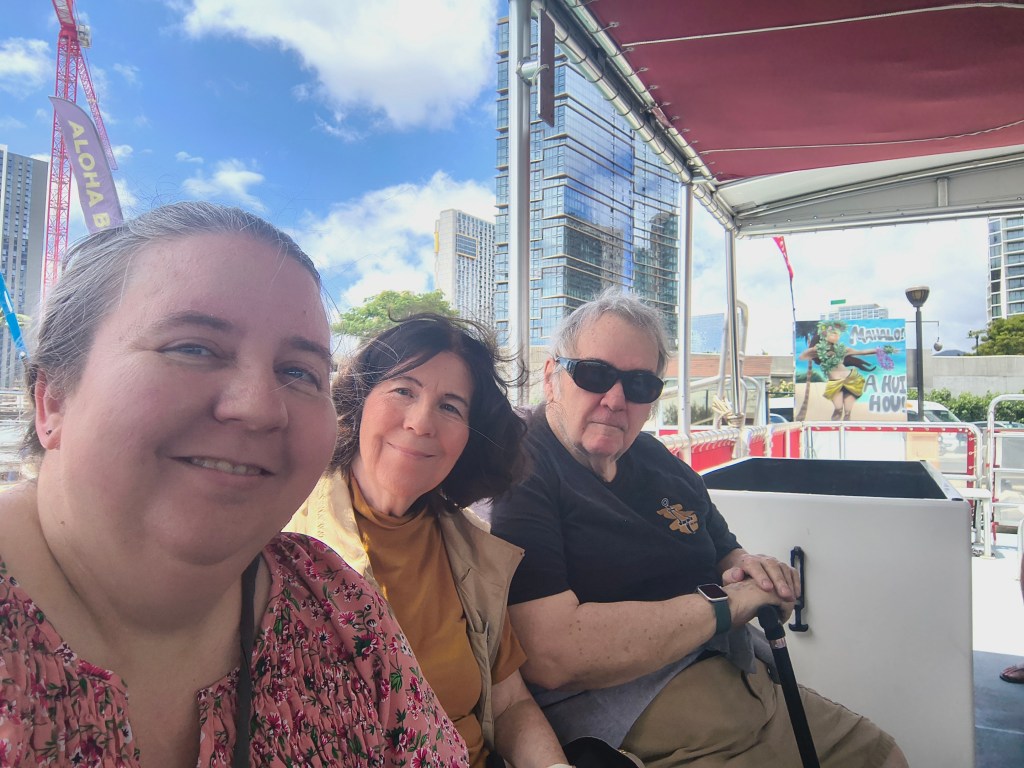
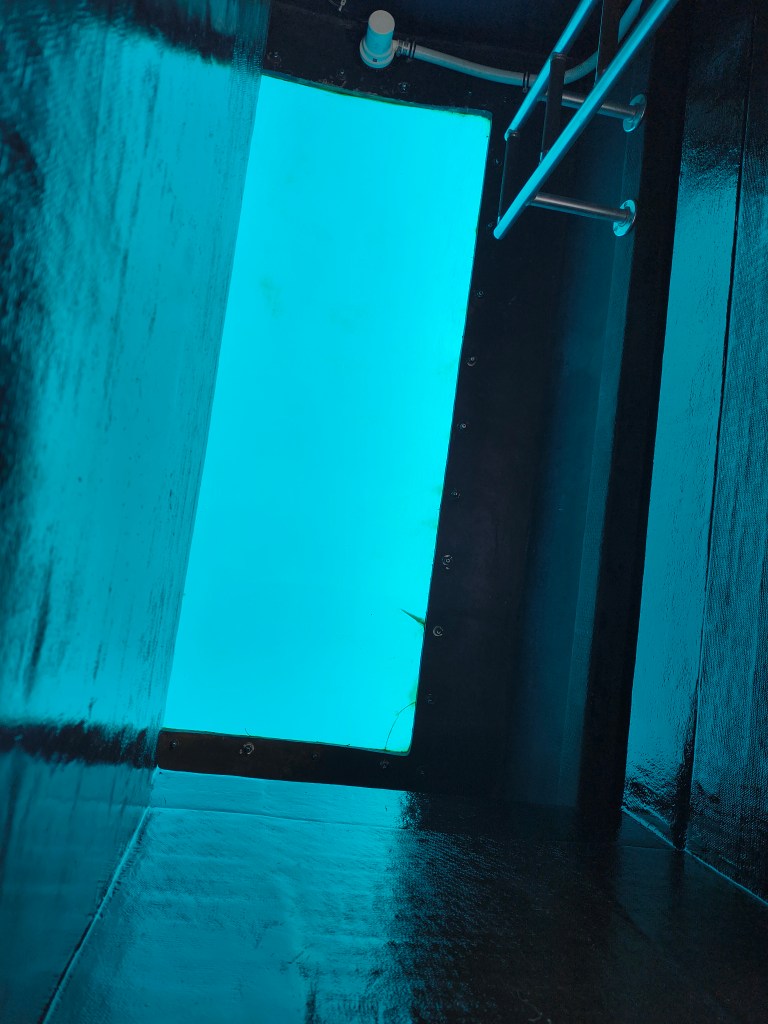
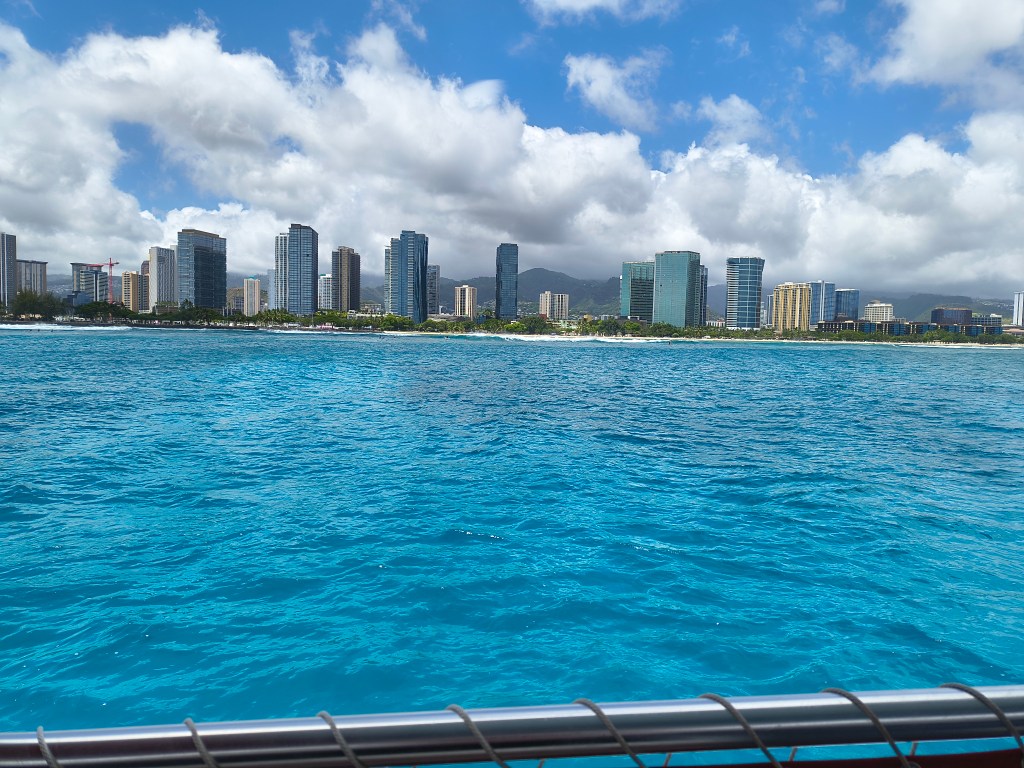
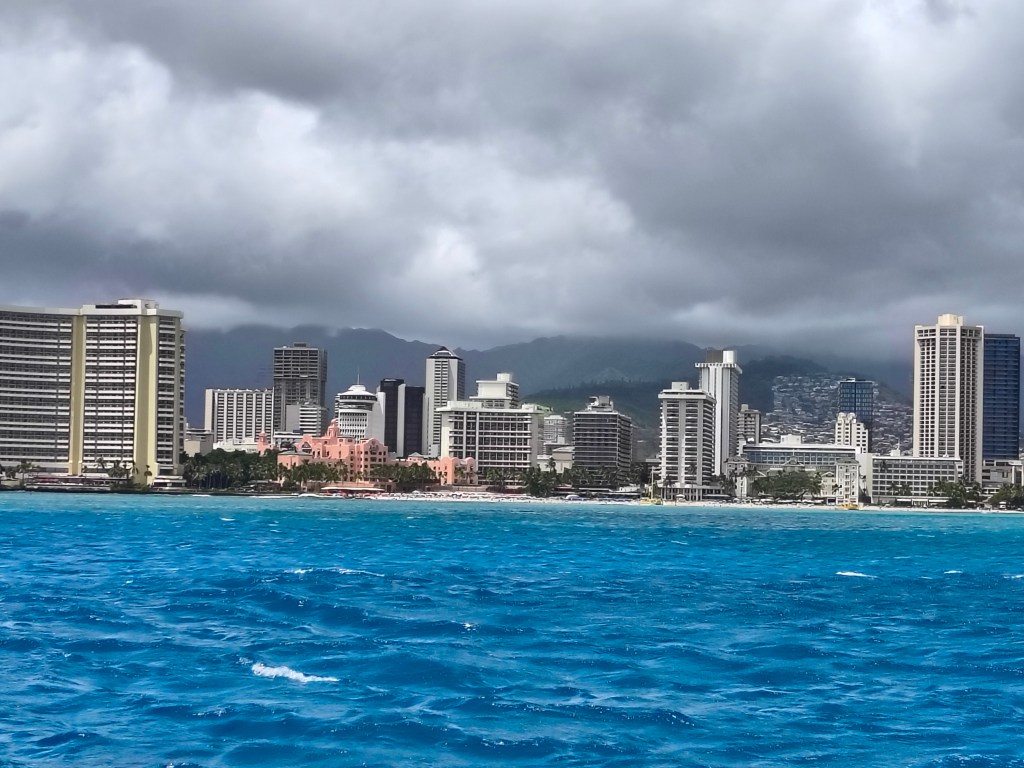
There were “wells” to see through the glass bottom, which let us see a little bit of coral and fish, but honestly we got a better view over the rail of the spectacular Honolulu shoreline.
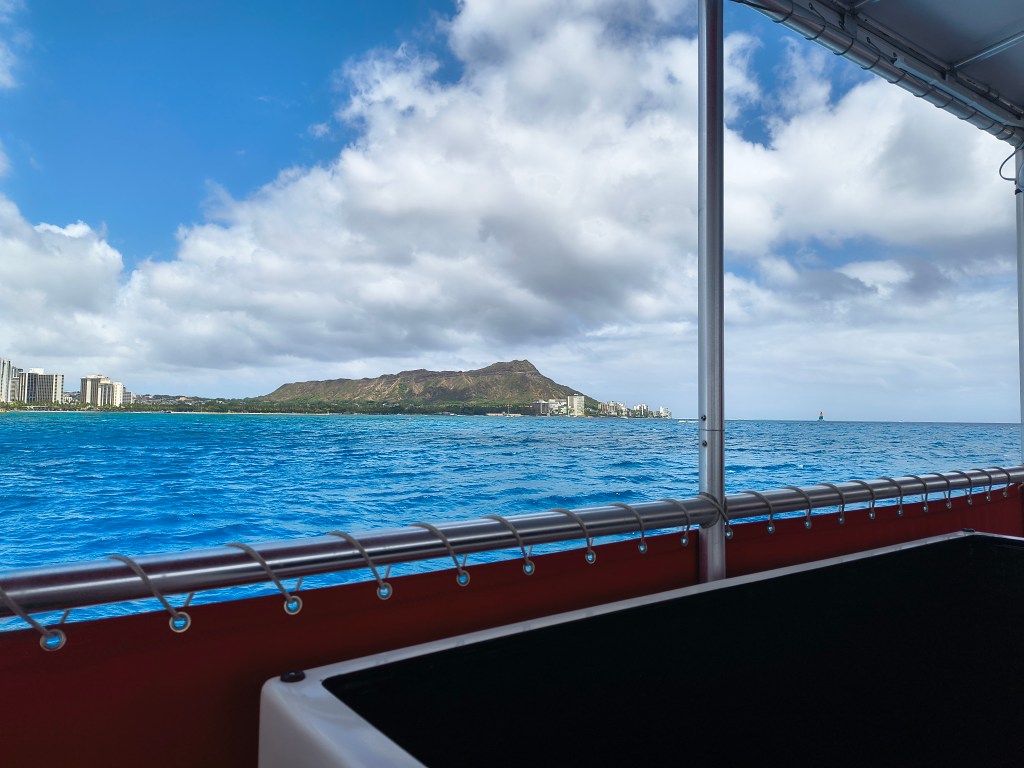
We saw the famous Diamond Head and Wakiki Beach.
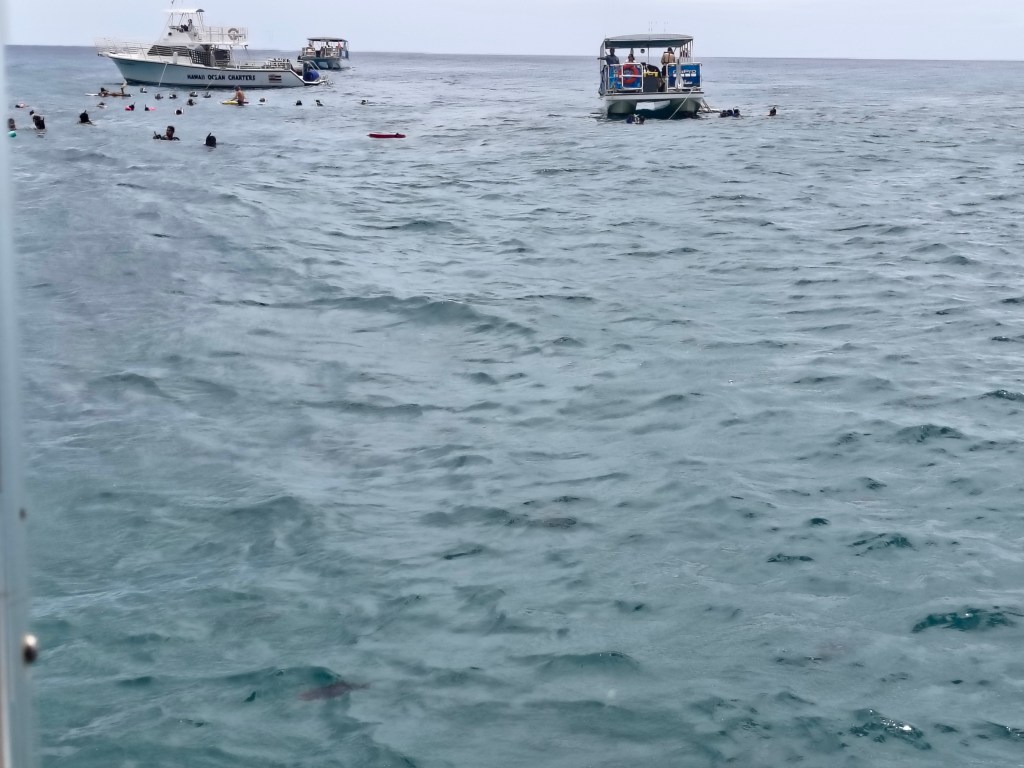
We went out amongst the snorkling boats that were turtle-watching, and we saw one sea turtle ourselves (along with gorgeous red and yellow-black-striped fish) but my pictures were… less than impressive.
But I did get some nice video of surfers alongside us as we came back in to harbor.
Our captain, Jim, was full of helpful advice about places to visit and restaurants (as well as jokes and local history).
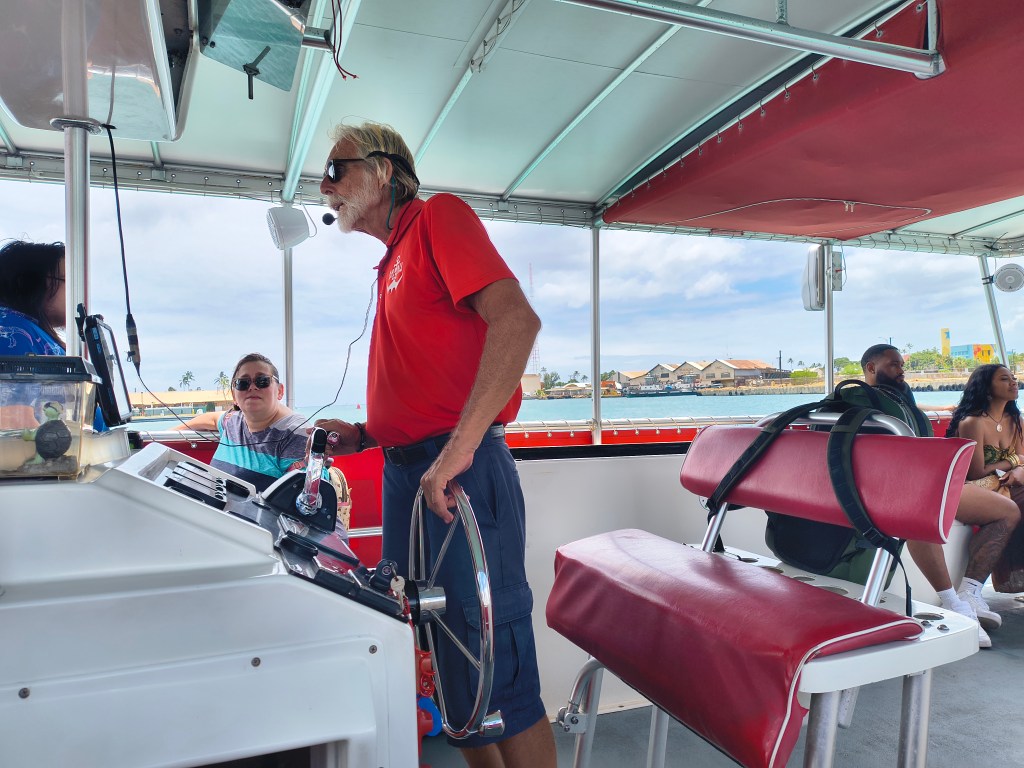
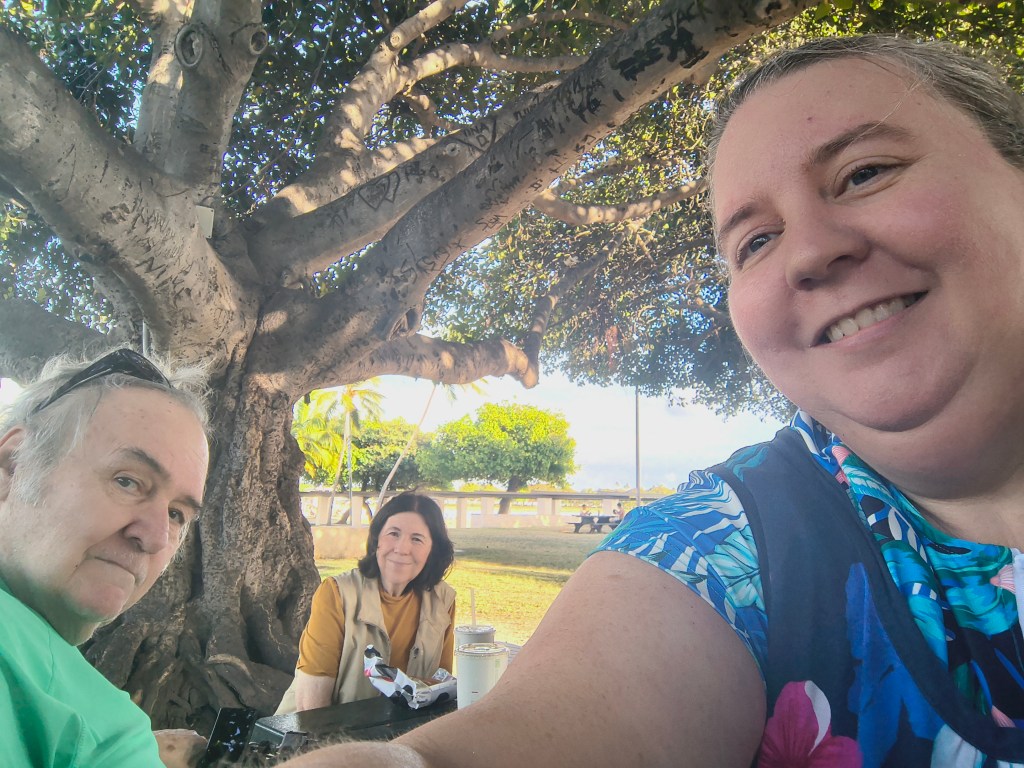
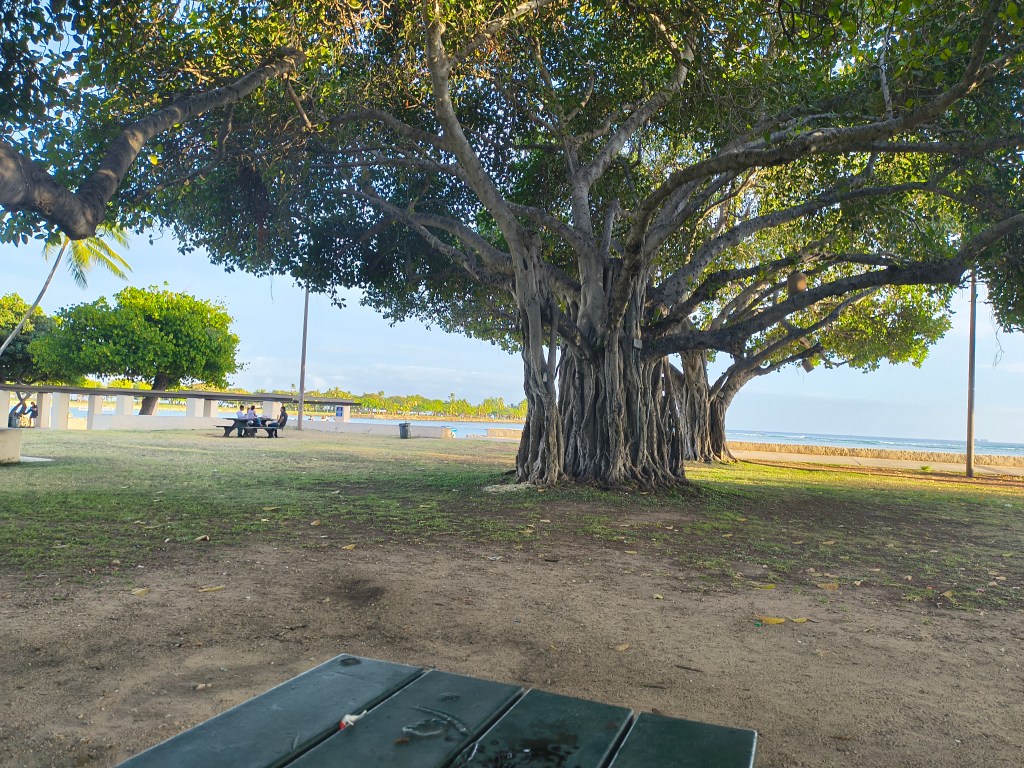
On his advice, we went to Ala Moana beach instead of Wakiki in the evening. It’s typically less crowded and has free parking… seems to be where the locals hang out. We had a picnic, and I went into the ocean chest-deep to watch the sunset.
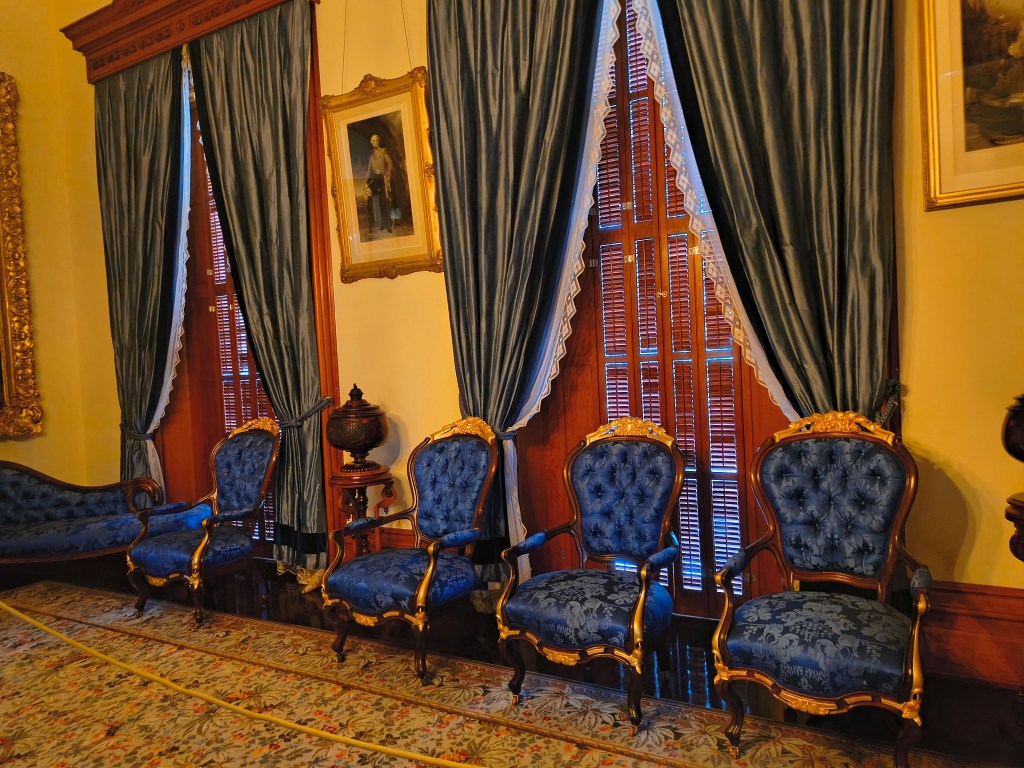
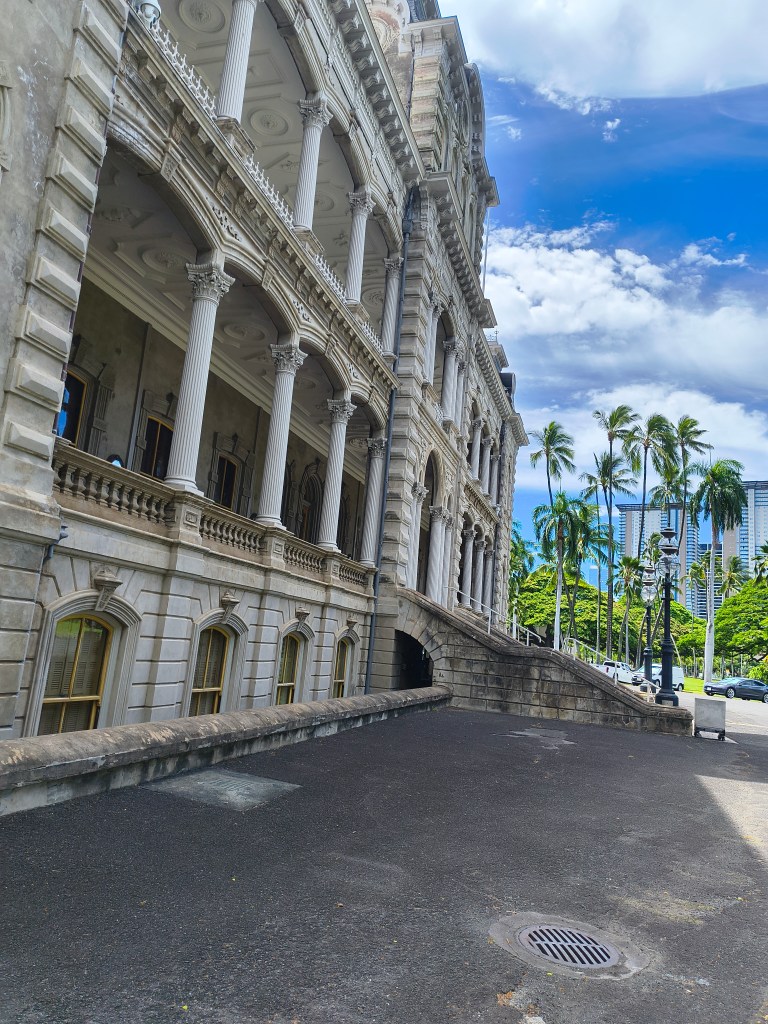
The next day, I went to Iolani Palace (a five-minute walk from our VRBO) and took the audio tour. I knew very little about Hawaiian history before this trip, but I’m getting up to speed. Unfortunately it’s not a happy story or one to make us proud of the way the U.S. has shown up in the world. Hawaii became unified as a single monarchy (eventually a constitutional monarchy) in the late 1700s, and the last reigning monarch, Queen Lilli’uokalani, was essentially overthrown by a coup d’etat manufactured by American business interests (including the Dole company) and the U.S. ambassador, acting without authorization. U.S. President Grover Cleveland agreed that they had acted illegally and told them to restore her to the throne, but they basically ignored him and Congress backed them up. So Hawaii became a US territory and then a state, but there’s still a significant indigenous Hawaiian movement to restore their independence.
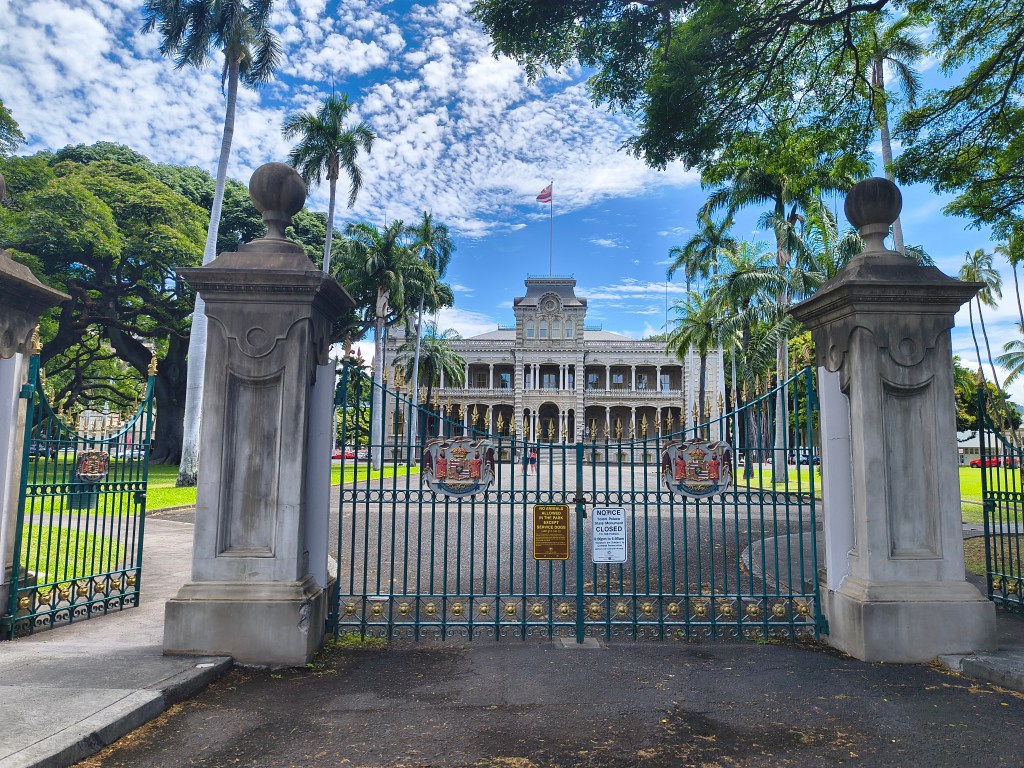
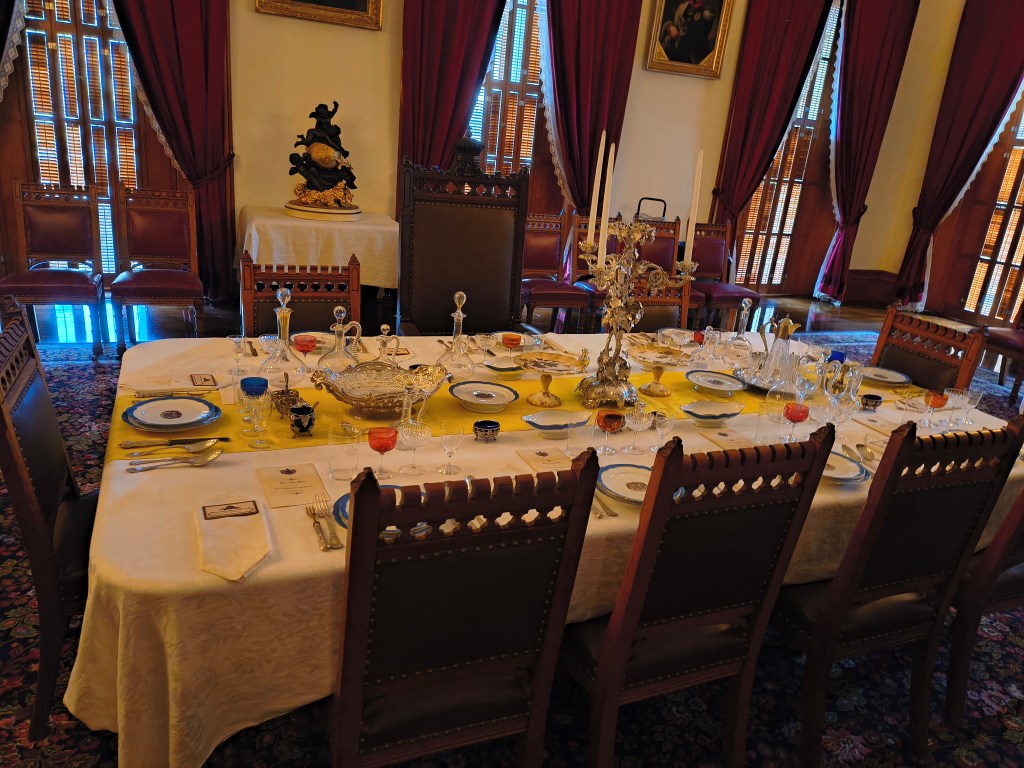
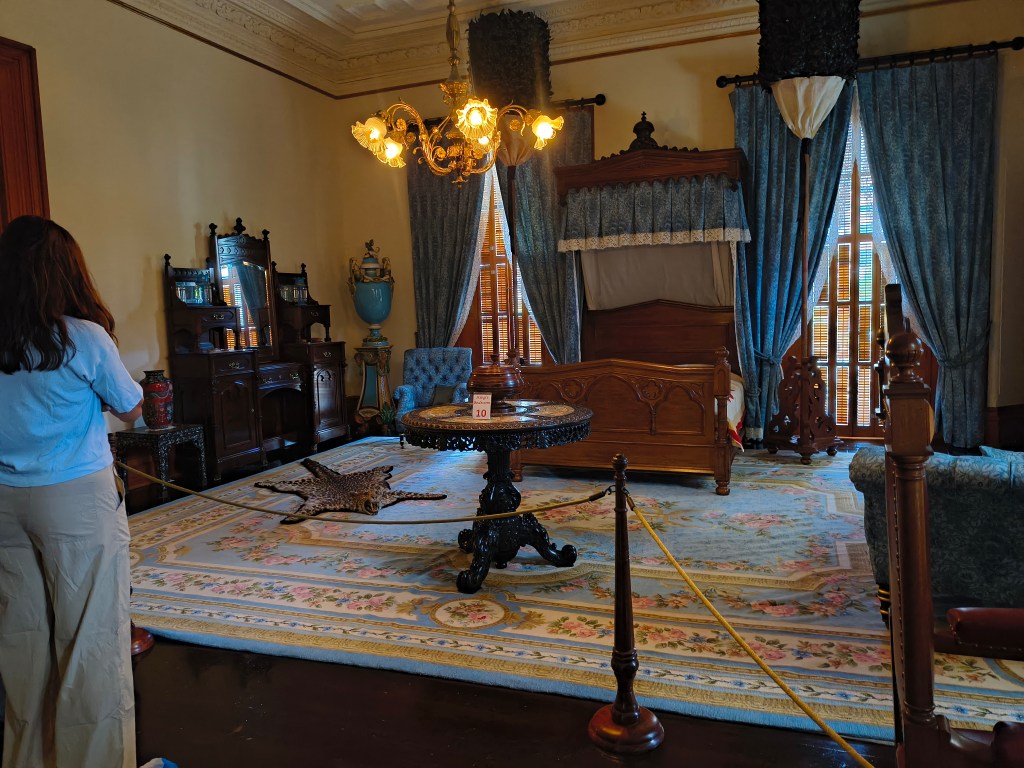
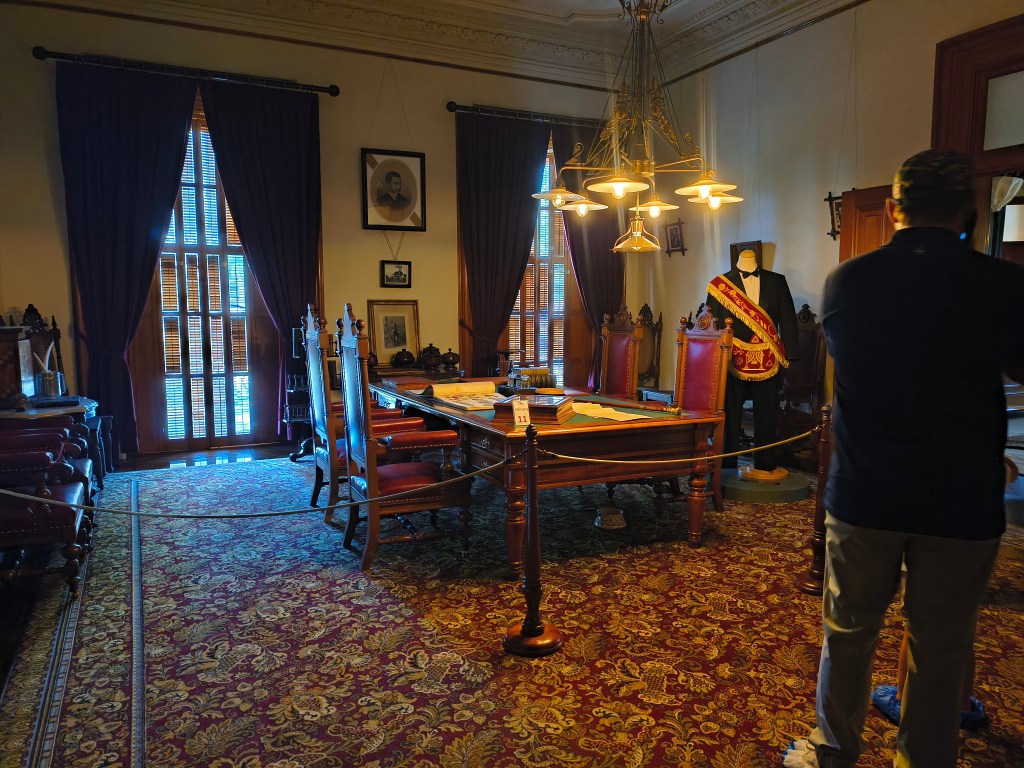
The palace was build in the late 1800s by Lilli’uokalani’s brother, King Kalākaua, and his wife Queen Kapiʻolani. Kalākaua was an enlightened leader who was fascinated with technology and far countries. He was the first reigning monarch anywhere to take a world tour (as well as the first foreign head of state to visit the US), and he filled his palace with gifts, artwork, and conveniences from all the places he visited.
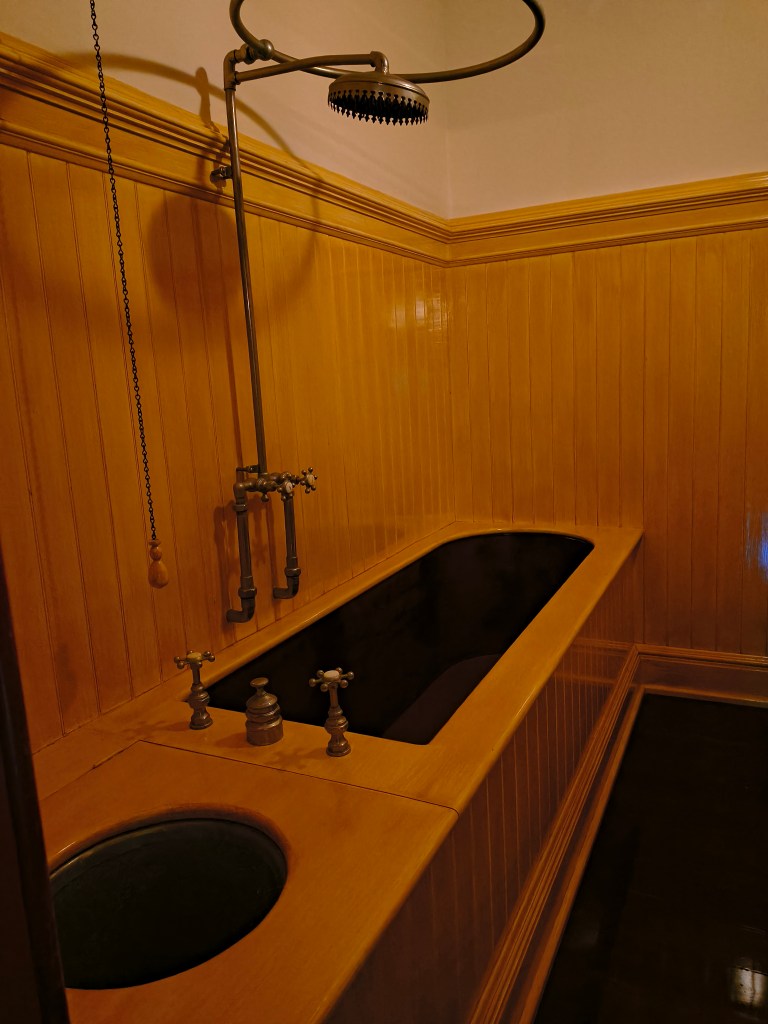
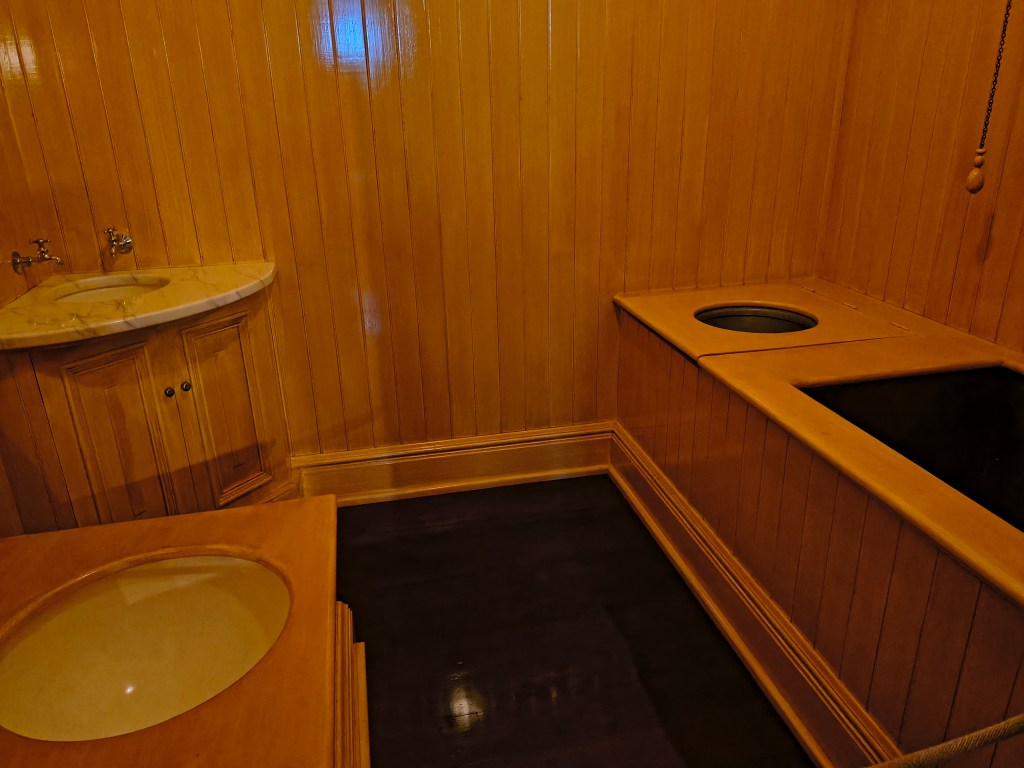
The palace had indoor plumbing when that was very much a novelty.
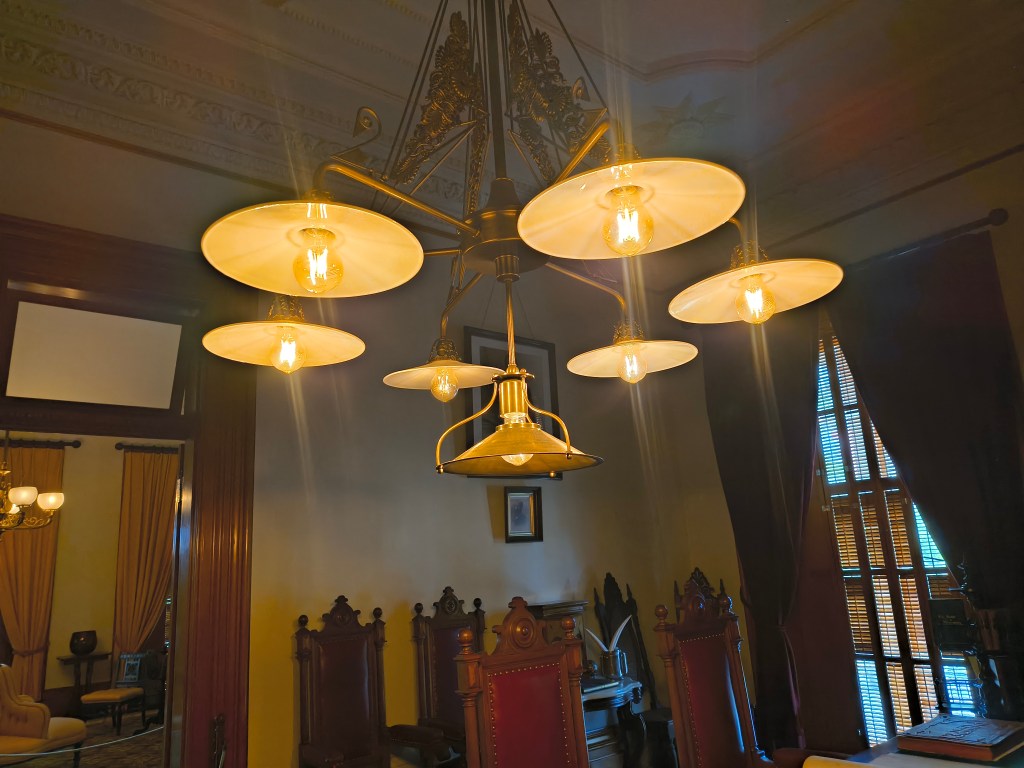
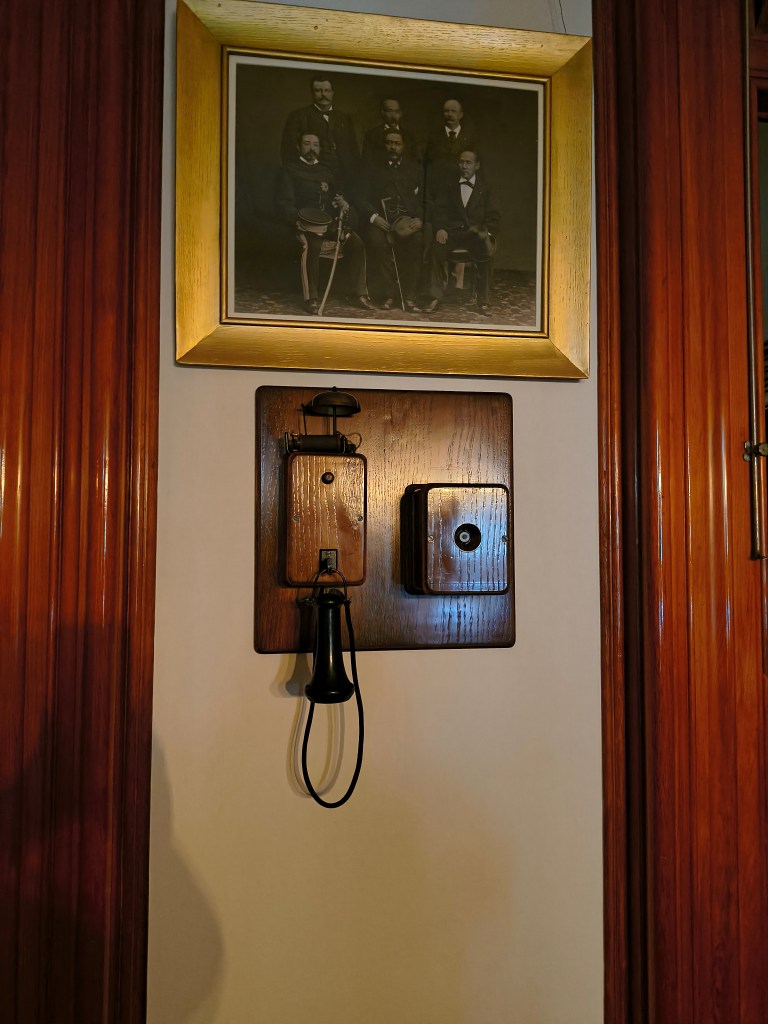
After meeting Thomas Edison on his travels, the king installed electric lights, along with the newly-invented telephone.
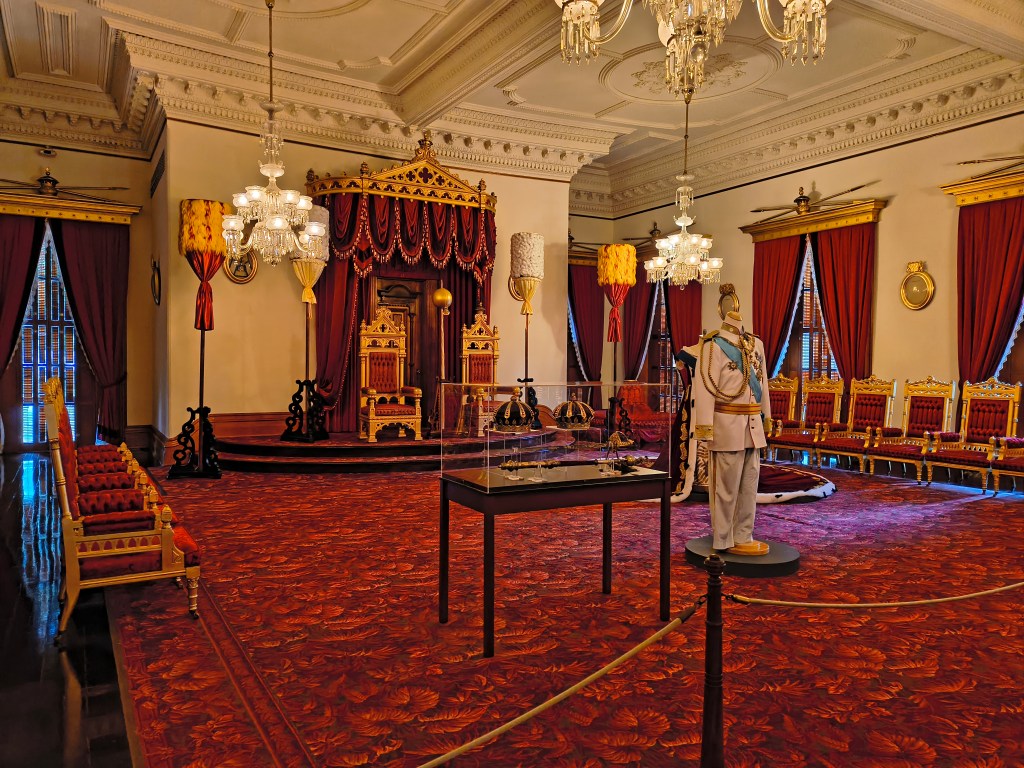
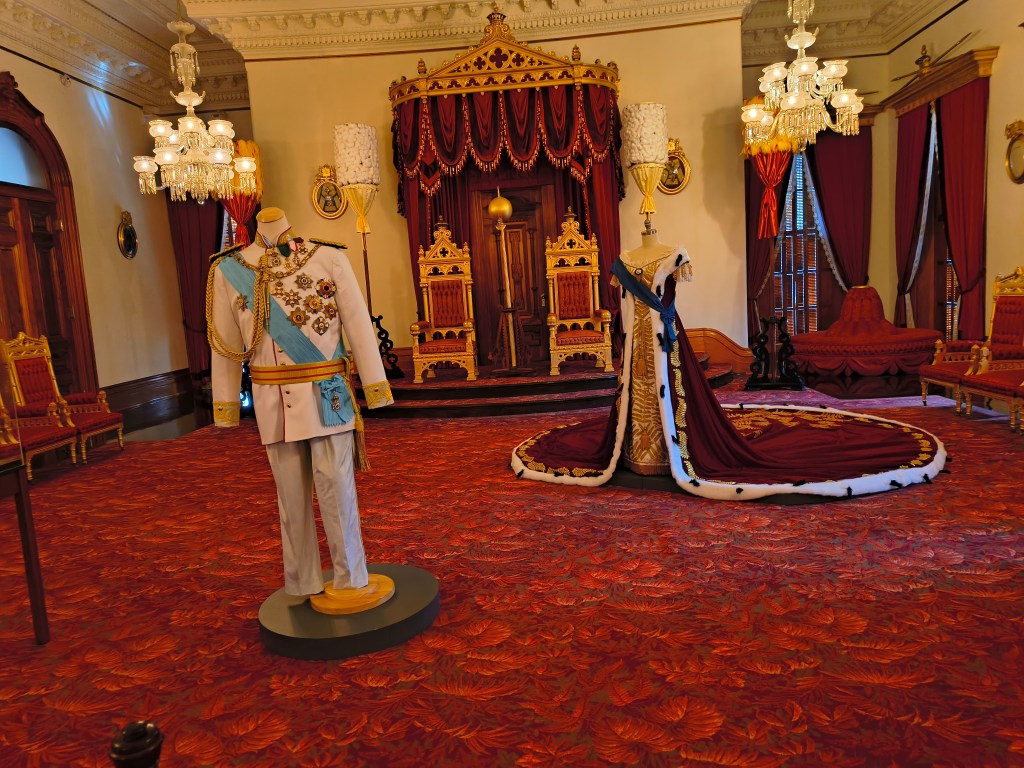
The public entertaining areas and the Throne Room were filled with a mixture of traditional Hawaiian, American, and European art, furniture, and dishes.
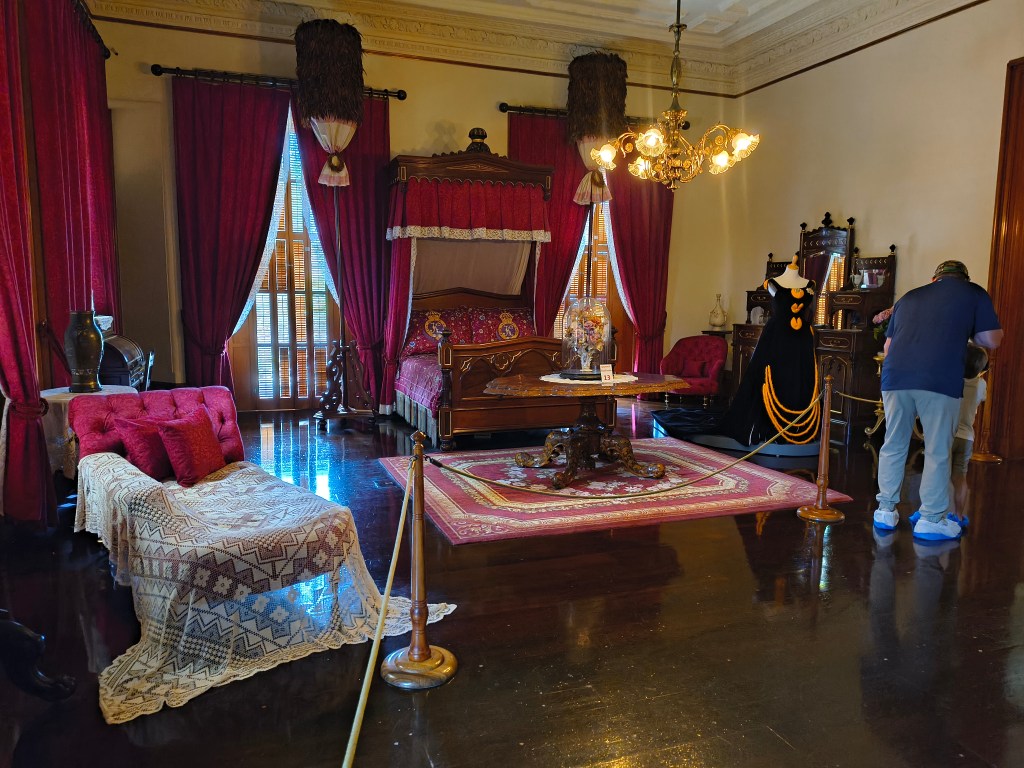
Upstairs, the king and queen each had a suite of rooms with bedrooms and sitting rooms, and the king had a library with his collection of books in multiple languages.
The king also had a music room. King Kalākaua and his sister Queen Lili’uokalani were both talented musicians who played multiple instruments and composed their own songs. Wikipedia says that the Hawaiian Music Hall of Fame honored Kalākaua and his brother and sisters as Na Lani ʻEhā (“The Heavenly Four”) for their patronage and enrichment of Hawaii’s musical culture and history.
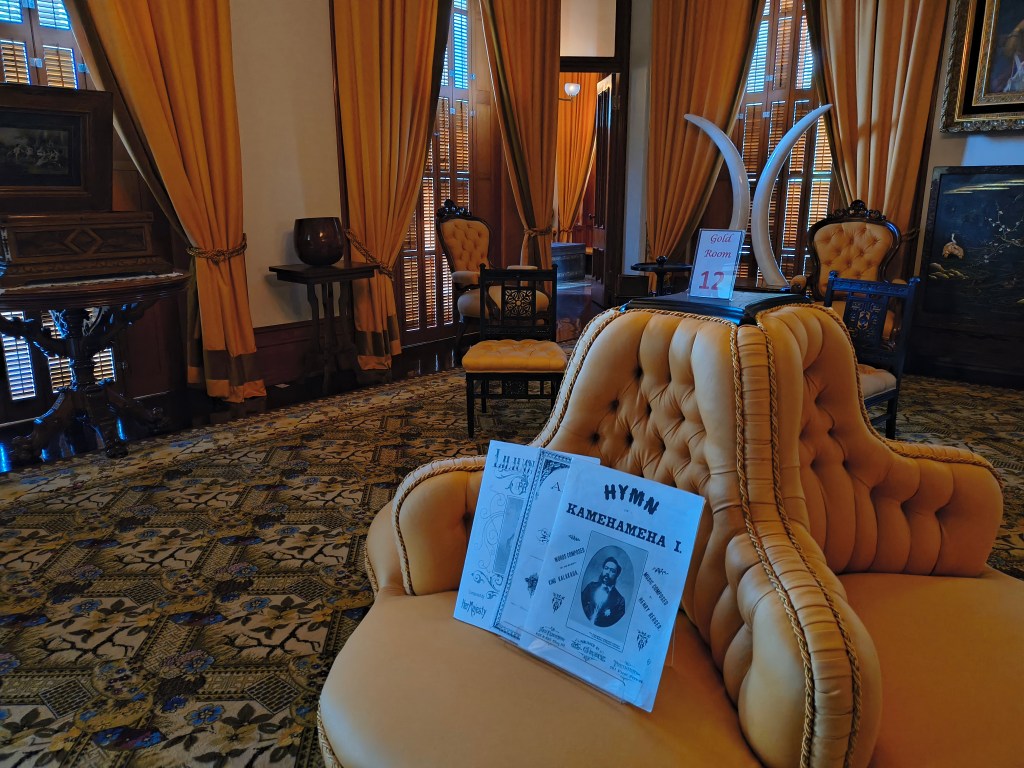
He wrote the lyrics to the Hawaii state anthem “Hawaiʻi Ponoʻī,” and Lili’uokalani wrote the most famous of all Hawaiian songs, “Aloha Oe,” or “Farewell to Thee,” a song for the wistful parting of lovers and, in time, a lament for the loss of Hawaii’s kingdom.
Queen Kapiʻolani and (at the time) Princess Lili’uokalani also travelled the world and participated in UK Queen Victoria’s Diamond Jubilee. They had some amazing dresses!

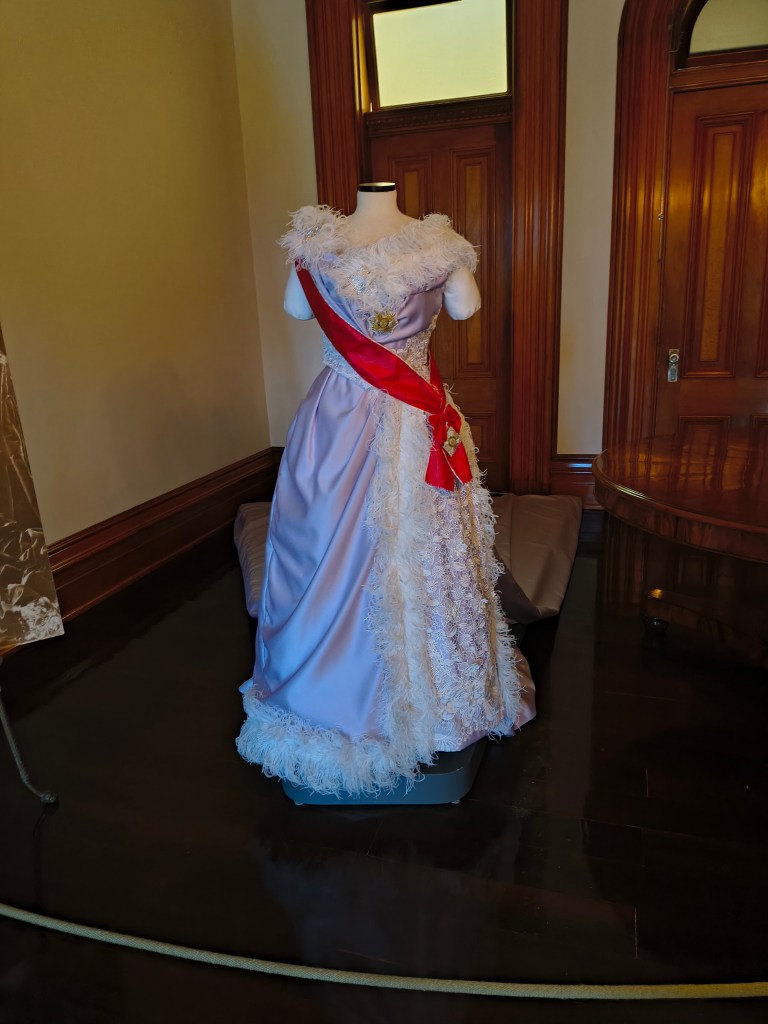
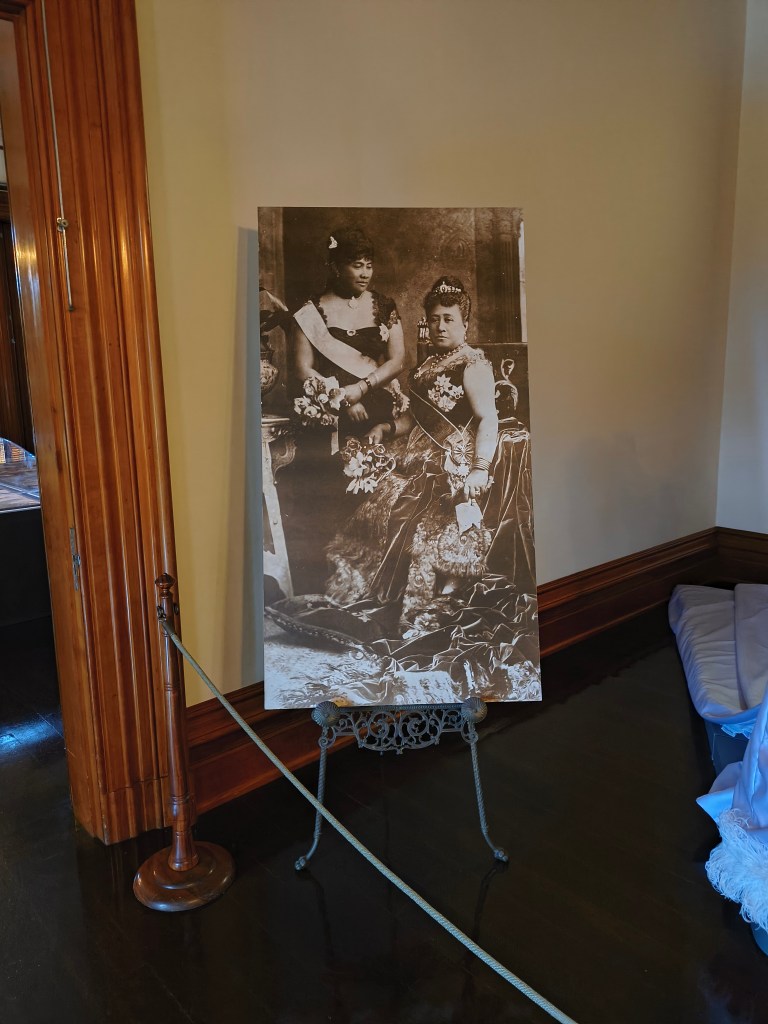
King Kalākaua died unexpectedly while abroad in 1891, and was brought home in a ship draped in black. It is said that his widow, Queen Kapiʻolani, stood alone on the second-story balcony (lanai) of the palace, weeping aloud for him. He was succeeded by his sister Queen Lili’uokalani, but not for long.
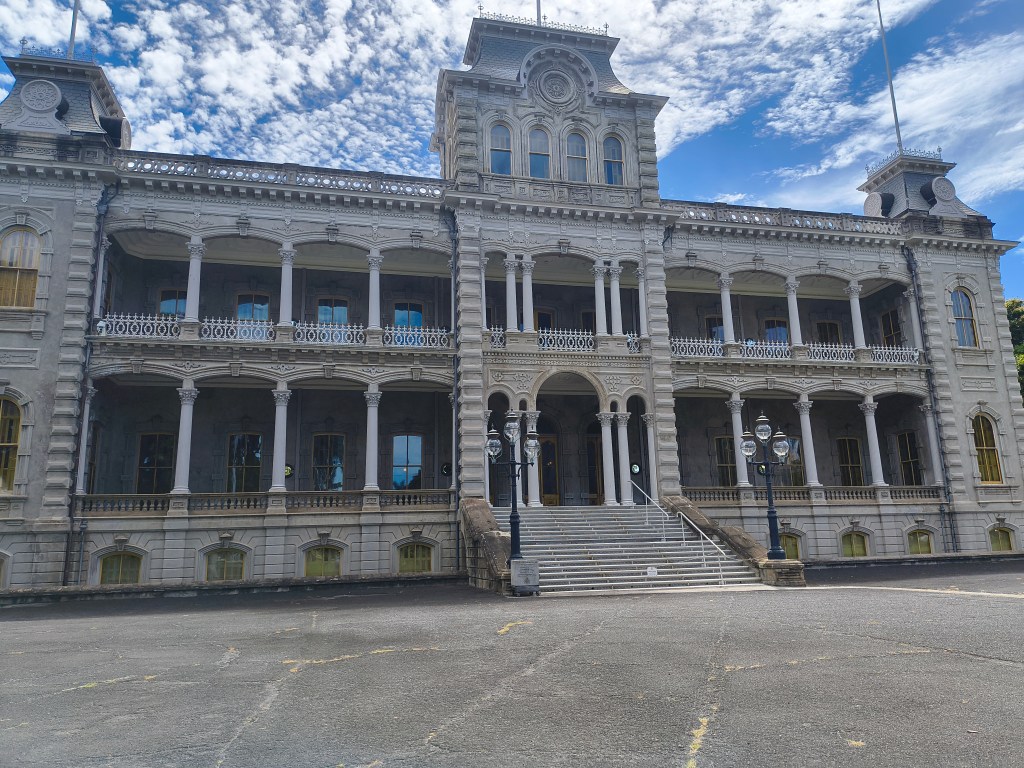
The final room of the palace was more sombre in its history. It was the bare, echoing room where Queen Lili’uokalani was held prisoner for eight months by the Dole coup leaders after a military tribunal falsely convicted her of being involved in an attempt by some of her followers to restore her to the throne by force. When the coup first happened in 1893, she had temporarily surrendered her powers to the distant United States government, hoping that President Cleveland would see justice done in restoring her while avoiding bloodshed. But now the coup leaders demanded that she abdicate completely, or they would put seven of her followers to death.
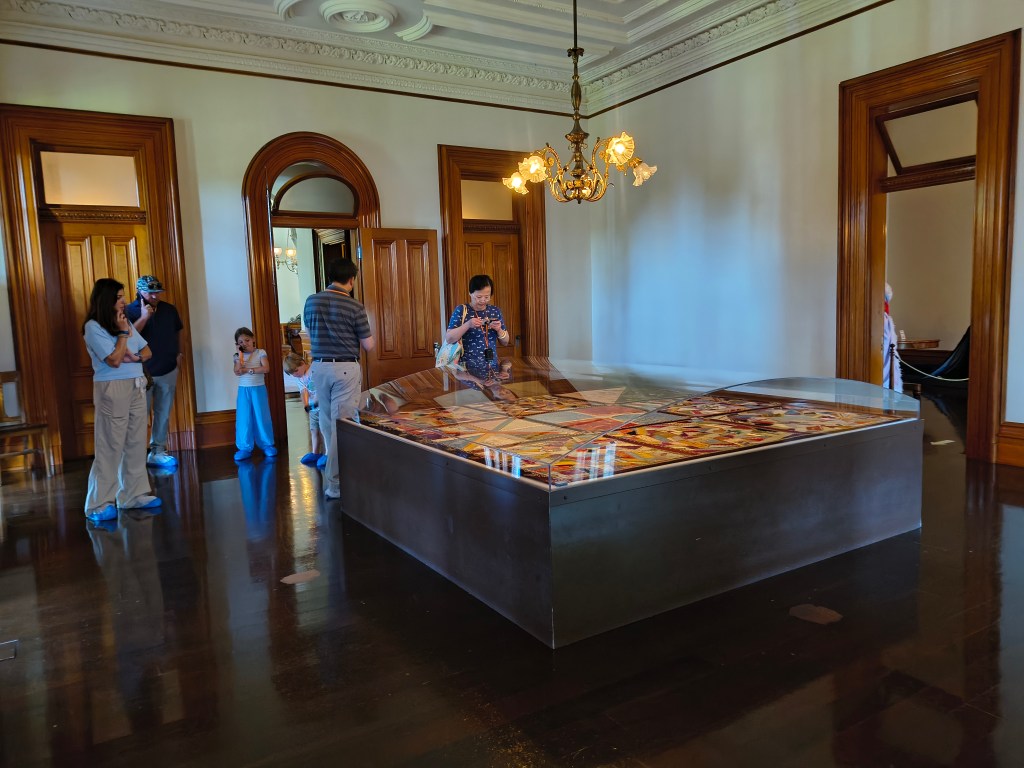
She said that she would not have done it to save her own life, but she could not be responsible for the deaths of her supporters. She abdicated, and the Kingdom of Hawaii quietly died.
To pass the time during her confinement, during which she was not even allowed books and newspapers, she and her attendants made an enormous quilt that commemorated the events of her life, good and bad.
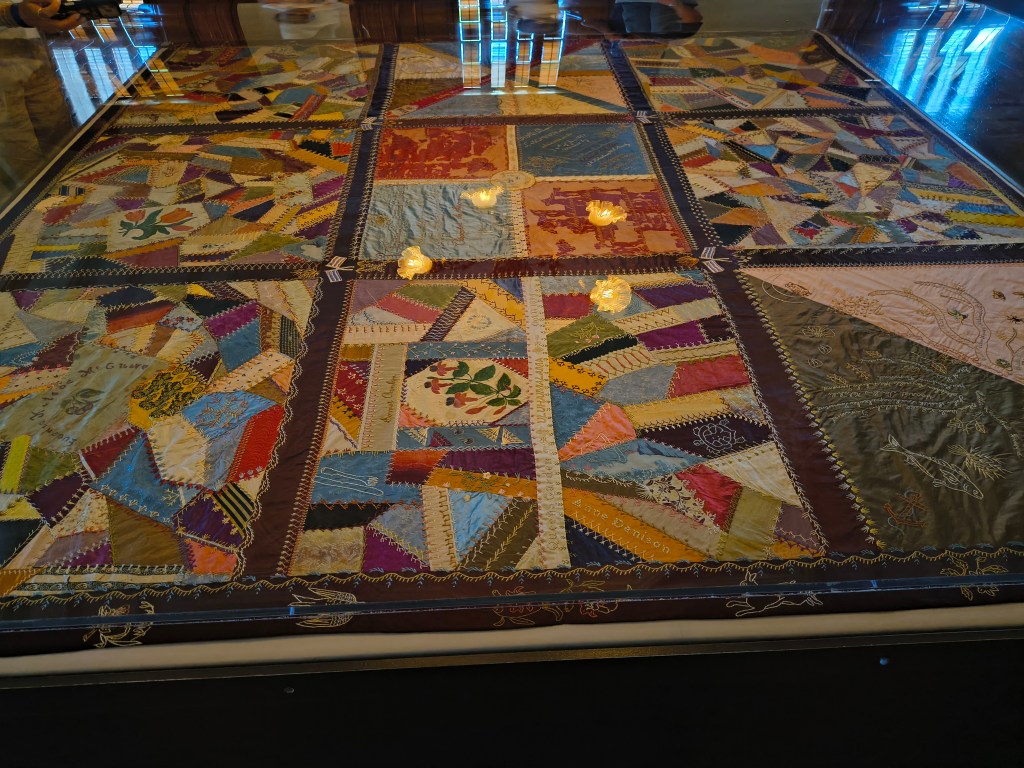
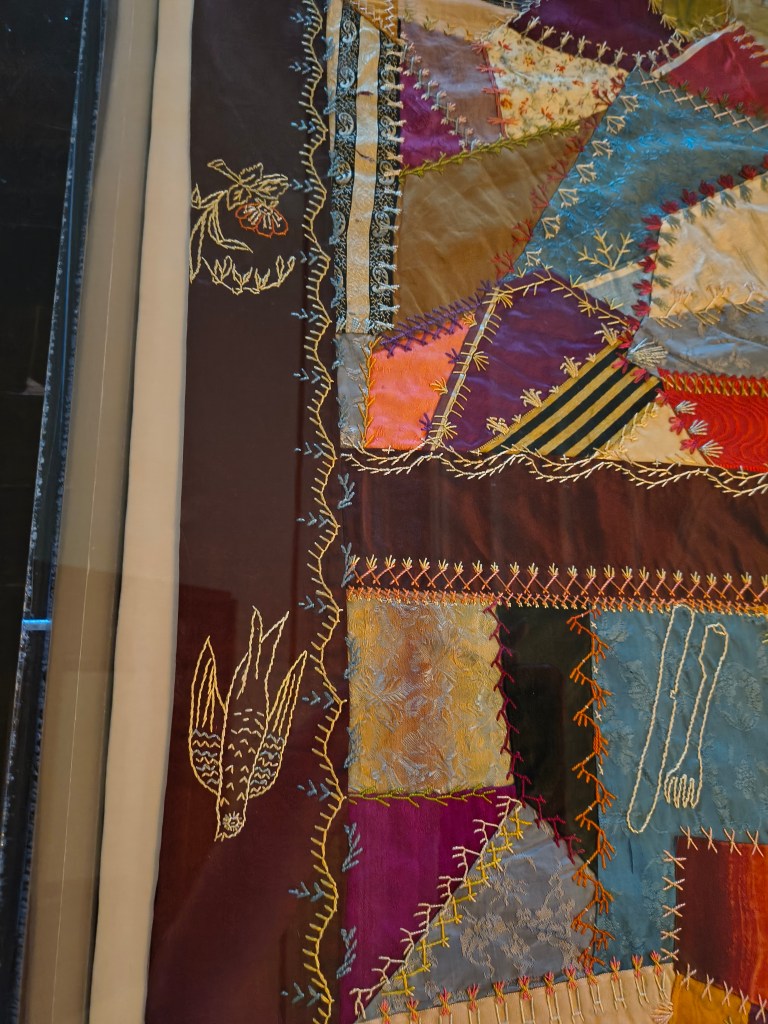
During this time she also wrote music, including Ke Aloha o Ka Haku (“The Queen’s Prayer”):
Your loving mercy
Is as high as Heaven
And your truth
So perfect
I live in sorrow
Imprisoned
You are my light
Your glory, my support
Behold not with malevolence
The sins of man
But forgive
And cleanse
And so, o Lord
Protect us beneath your wings
And let peace be our portion
Now and forever more
Amen
She was eventually paroled and returned to private life, dying in Honolulu in 1917. Iolani palace was used for many years as office space for the Republic/ Territory/ State government, but in 1969 a nonprofit group began to restore it to its historical glory and to open it up to teach visitors about Hawaiian history.
From that reminder of human inhumanity and courage, I turned with my parents to visit another: the USS Arizona Memorial at Pearl Harbor. On December 7, 1941, Japan launched a surprise air raid on the U.S. Naval Fleet and air force at Pearl Harbor, Honolulu, Hawaii, an attack which set off U.S. involvement in World War II.
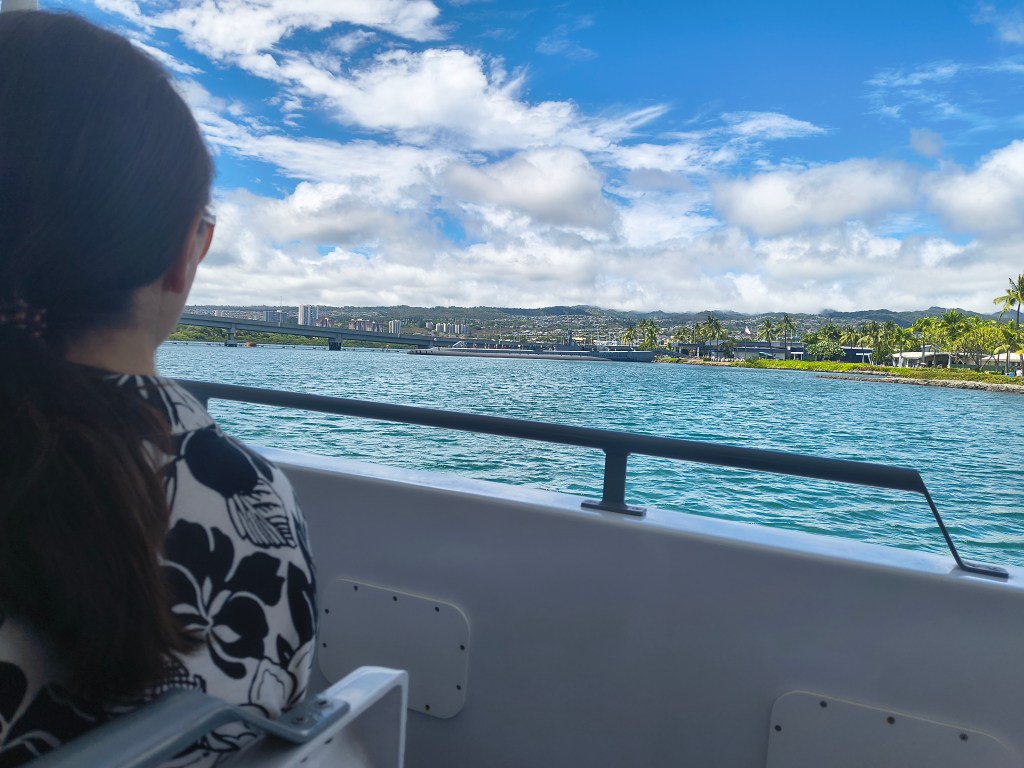
The USS Arizona was one of the battleships anchored there, and the most catastrophically damaged. It sank to the bottom of the harbor, giving more than 1,000 sailors no chance to escape, and so they are entombed there.
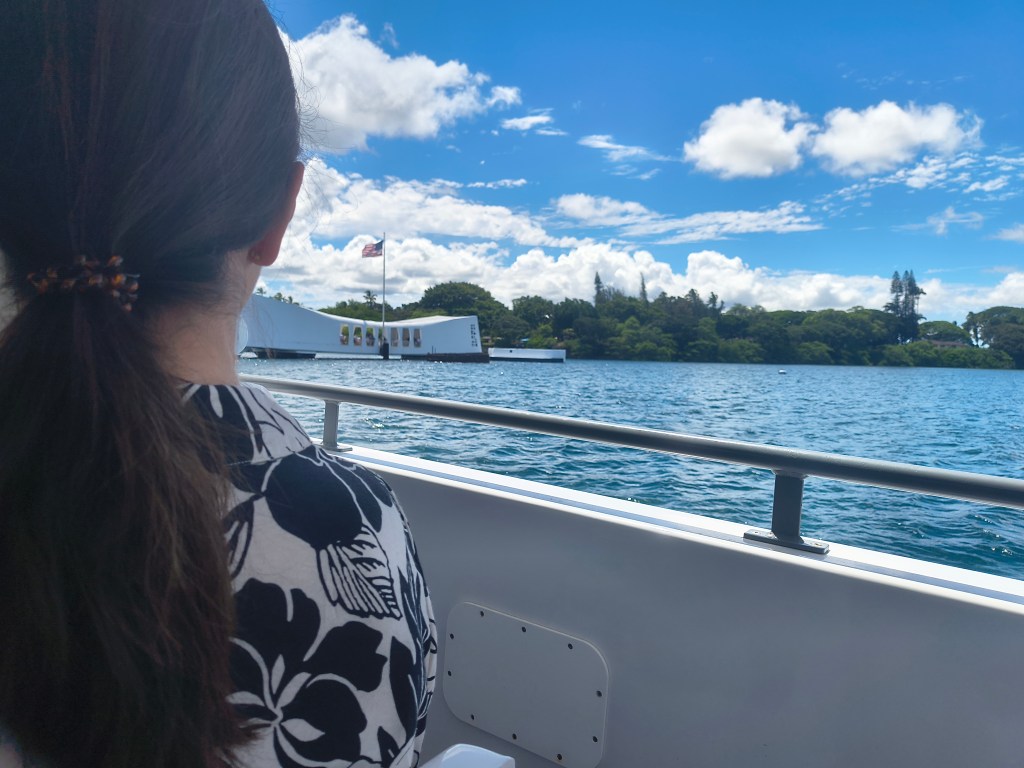
A memorial has been built over the ship’s final resting place; it can be reached by a brief ferry ride from the visitor’s center. The staff make sure that visitors take the somber nature of the site seriously, with the same respect that is afforded to land cemeteries like Arlington.
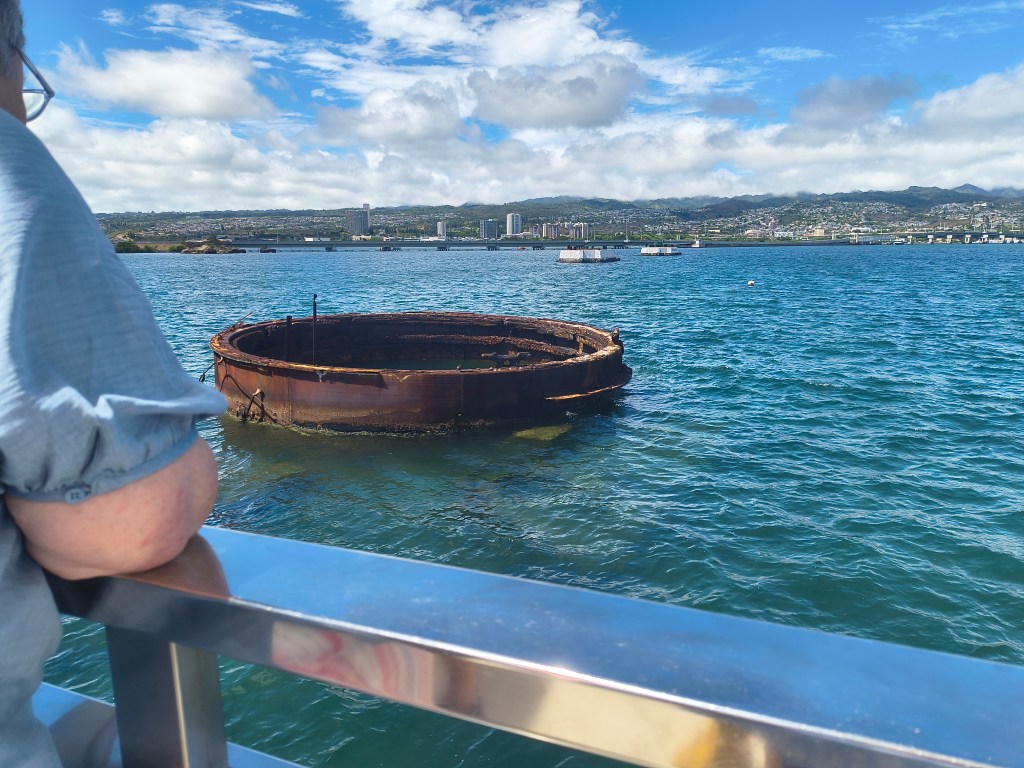
Some bits of the ship’s superstructure are still visible from the surface. And almost 85 years later, globs of fuel from the ship’s fully-loaded tanks still occasionally rise to the surface.
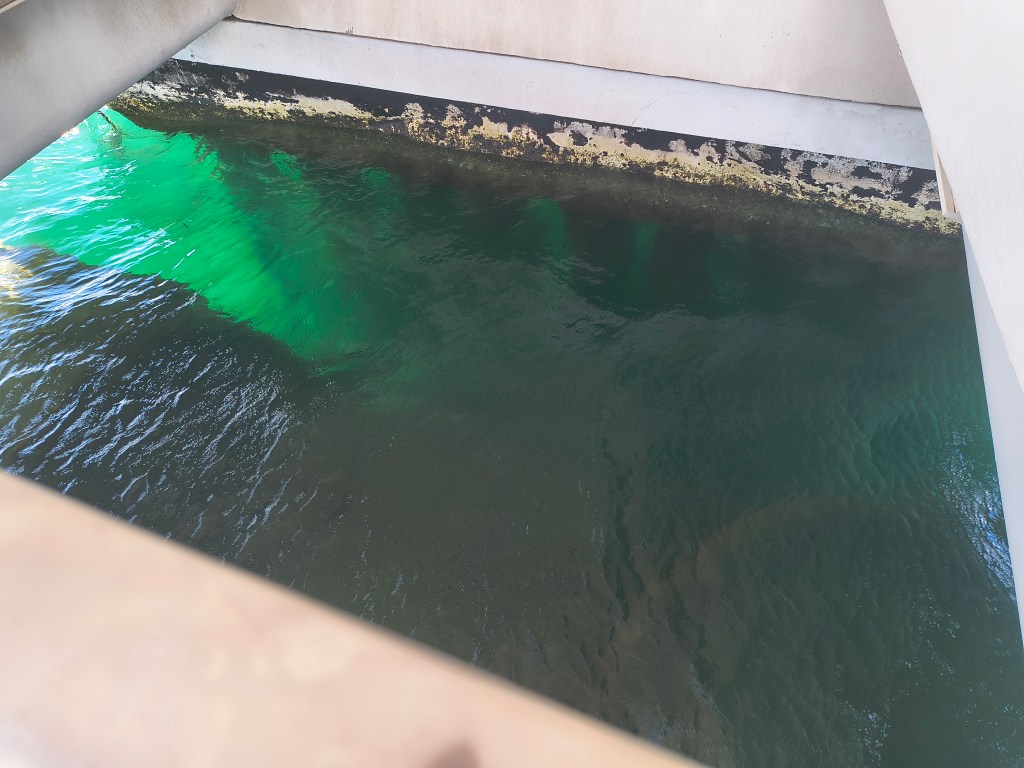
A well in the middle of the memorial lets users look down toward the wreck.
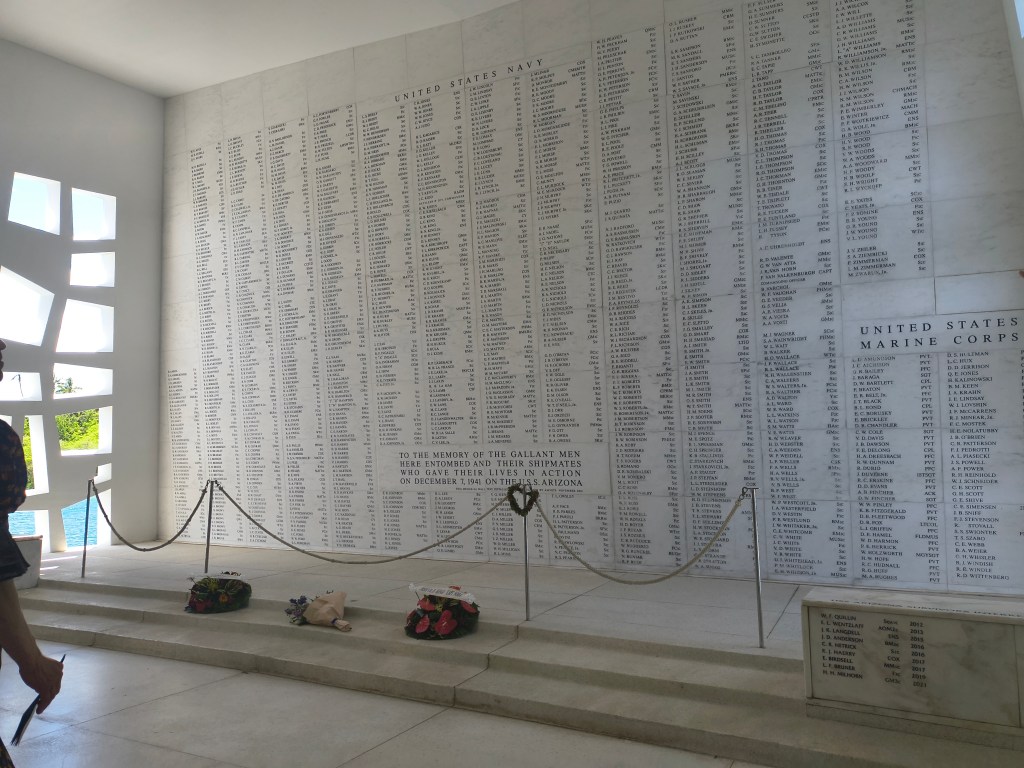
A shrine commemorates those who died on the Arizona in the attack, while the blocks on the side mark the names of those who were buried here later, who survived the attack, had the chance to grow old, and chose in the end to be interred with their old shipmates.
It was a day heavy with history, full of real history’s complications and contradictions. The united Kingdom of Hawaii was founded in blood at the battle of the Pali, only to end a hundred years later in a bloodless coup. The United States played the villain in ending the kingdom in part because of its lust after Pearl Harbor as a strategic naval base, only to pay the price fifty years later in the destruction of the pride of its fleet in that same harbor. If anything, it is a reminder not to exalt any person or nation too high in esteem, nor to judge either too harshly. We are all a streaky mix of the imago dei and the devil.
So, that was Tuesday. Today, Wednesday, was a travel day for me and my parents; they have gone on to Hilo to the house where we’ll spend most of the rest of our trip on the Big Island, while I boarded a plane to American Samoa to pick up my first new national park for this year.
So, Aloha Oe Hawaii. If all goes well, I’ll see you again in a few days.
 Vivian's RV Vignettes
Leave a comment